
The Chinese Cupping Method: What to Expect From Treatment
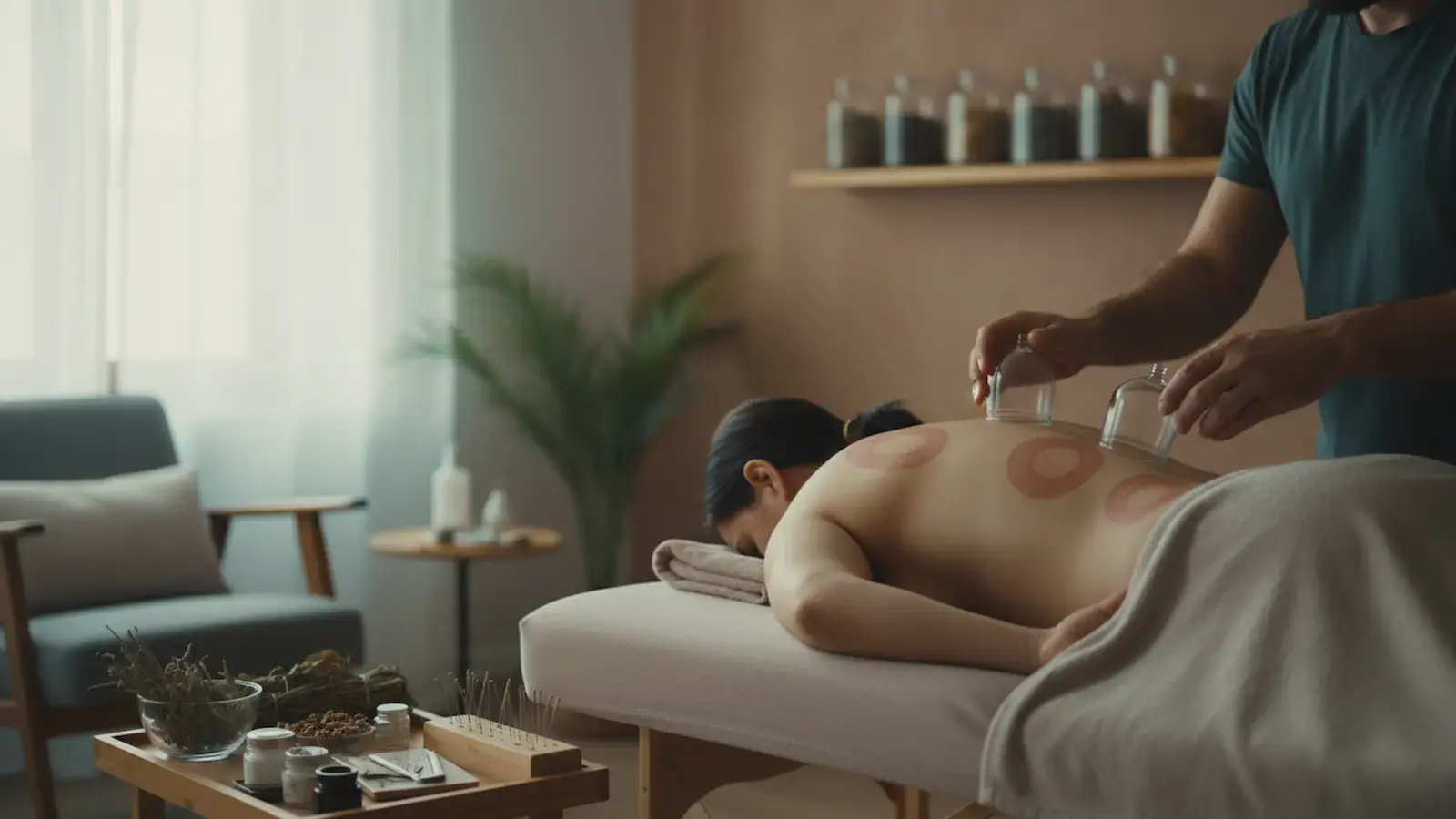
Quick answer: The Chinese cupping method uses glass, bamboo, or silicone cups placed on the skin to create suction, drawing blood flow to the area and helping release tight muscles and move stagnant Qi and Blood. A session usually leaves temporary circular marks, and cupping is often paired with acupuncture to address back pain, neck tension, sciatica, and similar conditions.
The Chinese cupping method has been part of Traditional Chinese Medicine for a very long time, and it remains one of the most visually distinctive therapies a patient will encounter in a TCM clinic. Those round marks left behind after a session tend to draw questions, and understanding what the therapy actually does helps separate the technique from the misconceptions around it.
In this article
- What Is the Chinese Cupping Method?
- How Chinese Cupping Works
- What a Cupping Session Feels Like
- Conditions Chinese Cupping May Help
- Is Chinese Cupping Right for You?
- Getting Started
What Is the Chinese Cupping Method?
Cupping is a therapy where cups are applied to the skin and a vacuum is created inside them, either with heat or a suction pump. That vacuum pulls the skin and superficial muscle layer upward into the cup, which is the opposite action of a massage that presses down. I use cupping as one of several tools within a broader Traditional Chinese Medicine treatment plan, not as a stand-alone fix.
A Therapy Rooted in Traditional Chinese Medicine
In TCM theory, pain and tension are often linked to Qi and Blood stagnation, a pattern where the body’s normal flow is blocked rather than moving smoothly through the tissues. Cupping is understood as a way to encourage that stuck flow to move again, which is why it is frequently used alongside acupuncture rather than in place of it.
How Chinese Cupping Works
Types of Cups Used
Cups can be made of glass, bamboo, or silicone, and the suction can be created by briefly heating the air inside a glass cup before placing it on the skin, or by using a hand pump attached to a plastic or silicone cup. Some practitioners also slide the cups gently across oiled skin, a technique known as moving cupping, which works more like a suction-based massage over a larger area.
What the Suction Does to Qi and Blood
Once the cup is in place, the suction draws blood to the surface of the skin and stretches the underlying fascia and muscle tissue. From a Traditional Chinese Medicine standpoint, this is meant to break up stagnation and support the smoother movement of Qi and Blood through the affected area, which is why cupping is so often chosen for complaints involving tight, sore, or stiff muscles.
What a Cupping Session Feels Like
Most patients describe cupping as a strong pulling or tugging sensation rather than pain. The cups are typically left in place for several minutes, and the sensation tends to ease as the tissue relaxes into the suction. It is a different feeling from acupuncture, since cupping works on the surface and the muscle layer below it rather than at specific points along the body.
The Marks Cupping Leaves Behind
The circular marks that follow a session are one of the most recognizable features of the Chinese cupping method. They range from a light pink to a deeper purple depending on the degree of stagnation in that area, and they typically fade within a few days to about a week. These marks are not bruises in the sense of an injury; they reflect blood drawn to the surface by the suction and are an expected, temporary part of the treatment.
Conditions Chinese Cupping May Help
Chronic Pain and Muscle Tension
Cupping is commonly used for chronic pain conditions such as back pain, shoulder and neck tension, and sciatica, where tight muscles and restricted movement are central complaints. For a closer look at how this applies to one specific area, I’ve written separately about cupping for neck pain, including what to expect when the technique is focused on that region.
Combining Cupping With Acupuncture
Cupping is rarely used entirely on its own in my practice. It is usually combined with acupuncture, and sometimes with a custom herbal formula, as part of a single treatment plan built around the patient’s pattern. If herbs are part of that plan, it’s worth reading about whether Chinese herbs are safe to take alongside other therapies.
Is Chinese Cupping Right for You?
What to Expect at Traditional Healing Centre
At Traditional Healing Centre, every treatment plan starts from your own Traditional Chinese Medicine diagnosis, never an off-the-shelf protocol. That means cupping is only recommended when the pattern identified through a full intake, including a look at your tongue and a reading of your pulse, points to Qi and Blood stagnation as part of the picture. I offer cupping alongside acupuncture, Chinese herbal medicine, Tuina massage, moxibustion, and cosmetic acupuncture, and I plan treatment around what each individual visit reveals rather than a fixed package. As with most Traditional Chinese Medicine therapies, it’s reasonable to plan on five to ten treatments before judging progress.
Getting Started
If you’re curious whether the Chinese cupping method fits your particular pattern of pain or tension, the first step is a proper diagnosis rather than guessing from general descriptions online. You can book an appointment to discuss your symptoms and find out whether cupping, acupuncture, or a combination of therapies makes sense for you.