
TCM for Menstrual Cramps: Herbs, Acupuncture and What Helps
Quick answer: Herbal remedies for period pain in Traditional Chinese Medicine are chosen to match the specific pattern behind your cramps, such as Qi and Blood stagnation or cold in the uterus, rather than a single formula for everyone. Common formulas combine herbs that move Qi and Blood or warm the uterus, and they work alongside a full diagnosis rather than on their own. Because every body responds differently, a visit with a licensed practitioner is the most reliable way to find the formula suited to you.
Many of the patients I see each month describe the same frustration: cramps that return every cycle, sometimes with back pain, bloating, or mood changes that make the week before and during their period difficult to plan around. It makes sense that so many people search for herbal remedies for period pain rather than reaching only for an over-the-counter tablet. In Traditional Chinese Medicine, herbs have been used to support menstrual health for centuries, but they are never used in isolation from a proper diagnosis.
In this article
- Understanding Period Pain Through a Traditional Chinese Medicine Lens
- Common Herbal Formulas for Period Pain
- Supporting Herbal Treatment With Lifestyle Choices
- Why a Personalized Formula Matters More Than a Generic Blend
- When to Seek Professional Guidance
- New Patients: Start With a Proper Diagnosis
- In this series
Understanding Period Pain Through a Traditional Chinese Medicine Lens
In Traditional Chinese Medicine, menstrual pain is not treated as a single condition with one standard remedy. Instead, I look at the pattern behind the symptom, because two patients with similar cramps may need very different support.
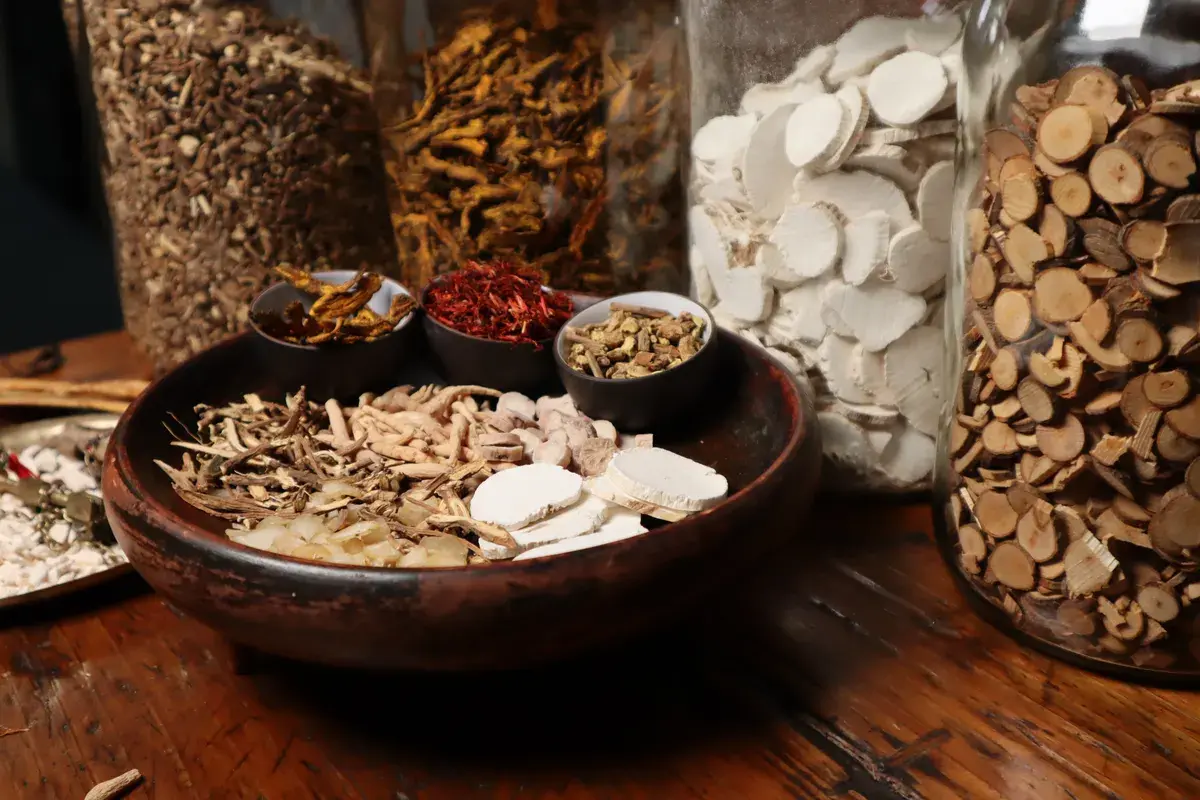
Photo by Chinese Medicine Podcast Podcast on Pexels
Qi and Blood Stagnation
This is one of the most common patterns behind period pain. When Qi and Blood do not move smoothly through the lower abdomen, pain tends to be sharp, cramping, and may come with dark clots. Herbs that move Qi and invigorate Blood are often chosen here to encourage smoother flow.
Cold in the Uterus
Some patients describe pain that feels better with heat and worse in cold weather or after cold drinks. This points toward a cold pattern, where warming herbs and moxibustion are often considered alongside the formula. Wen Jing Tang (Warm the Menses Decoction) is a classic formula traditionally used when the lower abdomen feels cold, distended and painful.
Qi and Blood Deficiency
Not every case of period pain is about stagnation. A dull, lingering ache, especially toward the end of the period, can point to a deficiency pattern, where the body needs gentle nourishment rather than strong movement.
Common Herbal Formulas for Period Pain
Formulas are built from combinations of herbs rather than a single ingredient, and the combination is adjusted based on the pattern identified during the diagnosis.
Formulas for Stagnation Patterns
For Qi and Blood stagnation, formulas typically include herbs known for moving Blood and easing cramping pain. These are often paired with acupuncture points chosen to support the same goal. A classic example is Shao Fu Zhu Yu Tang, traditionally used for Blood stasis in the lower abdomen, with lower abdominal pain and dark, clotted menstrual blood; it is not used during pregnancy.
Formulas for Deficiency Patterns
When the pattern points to deficiency, the formula shifts toward herbs that nourish Blood and support overall energy, since forcing movement in a depleted body can make symptoms worse rather than better. Si Wu Tang (Four-Substance Decoction) is the classic Blood-nourishing formula, traditionally used for dull, dragging pain with periods.
Supporting Herbal Treatment With Lifestyle Choices
Herbal formulas tend to work best as part of a broader approach. I often discuss gentle movement, warm foods and drinks around the menstrual period, and stress management with patients, since all of these factor into how Qi and Blood move through the body. Tuina massage can also be a helpful addition for patients who hold tension in the lower back and abdomen.
Why a Personalized Formula Matters More Than a Generic Blend
A pre-made herbal blend purchased online may address a general idea of “period support,” but it cannot account for your specific pattern. A formula meant for cold stagnation may do little for someone with a deficiency pattern, which is why every treatment plan at Traditional Healing Centre starts from your own Traditional Chinese Medicine diagnosis, never an off-the-shelf protocol.
How Traditional Healing Centre Approaches Period Pain
At Traditional Healing Centre in Keswick, every treatment plan starts from the patient’s own Traditional Chinese Medicine diagnosis, never an off-the-shelf protocol. I ask a lot of questions about the pain, the cycle, sleep, and digestion, then look at the tongue and take the pulse before recommending acupuncture, Chinese herbal medicine, Chinese cupping, moxibustion, or Tuina massage, depending on what the pattern calls for. For patients curious whether this approach fits their situation, I welcome a conversation through the Get in touch page before committing to a course of treatment.
When to Seek Professional Guidance
Period pain that is severe, sudden in onset, or accompanied by heavy bleeding or fever deserves attention from a physician first, since Traditional Chinese Medicine is meant to work alongside, not instead of, appropriate medical care. For recurring cramps that disrupt daily life cycle after cycle, a full TCM diagnosis can help identify the pattern at the root of the pain and guide a formula suited specifically to your situation.
New Patients: Start With a Proper Diagnosis
If period pain has become a monthly disruption, I invite new patients to book an appointment for a full diagnosis before trying another generic remedy. Visit Traditional Healing Centre to learn more about how a tailored course of treatment is built around your own pattern.
Herb and formula details: Bencao Index.
In this series
- Plantar Fasciitis Relief: What Actually Helps, and Where Acupuncture Fits
- Can Physio Help Sciatica? Physio, Chiro or Acupuncture: How to Choose
- Can Acupuncture Help With Weight Loss? An Honest Answer
- TCM for Menstrual Cramps: Herbs, Acupuncture and What Helps