
Chinese Herbal Teas a TCM Practitioner Actually Recommends
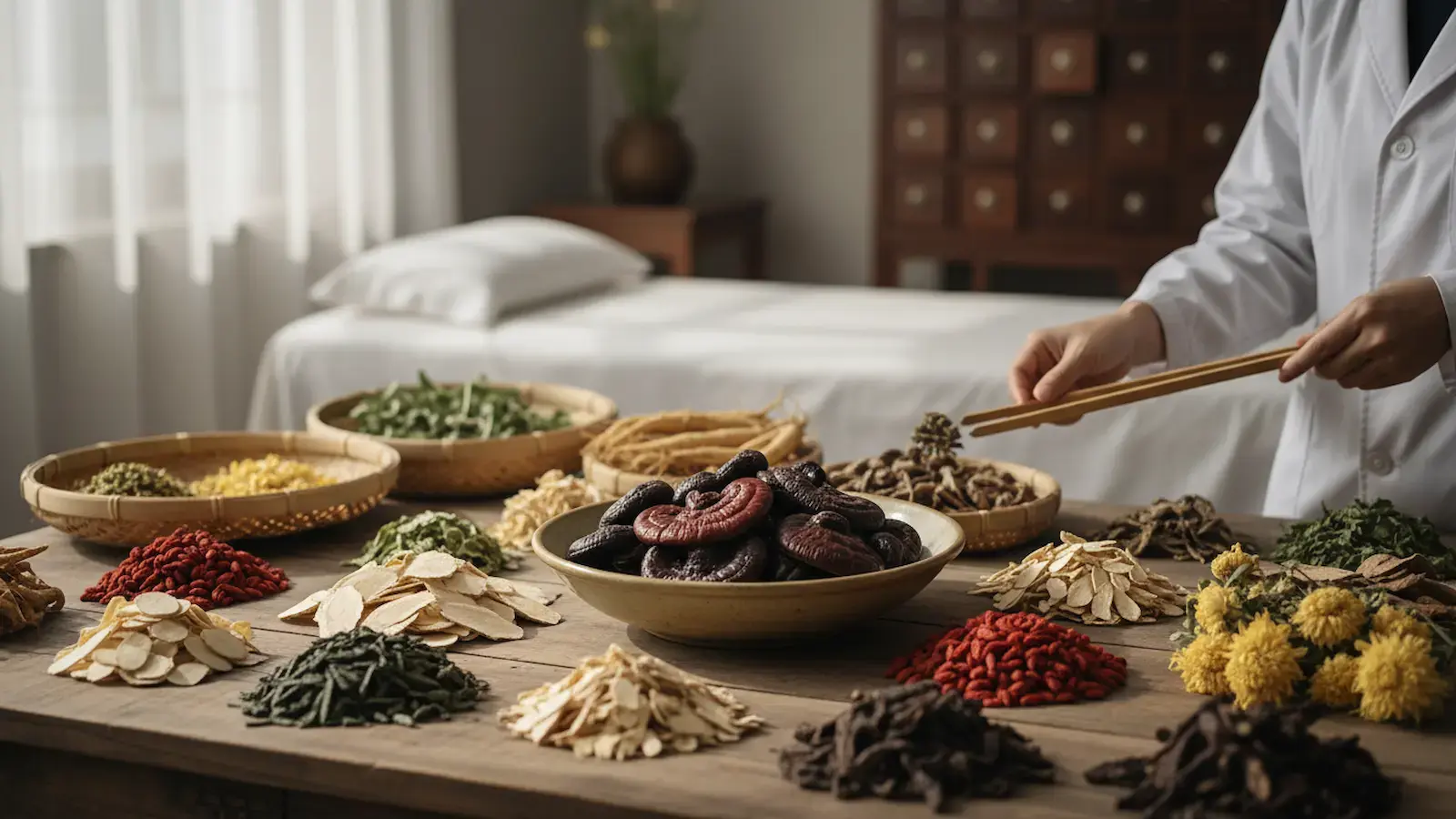
Quick answer: Traditional Chinese Medicine herbal teas are warm infusions made from herbs, roots, flowers and other natural ingredients, each chosen for its ability to support a specific pattern of imbalance, such as Qi and Blood stagnation. They are usually one part of a broader herbal formula rather than a stand-alone remedy, and they work best when matched to a person’s constitution through a proper Traditional Chinese Medicine diagnosis.
Traditional Chinese Medicine herbal teas are often the first thing people encounter when they begin exploring natural approaches to everyday discomfort. Long before acupuncture needles or cupping jars enter the picture, a warm cup of herbal tea has served as an accessible, low-risk way to support the body’s balance. In my own practice, I find that many new patients ask about teas before they ask about anything else, curious whether a simple infusion can ease the tension, fatigue or digestive upset they have been living with.
In this article
- What Are Traditional Chinese Medicine Herbal Teas?
- How Herbal Teas Fit Into a Treatment Plan
- Popular Uses People Ask About
- Safety and Quality Considerations
- Why a Personalized Formula Matters
- Getting Started
What Are Traditional Chinese Medicine Herbal Teas?
A Traditional Chinese Medicine herbal tea is a decoction or infusion made from one or more botanical ingredients, chosen for the specific effect they have on the body according to Chinese medicine theory. Some ingredients are considered warming, others cooling; some are thought to move Qi, while others nourish Blood or calm the mind. A tea can be as simple as a single dried flower steeped in hot water, or as complex as a blend of several herbs working together.
Common Ingredients
Chrysanthemum, goji berry, ginger, licorice root, hawthorn and dandelion are among the ingredients I am asked about most often. Chrysanthemum is traditionally used to support clear vision and a calm mind, goji berry to nourish Blood, ginger to warm the digestive system, and hawthorn to support healthy digestion after rich meals. Each of these has a long history of use, though their effects vary from person to person depending on the underlying pattern being addressed.
How Herbal Teas Fit Into a Treatment Plan
It is worth being clear-eyed about what a tea can and cannot do. A tea bought off a shelf is prepared for the general public, not for one particular person’s pattern. In a full course of treatment, herbal teas are typically one supportive piece alongside acupuncture, Tuina massage or other therapies, not a replacement for a complete formula tailored to the individual.
Qi and Blood Stagnation and Other Patterns
Two people with the same complaint, say, tension headaches, may be experiencing very different patterns underneath. One may show signs of Qi and Blood stagnation, while another may be dealing with an entirely different imbalance. The herbs that help one pattern may do little for the other, which is why matching the tea to the pattern matters more than matching it to the symptom alone.
Popular Uses People Ask About
Supporting Sleep and Stress
Teas containing ingredients such as jujube seed or lily bulb are traditionally associated with calming the mind and supporting restful sleep. People under ongoing stress often ask about these blends, and while they may offer gentle support, they work best as part of a wider approach that also looks at lifestyle, diet and overall pattern.
Supporting Digestion
Ginger, hawthorn and tangerine peel are frequently used in teas aimed at supporting digestion after heavy or irregular eating. These are generally considered gentle and food-based rather than medicinal in a strong sense, which is part of why they remain popular as everyday additions to a diet.
Supporting Menstrual Health
Some patients ask about teas for menstrual comfort, often involving ingredients like rose or mugwort. As with other concerns, the suitability of any given tea depends on the individual pattern, and a formula that suits one person’s cycle may not suit another’s.
Safety and Quality Considerations
Not all herbal teas are appropriate for everyone, and quality matters. Herbs should come from a reliable source, and anyone who is pregnant, nursing, managing a chronic condition or taking medication should speak with a qualified practitioner before adding new herbal teas to their routine. Herbal teas are a complementary tool, and they work alongside, not in place of, guidance from your doctor.
Why a Personalized Formula Matters
This is where working with a trained practitioner makes a real difference. At Traditional Healing Centre in Keswick, Ontario, every treatment plan starts from the patient’s own Traditional Chinese Medicine diagnosis, never an off-the-shelf protocol. Before recommending any herbal formula, I ask a lot of questions, look at the tongue and take the pulse, then work out the pattern behind the symptoms rather than simply reacting to them. This approach applies to Chinese Herbal Medicine as a whole, including the teas and decoctions that form part of a course of treatment, as well as to acupuncture, Chinese Cupping, Moxibustion, Tuina massage and Cosmetic Acupuncture. If you would like a formula built around your own pattern rather than a generic blend, you can book an appointment to begin with a full diagnosis.
Getting Started
If you have questions about whether an herbal tea or a fuller formula suits your situation, it is worth asking before you begin. You can get in touch to discuss your symptoms and find out what a proper diagnosis might reveal about the pattern behind them.
New Patients: If you are curious about Traditional Chinese Medicine herbal teas and how a tailored formula could support your health, visit Traditional Healing Centre to ask a question or book your first visit.
Herb and formula details: Bencao Index.