
Dry Needling vs Acupuncture: What's the Difference?
Quick answer: Dry needling and acupuncture both use thin, solid needles inserted into the body, but they come from different systems of medicine. Dry needling is a modern technique, often used by physiotherapists, to release tight muscle trigger points. Acupuncture is a component of Traditional Chinese Medicine, guided by a full diagnosis of a patient’s overall pattern of symptoms, not just a single sore muscle.
If you have been researching options for chronic pain, you have likely asked yourself what is the difference between dry needling and acupuncture. The two are often mentioned together because they share a visible similarity: both involve inserting fine needles into the skin and muscle. Beyond that, their training, their theory, and the way a practitioner decides where to place a needle diverge considerably.
In this article
- Where Dry Needling Comes From
- Where Acupuncture Comes From
- How the Two Techniques Compare
- Which Approach Might Suit You
- Why Diagnosis Matters at Traditional Healing Centre
- New Patients
Where Dry Needling Comes From
Dry needling developed out of Western physical medicine in the second half of the twentieth century. It is built on the idea of the “trigger point,” a tight band of muscle fiber that can refer pain to other parts of the body. A practitioner locates these bands by feel and inserts a needle directly into them, aiming for a local muscle twitch that is thought to help the tissue release.
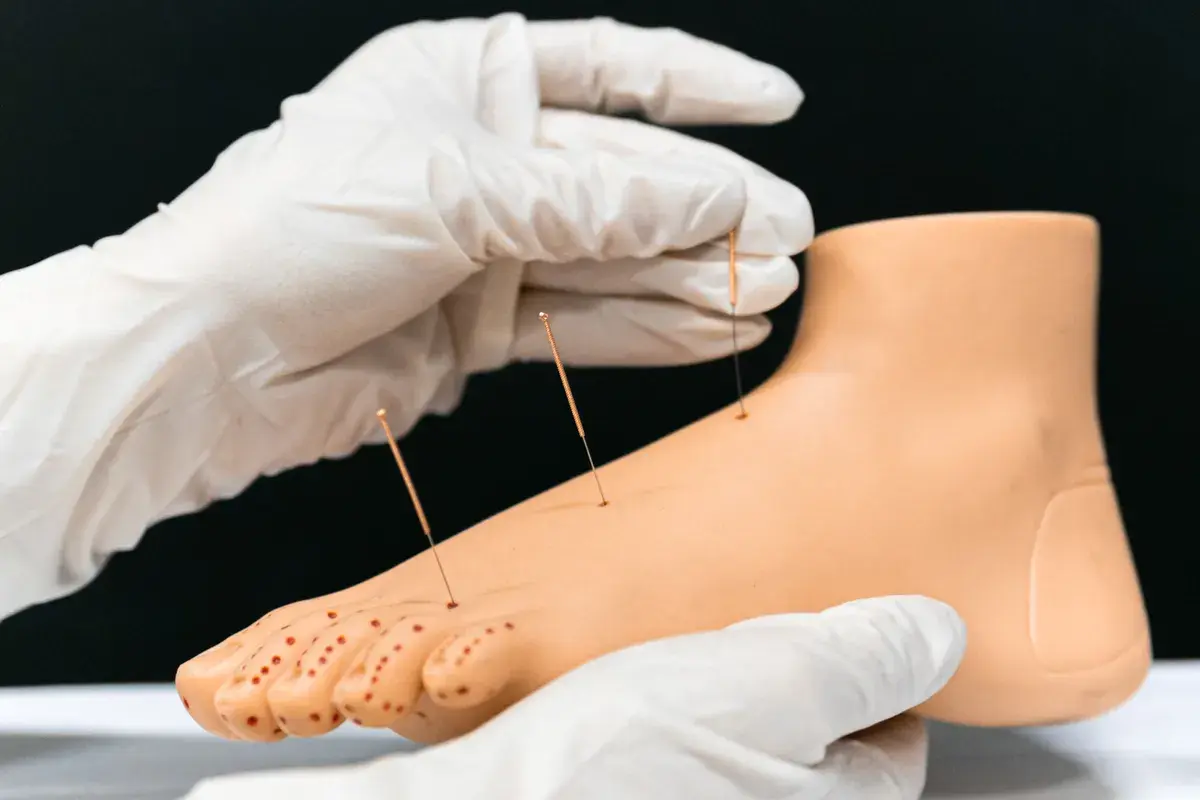
Photo by Maksim Goncharenok on Pexels
Dry needling is typically taught as a short add-on certification to practitioners who are already licensed in another field, such as physiotherapy or chiropractic. The focus stays narrow: one muscle, one trigger point, one mechanical goal.
Where Acupuncture Comes From
Acupuncture is thousands of years old and sits within the broader framework of Traditional Chinese Medicine. Rather than isolating a single muscle, I start every visit with a full diagnosis. I ask a lot of questions about a patient’s pain and their health in general, then look at the tongue and take the pulse. This is how I work out the pattern behind the symptoms, not just where it hurts.
A Treatment Plan Built on Diagnosis
That diagnostic step is what sets a Traditional Chinese Medicine approach apart from a purely mechanical one. Two people with the same sore lower back might receive different formulas and different point selections, because their underlying pattern, perhaps Qi and Blood stagnation in one case and something else in another, is not the same. The needle placement in acupuncture often extends well beyond the painful area itself, since points elsewhere on the body are selected to support the overall pattern. For a closer look at the range of concerns acupuncture is used for, see What Is Acupuncture Best For? A Practical Guide to Its Uses.
How the Two Techniques Compare
Training and Credentials
Licensed acupuncturists in Ontario complete several years of study covering Traditional Chinese Medicine theory, herbal medicine, point location, and supervised clinical practice before they are permitted to treat patients. Dry needling certifications are considerably shorter and are layered onto an existing license in a different profession, with the training centered on musculoskeletal anatomy rather than Traditional Chinese Medicine theory.
What a Session Looks Like
A dry needling session usually targets the specific muscle or region reported as painful. An acupuncture visit tends to be broader in scope. After the diagnosis, needles may be placed at distal points on the limbs as well as locally, and some practitioners incorporate techniques such as Chinese cupping, moxibustion, or Tuina massage alongside the needling itself. Some modern acupuncture sessions also add gentle electric stimulation to the needles; if you are curious how that works, I cover it in Acupuncture with Electric Stimulation: What to Know Before Your First Session.
Which Approach Might Suit You
For someone dealing with a single, clearly identified tight muscle, dry needling may be a reasonable option within a physiotherapy course of treatment. For patients managing chronic pain conditions such as back pain, sciatica, or knee pain, or for those with digestive, sleep, stress, or menstrual concerns, a full Traditional Chinese Medicine diagnosis offers a more complete picture of what is driving the symptoms, rather than addressing one muscle in isolation. Acupuncture has also found use outside pain management; patients interested in facial treatments can read more in Acupuncture Cosmetic Treatments: What to Know Before You Book.
Why Diagnosis Matters at Traditional Healing Centre
At Traditional Healing Centre in Keswick, Ontario, every treatment plan starts from the patient’s own Traditional Chinese Medicine diagnosis, never an off-the-shelf protocol. I offer acupuncture, Chinese herbal medicine, Chinese cupping, moxibustion, Tuina massage, and cosmetic acupuncture, and each formula and point selection is chosen to match the pattern I find during that initial assessment, not applied as a standard routine for every patient who walks in with a similar complaint.
New Patients
If you are weighing dry needling against acupuncture and would like to discuss which approach fits your symptoms, I invite you to book an appointment or get in touch with any questions before your first visit. You can also learn more about the clinic at Traditional Healing Centre.