
Acupuncture with Electric Stimulation: What to Know Before Your First Session
Quick answer: Acupuncture with electric stimulation, often called electroacupuncture, involves attaching a small device to traditional acupuncture needles to deliver a gentle pulsing current. The current amplifies the stimulation at each point, which many practitioners use for pain conditions, muscle tension, and nerve-related issues. It is still based on traditional acupuncture point selection, simply enhanced with controlled electrical pulses.
I find that patients often ask about this technique after hearing about it from a friend or reading about it online, usually wondering whether the “electric” part feels intense or is something to be nervous about. It isn’t as dramatic as it sounds, and understanding how it actually works can make the decision to try it much easier.
In this article
- What Is Acupuncture with Electric Stimulation?
- Conditions It May Help
- What to Expect During a Session
- Is It Right for You?
- Where Traditional Healing Centre Fits In
- New Patients: Book Your Visit
What Is Acupuncture with Electric Stimulation?
Electroacupuncture builds on the same principles as traditional acupuncture, which uses thin needles inserted at specific points along the body to help regulate the flow of Qi and address imbalances. With electroacupuncture, I attach small clips to two or more needles, connecting them to a device that sends a mild, controlled electrical pulse between them.
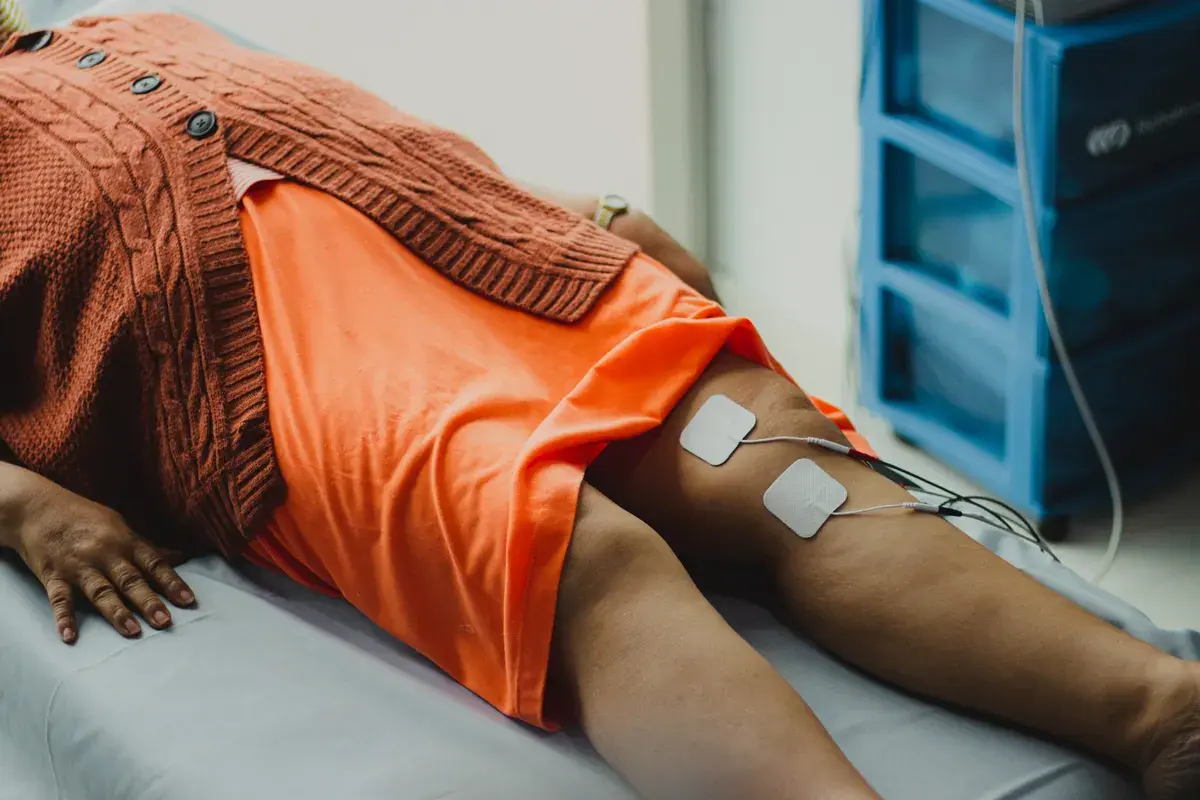
Photo by Juan Manuel Montejano Lopez on Pexels
The current doesn’t change the diagnostic approach. I still select points based on a patient’s individual presentation, pulse, tongue, and overall pattern of imbalance. The electrical stimulation is simply a tool that adds continuous, rhythmic stimulation to the points I’ve already chosen for that person.
The Role of the Electrical Current
The device allows me to adjust the frequency and intensity of the pulses depending on what I’m treating. Lower frequencies tend to be used for conditions involving deeper, more chronic pain, while higher frequencies are often chosen for acute discomfort or muscle spasm. This adjustability is part of what makes the technique useful across such a wide range of complaints.
Conditions It May Help
I most often recommend acupuncture with electric stimulation for:
- Chronic back pain and sciatica
- Knee pain and joint stiffness
- Tension headaches and migraines
- Muscle spasms or tightness
- Nerve-related discomfort
These are the same categories of concern that bring many people to acupuncture in the first place, so electroacupuncture is rarely a separate treatment path. It’s more often an enhancement I add to a plan once I understand how a patient is responding to needling alone.
What to Expect During a Session
A session looks much like standard acupuncture at the start. I cleanse the skin, insert the needles at the selected points, and only then attach the small electrode clips. The device is turned on gradually, and I ask the patient to tell me as soon as they notice any sensation.
Sensations You Might Feel
Most patients describe a light tapping, tingling, or gentle muscle twitch near the needle site. It should never feel painful or sharp. If at any point the sensation feels too strong, I lower the intensity immediately. Sessions involving the device typically last the same amount of time as a standard acupuncture appointment, with the current running for a portion of that treatment.
Is It Right for You?
Not every condition calls for electrical stimulation, and not every patient needs it to see results from acupuncture. I look at the full picture, the diagnosis, the duration and nature of the complaint, and how someone has responded to treatment so far, before deciding whether to add this technique to a plan. It’s one option among several, not a universal upgrade to traditional needling.
Where Traditional Healing Centre Fits In
At Traditional Healing Centre, every treatment plan starts from the patient’s own Traditional Chinese Medicine diagnosis rather than a generic protocol, which is exactly the kind of individualized decision-making that determines whether electrical stimulation makes sense for a given person. Alongside acupuncture, I also offer Chinese herbal medicine, Chinese cupping, moxibustion, Tuina massage, and cosmetic acupuncture, so a treatment plan can draw from several approaches depending on what someone’s diagnosis calls for.
New Patients: Book Your Visit
If you’re dealing with chronic pain, tension, or another concern and wondering whether acupuncture with electric stimulation might help, I’d be glad to walk you through it based on your own diagnosis. New patients can book an appointment or get in touch with questions first. Visit Traditional Healing Centre to get started.