
Acupuncture for Stress Relief: What a Session Feels Like
Quick answer: Acupuncture for stress relief works by addressing patterns such as Qi and Blood stagnation that Traditional Chinese Medicine associates with tension, poor sleep, and a racing mind. A visit begins with a full diagnosis—questions about your health, a look at your tongue, and a reading of your pulse—before fine needles are placed at points chosen to calm the nervous system and support balance. Most patients find a course of treatment, rather than a single visit, brings the most noticeable change.
Many of the people I see arrive carrying stress in their shoulders, their stomachs, or their sleep. Acupuncture for stress relief has become one of the most common reasons patients first book a visit with me, often alongside chronic pain or digestive complaints that stress tends to aggravate. Stress rarely stays in one place in the body, which is part of why a treatment approach that looks at the whole person, rather than a single symptom, tends to make sense to the people I treat.
In this article
- Understanding Stress Through a Traditional Chinese Medicine Lens
- What Happens During a Stress-Focused Acupuncture Visit
- What Research Suggests About Acupuncture and Stress
- Other Traditional Therapies That Support Relaxation
- Why a Personalized Treatment Plan Matters
- New Patients: Taking the First Step
- In this series
Understanding Stress Through a Traditional Chinese Medicine Lens
In Traditional Chinese Medicine, stress is not treated as a single, isolated problem. It is understood as a disruption to the smooth flow of Qi, the body’s vital energy, which in turn affects sleep, digestion, mood, and the muscles that tighten around the neck and jaw when tension builds. Rather than asking only what symptom a patient has, I ask a lot of questions about how that symptom fits into the broader picture of their health.

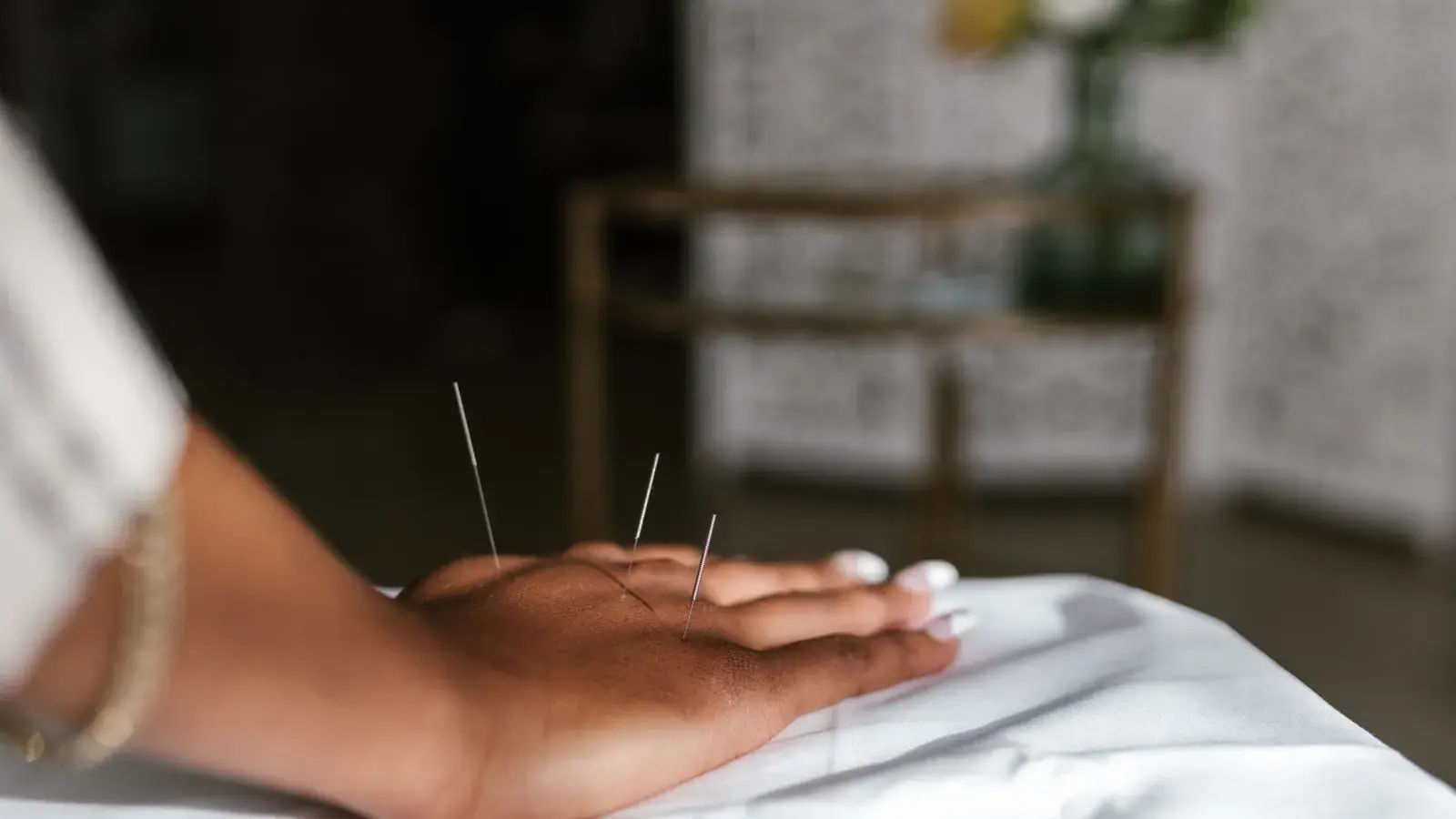
Photo by RDNE Stock project on Pexels
How Qi and Blood Stagnation Relate to Stress
Patients under prolonged stress often show signs of Qi and Blood stagnation: tight shoulders, headaches, irritability, or a feeling of pressure in the chest. This pattern, rather than “poor circulation” in the conventional sense, is what guides which acupuncture points and herbal formulas I choose. Two patients who both describe themselves as “stressed” may have quite different patterns, which is why the diagnosis matters as much as the treatment itself.
What Happens During a Stress-Focused Acupuncture Visit
A first visit always starts with a full diagnosis. I ask about sleep, appetite, menstrual cycles where relevant, energy levels throughout the day, and the specific situations that seem to trigger stress. I then look at the tongue and take the pulse, both of which give additional information about the underlying pattern.
The Diagnosis Comes First
This diagnostic process is what separates Traditional Chinese Medicine from a generic relaxation technique. The needles are placed based on the pattern identified, not a fixed set of “stress points” used for every patient. For readers who want a broader sense of the conditions acupuncture is commonly used for beyond stress, What Is Acupuncture Best For? A Practical Guide to Its Uses offers a helpful overview. Some patients also ask about acupuncture that incorporates gentle electric stimulation to enhance point stimulation; Acupuncture with Electric Stimulation: What to Know Before Your First Session explains what that involves for those curious about the option.
What Research Suggests About Acupuncture and Stress
A growing body of research has looked at acupuncture’s effect on the nervous system, including studies suggesting it may influence the body’s stress-response pathways and support a calmer physiological state during and after a visit. I am careful not to overstate what the evidence shows: acupuncture is not a substitute for addressing the underlying causes of chronic stress in one’s life, and it does not work identically for every patient. What the research does support is a reasonable basis for using acupuncture as one part of a broader approach to managing stress, alongside sleep, diet, and lifestyle factors.
Other Traditional Therapies That Support Relaxation
Acupuncture is often only one piece of a stress-focused course of treatment. Depending on the pattern I identify, I may also recommend Chinese herbal medicine, where a formula is tailored to the individual rather than drawn from a generic list, or Chinese cupping to help release tension held in the back and shoulders.
Tuina Massage and Moxibustion
Tuina massage, a hands-on technique distinct from conventional massage therapy, can help move stagnant Qi and ease the muscular tightness that often accompanies stress. Moxibustion, which uses gentle heat near specific points, is sometimes added for patients whose pattern suggests a need for warming and strengthening rather than only moving stagnation. These therapies are chosen based on the same diagnosis that guides the acupuncture plan, not added as an afterthought.
Why a Personalized Treatment Plan Matters
At Traditional Healing Centre in Keswick, every treatment plan starts from the patient’s own Traditional Chinese Medicine diagnosis, never an off-the-shelf protocol. I offer acupuncture, Chinese herbal medicine, Chinese cupping, moxibustion, Tuina massage, and cosmetic acupuncture, and I draw on whichever combination fits the pattern in front of me rather than applying the same formula to every patient who mentions stress. If you would like to begin with a full diagnosis, you can book an appointment directly, or reach out with questions first.
New Patients: Taking the First Step
If stress has been affecting your sleep, your digestion, or simply how you move through your day, a personalized course of treatment may be worth exploring. I welcome new patients and am happy to answer questions about what a first visit involves before you commit to anything. Get in touch or visit Traditional Healing Centre to learn more and take the first step toward a calmer, more balanced sense of well-being.
In this series
- Acupuncture for Stress Relief: What a Session Feels Like
- Acupuncture with Electric Stimulation: What to Know Before Your First Session