
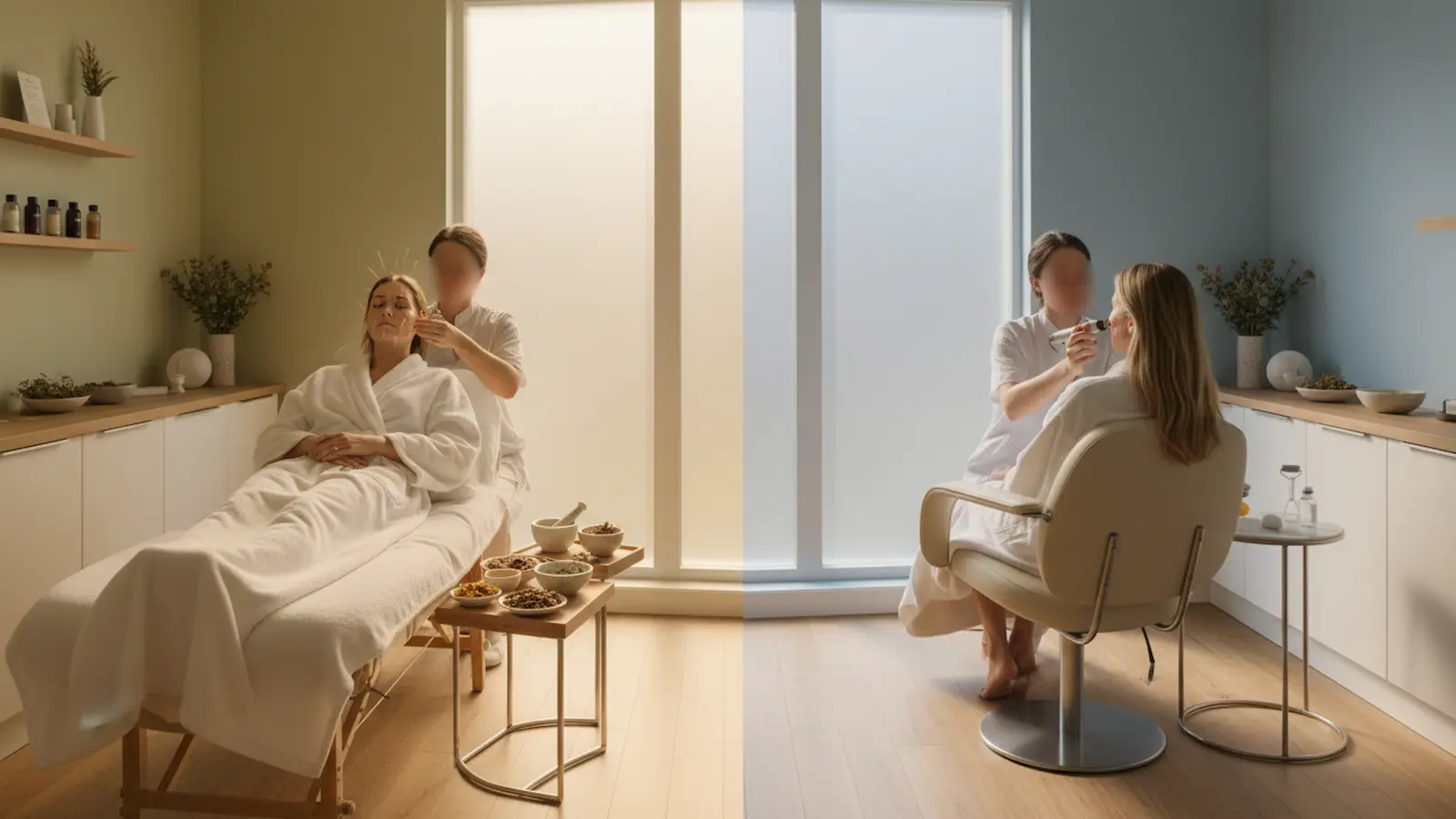
Quick answer: Cosmetic acupuncture uses fine acupuncture needles placed according to a Traditional Chinese Medicine pattern to support the skin and underlying tissue from within, while microneedling uses a rolling or stamping device to create controlled micro-injuries that stimulate collagen at the surface. Both aim to improve skin tone and texture, but they come from different traditions and are applied differently.
When people compare cosmetic acupuncture vs microneedling, they're usually trying to decide which approach fits their skin concerns, their comfort with needles, and how much downtime they can accept. Both treatments are built around the idea that controlled, minor trauma to the skin encourages the body to repair itself, but the philosophy, technique, and experience behind each one differ in ways worth understanding before you book a visit.
In this article
- What Cosmetic Acupuncture Involves
- What Microneedling Involves
- Key Differences Between the Two
- Which Might Suit You
- Where Traditional Healing Centre Fits In
- Making Your Decision
What Cosmetic Acupuncture Involves
Cosmetic acupuncture is a branch of Traditional Chinese Medicine that treats the face as part of the whole body, not as an isolated surface.
Facial Needling Technique
Very fine needles are inserted at specific points on the face, and often the body, chosen for their role in supporting circulation, Qi and Blood stagnation, and the health of the skin. The needles are typically left in place for a portion of the visit while the patient rests.
The TCM Diagnosis Behind It
Before any needles are placed, a practitioner asks about sleep, digestion, stress, and general health, then looks at the tongue and takes the pulse. This is how a pattern is identified, and it means the points chosen for one person's skin concerns may differ from another's, even if the visible signs look similar. If you'd like a deeper look at how this diagnostic approach shapes treatment, I've written about acupuncture cosmetic treatments and what to know before you book.
What Microneedling Involves
Microneedling comes from a different tradition and works mechanically rather than through a diagnostic framework.
How the Device Works
A handheld roller or pen-style device creates dozens of tiny punctures across the treated area in a single pass. These micro-injuries prompt the skin to produce collagen and elastin as part of its natural healing response.
Common Uses
Microneedling is often chosen for fine lines, acne scarring, and overall skin texture. Because the device treats the surface broadly rather than targeting specific points, sessions tend to be quicker and more standardized from one patient to the next.
Key Differences Between the Two
Treatment Philosophy
Cosmetic acupuncture is rooted in a whole-body pattern, addressing the face alongside sleep, stress, or digestive concerns that may be reflected in the skin. Microneedling is a localized, mechanical treatment aimed directly at the skin's surface and does not involve a broader diagnostic process.
Needle Depth and Technique
Acupuncture needles are solid and inserted at specific points, often left in place briefly. Microneedling devices use multiple short needles that puncture repeatedly across an area rather than resting at fixed points.
Recovery and Downtime
Microneedling can leave the skin visibly red for a day or two, since it deliberately creates many small wounds across the surface. Cosmetic acupuncture tends to involve less visible redness, though mild, short-lived marks at needle sites are possible.
Which Might Suit You
Signs Cosmetic Acupuncture May Fit
If your skin concerns seem tied to stress, poor sleep, or digestive issues, or if you're already interested in a Traditional Chinese Medicine approach to your health, cosmetic acupuncture addresses the face as part of that larger picture rather than as a standalone concern.
Signs Microneedling May Fit
If you're focused specifically on acne scarring or texture and prefer a more mechanical, surface-level approach without a broader health assessment, microneedling may be the more direct option.
It's also worth noting that neither treatment is the same as dry needling, which targets trigger points in muscle tissue rather than facial points or skin texture; I cover that distinction in Dry Needling vs Acupuncture: What's the Difference?
Where Traditional Healing Centre Fits In
At Traditional Healing Centre in Keswick, Ontario, I offer cosmetic acupuncture as part of a full Traditional Chinese Medicine assessment, not a standalone cosmetic add-on. I've trained in the Meizen facial protocol specifically for this work, and as with every course of treatment here, I start from your own pattern rather than an off-the-shelf protocol. Many patients plan on 5 to 10 treatments to judge how their skin and overall pattern are responding, and receipts are issued by a Registered Acupuncturist (R.Ac) and Registered Traditional Chinese Medicine Practitioner (R.TCMP), which many extended health plans accept even though OHIP does not cover these services. If you're curious how this compares to other acupuncture styles, I've also written about Five Element vs TCM Acupuncture.
Making Your Decision
Both cosmetic acupuncture and microneedling have a place in skin care, and the right choice often comes down to whether you want a treatment tied to your broader health pattern or one focused narrowly on the skin's surface. Neither replaces your doctor's treatment or medication, and results vary from person to person.
If you'd like to talk through which approach fits your skin and health concerns, book an appointment with Traditional Healing Centre, or get in touch with any questions first.