
Fire Cupping: What It Is, Does It Hurt, and the Marks It Leaves
Quick answer: Cupping fire therapy is a Traditional Chinese Medicine technique in which a brief flame is used to remove oxygen from inside a glass cup, creating suction when the cup is placed on the skin. That suction draws the skin and superficial tissue upward, which practitioners use to address Qi and Blood stagnation and muscle tension. A trained practitioner controls the flame and cup placement so the heat never touches the skin directly.
Many people hear “fire” and picture something risky, but the flame’s only job is to create suction inside the cup before it ever touches you. Once the cup is placed, the fire is gone, and what remains is a steady pulling sensation that most patients describe as a deep, firm pressure rather than discomfort. Understanding how this process works, what it is meant to accomplish, and what a visit involves can help you decide whether it fits into your approach to chronic pain or general wellness.
In this article
- What Is Cupping Fire Therapy?
- How a Cupping Fire Therapy Session Works
- What Cupping Fire Therapy May Help With
- Fire Cupping vs. Other Cupping Methods
- Is Cupping Fire Therapy Safe?
- Finding Tailored Care at Traditional Healing Centre
- New Patients: Start Your Visit
What Is Cupping Fire Therapy?
Cupping fire therapy is one of several cupping methods used in Traditional Chinese Medicine, distinguished by how the suction itself is created. Instead of a mechanical pump, a practitioner briefly ignites a flame inside a glass cup, then quickly places the cup against the skin. As the air inside cools, it contracts, pulling the skin and underlying tissue up into the cup.
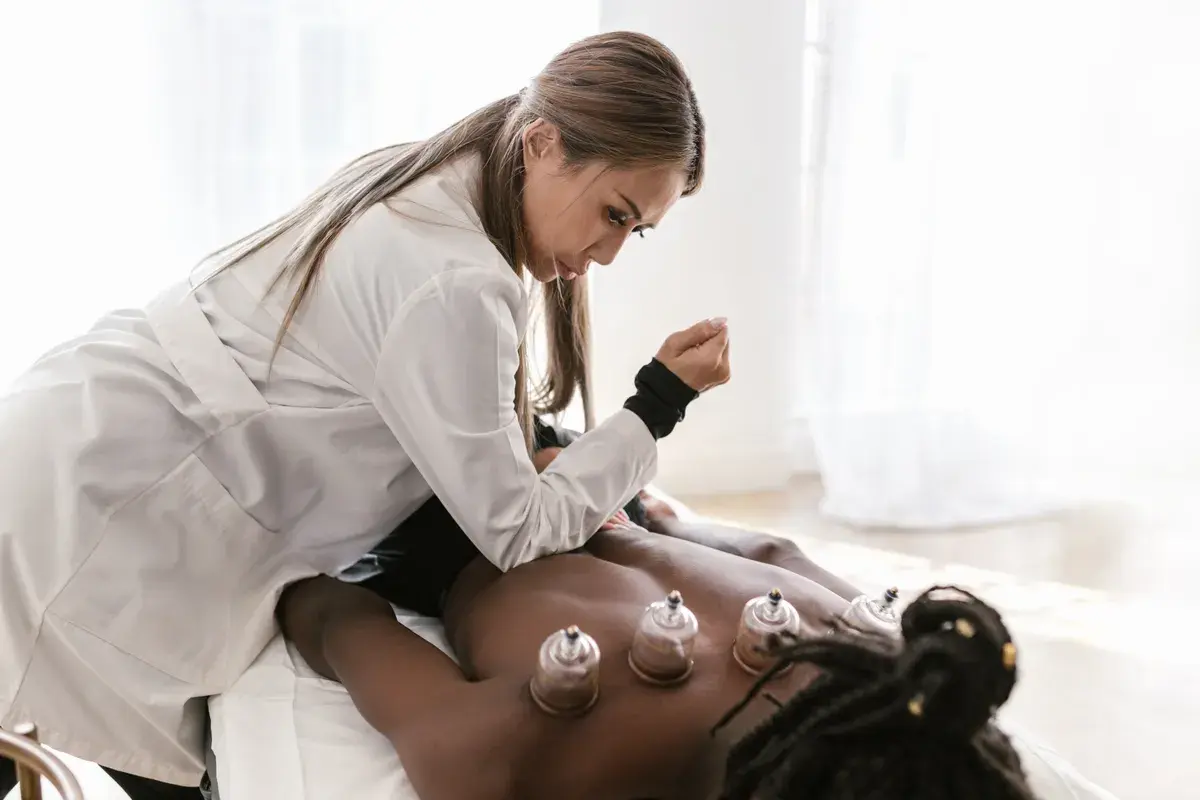
Photo by RDNE Stock project on Pexels
The Traditional Chinese Medicine Principle Behind It
In Traditional Chinese Medicine, pain and tension are often understood as signs of Qi and Blood stagnation along the body’s channels. Cupping is thought to help move that stagnation by lifting tissue and encouraging local circulation. Where the cups are placed, and for how long, depends on the pattern a practitioner identifies during your visit, not a one-size-fits-all routine.
How a Cupping Fire Therapy Session Works
A typical session is brief and methodical, with each step designed to keep the process controlled and comfortable.
Preparing the Skin and Cups
Before any cups are placed, the practitioner examines the area of concern and may apply a thin layer of oil to help the cups glide if gliding cupping is part of the plan. The glass cups themselves are inspected for cracks or chips, since smooth, intact glass is essential for a safe seal against the skin.
Applying the Flame and Placing the Cups
A flame, usually on a cotton ball soaked in alcohol, is briefly passed inside the cup and then withdrawn before the cup is pressed onto the skin. The flame never touches the body. Once in place, the cups may be left stationary for several minutes or moved slowly across the area, depending on what the practitioner’s assessment calls for.
What Cupping Fire Therapy May Help With
Chronic Pain and Muscle Tension
People with chronic back pain, sciatica, or tight shoulder and neck muscles sometimes turn to cupping as part of a broader course of treatment that may also include acupuncture or Tuina massage. The suction can create a sensation of release in tissue that has felt tight or restricted for a long time.
Qi and Blood Stagnation
Beyond musculoskeletal complaints, cupping is often used alongside other therapies to address the broader pattern of Qi and Blood stagnation that a practitioner identifies, rather than treating an isolated symptom on its own.
Fire Cupping vs. Other Cupping Methods
Suction-Based Alternatives
Some clinics use cups with a hand pump or squeeze-bulb mechanism to create suction instead of a flame. Both approaches aim to produce the same lifting effect on the skin, and the choice often comes down to a practitioner’s training and the specific area being treated. Neither method is inherently superior; what matters most is that it fits the pattern identified in your diagnosis. For a closer look at how these methods compare and who they tend to help, see Cupping Therapy: How It Works and Who It Helps.
Is Cupping Fire Therapy Safe?
When performed by a trained practitioner, cupping fire therapy is generally well tolerated. The most common after-effect is temporary, painless circular marks where the cups were placed, which typically fade within a week or two.
What to Expect Afterward
Mild soreness, similar to what you might feel after a deep tissue massage, is common for a day or so. Staying warm and hydrated afterward is generally recommended, and most people resume normal activity right away.
Finding Tailored Care at Traditional Healing Centre
At Traditional Healing Centre in Keswick, Ontario, every treatment plan starts from your own Traditional Chinese Medicine diagnosis, never an off-the-shelf protocol. I ask detailed questions about your health, examine your tongue, and take your pulse before deciding whether Chinese Cupping, Acupuncture, Moxibustion, Tuina Massage, or Chinese Herbal Medicine fits your pattern. This means the cupping you receive here is chosen because it matches what your diagnosis shows, not applied as a generic routine.
New Patients: Start Your Visit
If you are curious whether cupping fire therapy or another Traditional Chinese Medicine approach suits your health concerns, I invite you to book an appointment or get in touch with any questions before your first visit. Learn more at Traditional Healing Centre.