
Cupping Therapy: How It Works and Who It Helps
Quick answer: Cupping therapy uses suction cups placed on the skin to draw blood flow to the surface, loosening tight muscles and reducing inflammation. It’s commonly used alongside acupuncture to relieve chronic pain, stiffness, and tension. Most sessions last 10 to 20 minutes and leave temporary circular marks that fade within a week or two.
I’ve watched cupping therapy move from a niche treatment into something patients actively request after seeing the distinctive circular marks on athletes and public figures. As a practitioner who has used this technique for years, I find that its growing visibility has made people more curious about what it actually does and whether it could help them.
In this article
- What Is Cupping Therapy?
- Types of Cupping Therapy
- Conditions Cupping Therapy May Help
- What to Expect During a Session
- Choosing a Cupping Therapy Provider
- Is Cupping Therapy Right for You?
What Is Cupping Therapy?
Cupping is a form of Traditional Chinese Medicine that applies localized suction to the skin using glass, silicone, or bamboo cups. The suction pulls the skin and superficial muscle layer upward, which increases local blood flow and can release tightness that has built up in the tissue over time.
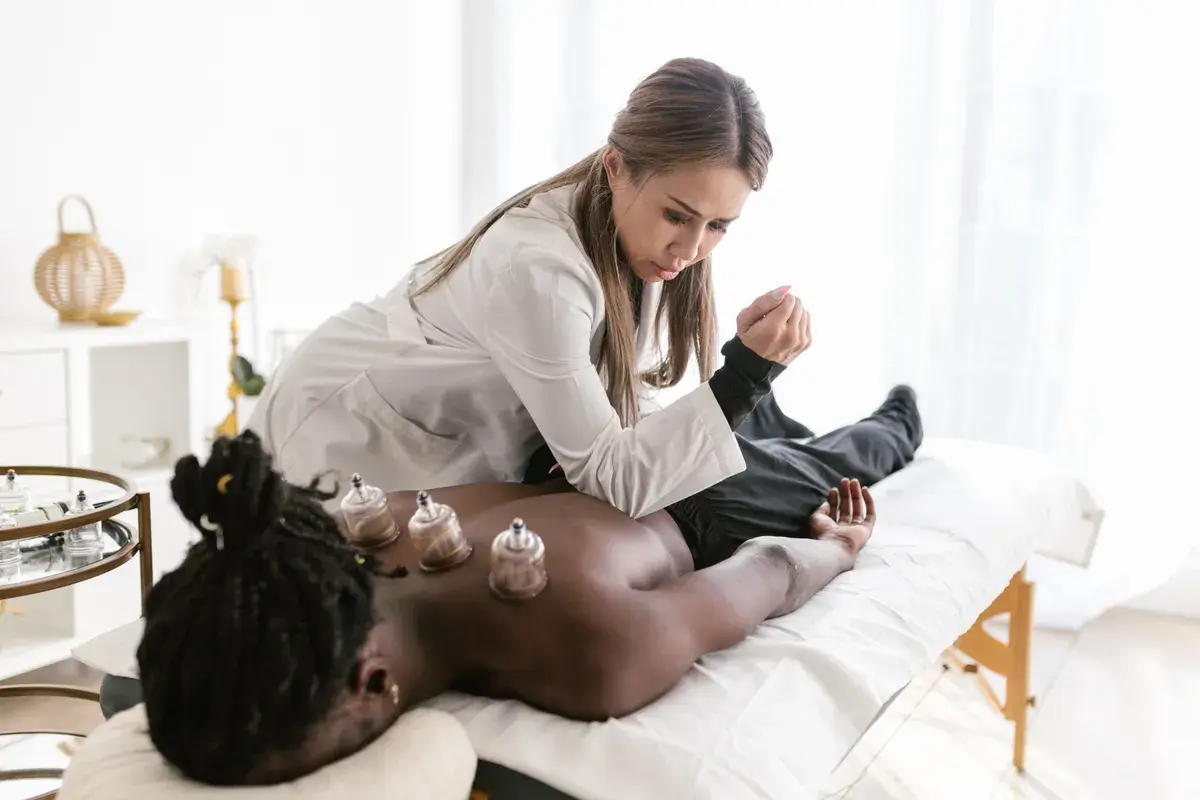
Photo by RDNE Stock project on Pexels
A Brief History
Cupping dates back thousands of years within Chinese medical practice, though similar suction-based therapies have appeared independently in Middle Eastern and European folk medicine. Within the Traditional Chinese Medicine framework, cupping is understood as a way to move stagnant Qi and blood, which practitioners associate with pain, stiffness, and poor circulation.
How the Suction Works
A practitioner creates suction either by using a small pump attached to a plastic cup or by briefly heating the air inside a glass cup before placing it on the skin. The vacuum effect draws the skin and underlying tissue into the cup, which is left in place for several minutes or moved slowly across the area in a technique called sliding cupping.
Types of Cupping Therapy
Not all cupping sessions look the same, and the method chosen often depends on the condition being treated.
Dry Cupping
Dry cupping is the most common form. Cups are placed on the skin without any incision, and suction alone creates the therapeutic effect. This is typically what people picture when they think of cupping therapy.
Wet Cupping
Wet cupping involves a small, superficial skin incision before the cup is applied, allowing a small amount of blood to be drawn out along with the suction. This variation is less common in North American clinics and is used selectively.
Fire Cupping
Fire cupping uses a brief flame to remove oxygen from inside a glass cup before it’s placed on the skin, creating the vacuum through heat rather than a mechanical pump. Many practitioners favor this traditional method for the depth of suction it produces.
Conditions Cupping Therapy May Help
Chronic Pain and Muscle Tension
People dealing with back pain, sciatica, knee pain, or tension headaches often turn to cupping because it targets the muscular and fascial restrictions that contribute to ongoing discomfort. When paired with acupuncture, cupping can address both the deeper energetic patterns and the surface-level tightness that patients feel day to day.
Stress and Circulation
Beyond pain, I’ve found that cupping can support relaxation by improving local circulation and easing the kind of chronic muscular tension that builds up from stress. Patients managing sleep difficulties or general tension sometimes notice a sense of release after a session, even when the cups were placed over the back or shoulders rather than a specific pain site.
What to Expect During a Session
Before Your Appointment
Most cupping sessions begin with a conversation about your health history and current symptoms, since a Traditional Chinese Medicine diagnosis guides where the cups are placed and how long they stay on. This is also when I’ll ask about any skin sensitivity or recent injuries that might change the approach.
During and After Treatment
During the session, you may feel a tight, pulling sensation as the cups create suction, though it shouldn’t be painful. Afterward, it’s common to see circular discoloration where the cups were placed; this typically fades within a few days to two weeks and is a normal response to the increased blood flow, not a sign of injury.
Choosing a Cupping Therapy Provider
If you’re considering cupping therapy, the provider’s approach matters as much as the technique itself. At Traditional Healing Centre, every treatment plan starts from your own Traditional Chinese Medicine diagnosis rather than a one-size-fits-all protocol, which means cupping is used where it genuinely fits your pattern of symptoms, alongside options like acupuncture, Chinese herbal medicine, moxibustion, or Tuina massage when appropriate. Other clinics may offer cupping as a standalone wellness add-on without that diagnostic foundation, which is worth asking about before you book.
Is Cupping Therapy Right for You?
Cupping therapy tends to work best as part of a broader treatment plan rather than a one-time fix, particularly for chronic pain, tension, or stress-related concerns. If you’re unsure whether it fits your situation, a conversation with a qualified practitioner can clarify what to expect and how it might complement other treatments you’re already using.
New Patients: if you’re curious whether cupping therapy could help with your pain, tension, or stress, I invite you to book an appointment or get in touch with your questions. You can also learn more at Traditional Healing Centre.