
How to Ease Period Pain at Home, and When to Get Help

Quick answer: Traditional Chinese Medicine eases period pains by addressing Qi and Blood stagnation through acupuncture, tailored herbal formulas, and warming therapies such as moxibustion. Gentle self-care, including warmth on the lower abdomen and light movement, can also reduce discomfort between visits.
Many women search for how ease period pains because over-the-counter options do not always bring the relief they hope for, or they prefer an approach that looks at the root pattern rather than just the symptom. Traditional Chinese Medicine has addressed menstrual discomfort for centuries, and its principles remain just as relevant today for anyone looking for a calmer, more balanced monthly cycle.
In this article
- Understanding Period Pain Through a Traditional Chinese Medicine Lens
- Acupuncture for Menstrual Comfort
- Chinese Herbal Medicine and Other Supportive Therapies
- Where Traditional Healing Centre Fits In
- When to Seek Professional Guidance
- New Patients, Start Here
Understanding Period Pain Through a Traditional Chinese Medicine Lens
In Traditional Chinese Medicine, period pain is most often linked to Qi and Blood stagnation. When Qi and Blood do not flow smoothly through the uterus, the result is often cramping, heaviness, or a dull ache that can appear before or during menstruation. Cold accumulating in the lower abdomen, emotional stress, or an underlying deficiency pattern can all contribute to this stagnation.
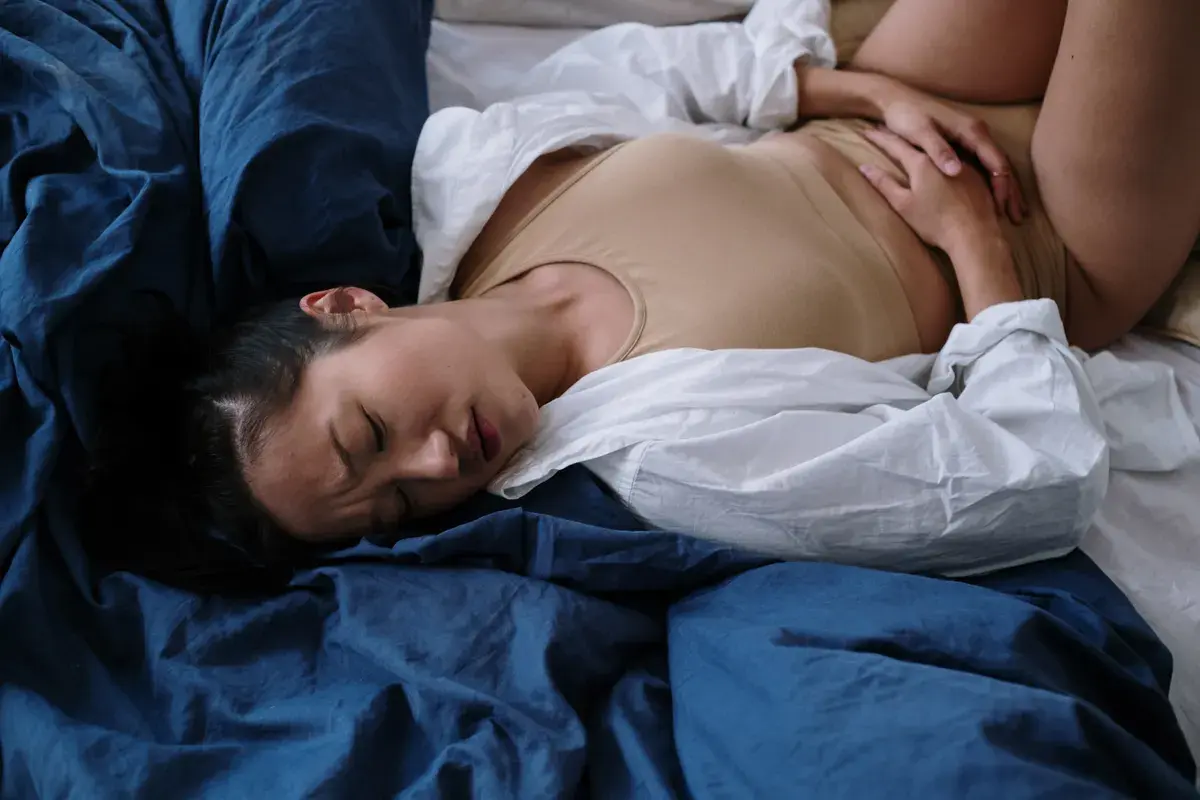
Photo by cottonbro studio on Pexels
Why the Pattern Matters
No two people experience period pain in exactly the same way. Some notice sharp, stabbing cramps that ease with warmth, while others feel a dragging heaviness accompanied by fatigue. These differences point to different underlying patterns, which is why a single generic approach rarely offers lasting comfort. A proper diagnosis, built from careful questioning, a look at the tongue, and a reading of the pulse, helps determine whether the priority is moving stagnant Qi, warming the uterus, or nourishing Blood.
Acupuncture for Menstrual Comfort
Acupuncture is one of the most studied Traditional Chinese Medicine therapies for menstrual discomfort. By placing fine needles at specific points, a practitioner aims to encourage smoother movement of Qi and Blood, which may help reduce the intensity of cramping over a course of treatment. Many patients schedule visits in the days leading up to their period, since addressing stagnation before symptoms peak is often part of the strategy.
What a Visit Typically Involves
A first visit usually begins with a detailed conversation about the menstrual cycle, including pain patterns, flow, and any accompanying symptoms such as sleep disturbance or digestive changes. This is followed by tongue and pulse assessment, then a treatment tailored to the pattern identified that day. Follow-up visits may be adjusted as the cycle progresses, since patterns can shift from one phase to another.
Chinese Herbal Medicine and Other Supportive Therapies
Herbal formulas are often combined with acupuncture to support the body between visits. A formula chosen for Blood stagnation differs from one chosen for Qi deficiency, which is why self-prescribing from general advice online is rarely as effective as a formula matched to an individual pattern. Moxibustion, the gentle warming of acupuncture points with dried mugwort, is frequently used alongside herbs when cold is believed to be contributing to cramping. Tuina massage, a hands-on bodywork technique, can also be applied to the abdomen or lower back to encourage circulation and ease tension.
Simple Self-Care Between Visits
Alongside professional care, a few habits can support comfort at home. Applying a warm compress to the lower abdomen, avoiding cold or raw foods in the days before a period, staying gently active with walking or stretching, and managing stress through rest or breathing exercises are all practices consistent with Traditional Chinese Medicine theory. These habits do not replace a formal treatment plan, but they can complement it.
Where Traditional Healing Centre Fits In
For readers in Keswick, Ontario looking for a personalized approach, Traditional Healing Centre offers acupuncture, Chinese herbal medicine, Chinese cupping, moxibustion, and Tuina massage, all forms of care that can be part of a plan to ease period pains. What sets this clinic apart is that every treatment plan starts from the patient’s own Traditional Chinese Medicine diagnosis, never an off-the-shelf protocol, meaning the approach to menstrual discomfort is built around the individual’s pattern rather than a standard routine applied to everyone.
When to Seek Professional Guidance
While mild cramping is common, pain that is severe, worsening, or accompanied by unusual symptoms deserves attention from a qualified practitioner. A thorough diagnosis helps rule out the need for other forms of care and ensures that any treatment plan, whether acupuncture, herbal formulas, or a combination, is suited to the individual rather than a generic complaint of “period pain.”
New Patients, Start Here
If period pain has become a monthly concern, I invite new patients to book an appointment or get in touch with questions about how a personalized Traditional Chinese Medicine plan might help. Learn more at Traditional Healing Centre.