
Acupuncture Points on Wrist: What They Do and Why They Matter
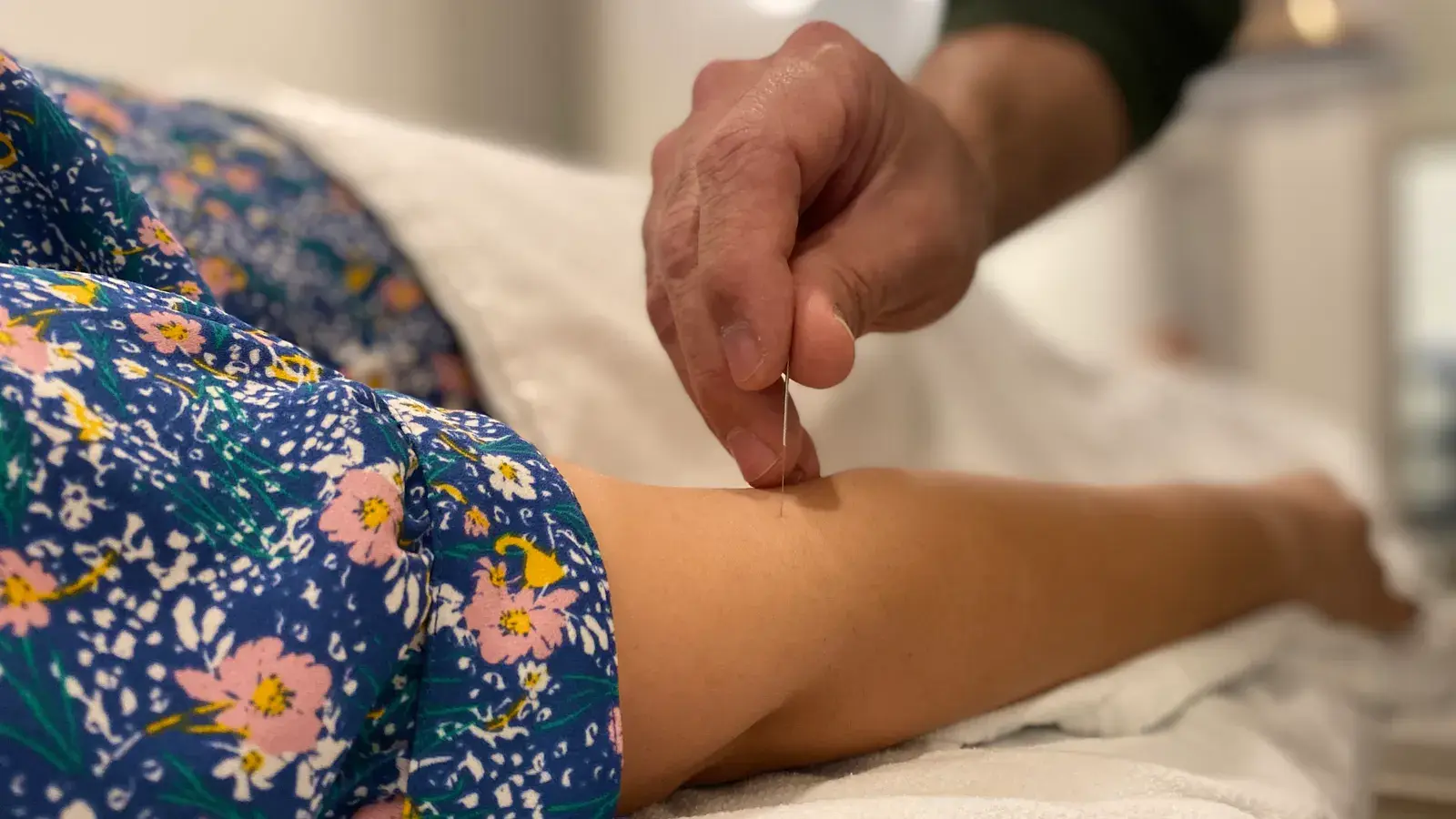
Quick answer: The wrist holds several acupuncture points that Traditional Chinese Medicine practitioners use regularly, including Pericardium 6 (Neiguan), Heart 7 (Shenmen), Lung 7 (Lieque), and Large Intestine 5 (Yangxi). These points are chosen based on a patient’s individual pattern, often to address stress, sleep difficulties, digestive discomfort, or wrist and forearm pain itself.
Acupuncture points on wrist are among the most frequently used in a treatment plan, partly because the wrist is easy to access and partly because several important meridians pass directly through it. I rely on these points often, though which ones I select depends entirely on what a patient’s tongue, pulse, and symptoms tell me during their visit.
In this article
- Why the Wrist Matters in Traditional Chinese Medicine
- The Main Acupuncture Points on Wrist
- What These Points Are Used For
- What a Visit Involves
- Why Choose a Registered Practitioner
- How Traditional Healing Centre Approaches Wrist Points
Why the Wrist Matters in Traditional Chinese Medicine
The wrist sits at a crossroads of several meridians, including the Heart, Pericardium, Lung, and Large Intestine channels. Because these pathways run close to the surface here, the wrist offers a convenient place to influence the flow of Qi and Blood without needing deeper needling. This is one reason wrist points show up so often alongside points elsewhere in the body, such as ST36 below the knee.

Photo by RDNE Stock project on Pexels
The Main Acupuncture Points on Wrist
Pericardium 6 (Neiguan)
Located roughly three finger-widths above the wrist crease, between the two tendons on the inner forearm, PC6 is one of the most commonly used points for calming the mind and settling the stomach. It’s frequently paired with points used for nausea and for emotional tension.
Heart 7 (Shenmen)
Found at the wrist crease on the pinky-finger side, HT7 is closely associated with the Heart’s role in housing the mind, according to Traditional Chinese Medicine theory. I often include it when a patient describes restlessness, anxiety, or difficulty settling at night.
Lung 7 (Lieque)
Sitting just above the wrist on the thumb side, LU7 connects to the Lung meridian and is traditionally used to support the body’s defensive Qi, along with respiratory symptoms.
Large Intestine 5 (Yangxi)
Located in the anatomical “snuffbox” at the base of the thumb, LI5 is used for wrist pain and stiffness directly, as well as for broader Large Intestine channel concerns.
What These Points Are Used For
Stress, Sleep and Emotional Balance
PC6 and HT7 are both associated with calming the mind in Traditional Chinese Medicine, which is why they often appear in formulas designed to address stress or disrupted sleep. For a broader look at how point selection changes for sleep concerns specifically, see Acupuncture Points for Better Sleep.
Digestive and Respiratory Support
PC6’s connection to the stomach makes it a frequent choice for digestive discomfort, while LU7 supports the Lung’s role in respiratory health. Neither point works in isolation; they’re selected as part of a pattern that considers the whole picture of a patient’s health, not a single symptom.
What a Visit Involves
Every treatment plan I build starts from the patient’s own diagnosis, not a predetermined protocol. That means I ask a lot of questions, look at the tongue, and take the pulse before I decide which acupuncture points on wrist, or elsewhere, make sense for that individual. For a general overview of what happens during and after needling, I’ve written about what acupuncture actually does to the body.
Most patients should plan on five to ten treatments before judging progress, since Traditional Chinese Medicine works gradually to address the underlying pattern behind a symptom, not just the symptom itself.
Why Choose a Registered Practitioner
Receipts for acupuncture should come from a Registered Acupuncturist (R.Ac) and Registered Traditional Chinese Medicine Practitioner (R.TCMP), which matters both for your records and because many extended health plans cover these services, even though OHIP does not. Choosing a practitioner registered with the College of Traditional Chinese Medicine Practitioners and Acupuncturists of Ontario (CTCMPAO) gives you a measure of accountability and training behind the treatment you receive.
How Traditional Healing Centre Approaches Wrist Points
At Traditional Healing Centre, every treatment plan starts from your own Traditional Chinese Medicine diagnosis, never an off-the-shelf protocol. Jason Tarter, R.TCMP, R.Ac, has practiced for 18 years, combining acupuncture with custom herbal formulas he writes and fills himself through the clinic’s own dispensary. Whether wrist points are the right fit for your symptoms is something we work out together, starting with a full assessment of your tongue, pulse, and health history.
If you’re curious whether treatment involving acupuncture points on wrist could help with what you’re experiencing, book an appointment with Traditional Healing Centre to get started.