
Chinese Medicine Liver Diet: Foods That Support Liver Qi
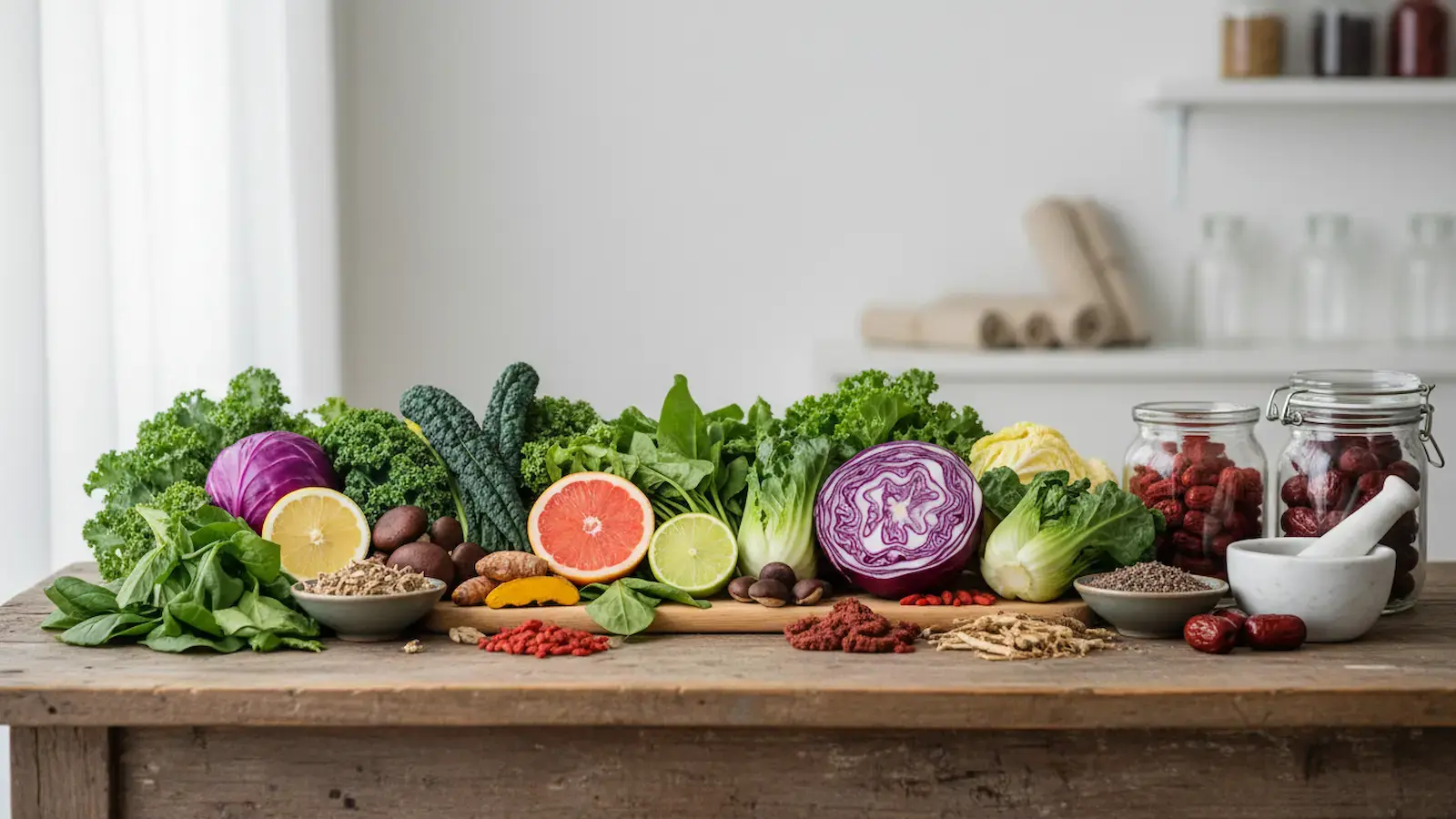
Quick answer: A chinese medicine liver diet emphasizes foods that keep Liver Qi moving freely—leafy greens, sour flavors, and lightly cooked vegetables—while limiting heavy, greasy, or very cold foods that can slow digestion and contribute to Qi and Blood stagnation. It is typically paired with an individualized Traditional Chinese Medicine diagnosis rather than followed as a fixed meal plan.
In Traditional Chinese Medicine, the Liver organ system does far more than process what you eat. It is responsible for the smooth flow of Qi throughout the body, and it stores Blood, releasing it as needed during activity and reabsorbing it during rest. When Liver Qi moves freely, digestion runs smoothly, moods stay even, and sleep comes easily. When it does not, a person may notice irritability, bloating, tight shoulders, headaches, or an irregular menstrual cycle. Diet is one of several tools that can support this system, alongside acupuncture and Chinese herbal medicine.
In this article
- Understanding the Liver in Chinese Medicine
- What a Chinese Medicine Liver Diet Looks Like
- Pairing Diet with Treatment
- When to Seek Guidance
Understanding the Liver in Chinese Medicine
Before changing what is on your plate, it helps to understand what the Liver organ system is doing in TCM theory. This is not the same as the Western anatomical liver, though the two overlap in some functions.
The Liver’s Role in Qi Flow
The Liver is often described as the organ that “likes to move freely.” It governs the smooth circulation of Qi, which in turn affects the spleen and stomach’s ability to digest food properly. When Liver Qi becomes constrained, the result is often what practitioners call Qi and Blood stagnation, rather than poor circulation in a general sense. This pattern can show up as digestive discomfort, tension headaches, or premenstrual irritability. Diet choices either support this free flow or add to the obstruction.
What a Chinese Medicine Liver Diet Looks Like
A dietary approach built around Liver health tends to favor fresh, lightly prepared foods and avoid anything that sits heavy in the stomach.
Foods That Support Liver Qi
Leafy greens such as bok choy and spinach, along with lightly steamed or stir-fried vegetables, are generally considered supportive because they are easy to digest and add freshness without excess heaviness. Mildly sour foods, including lemon and vinegar in small amounts, are traditionally thought to have an affinity for the Liver and may help it do its job of keeping Qi moving. Whole grains and modest portions of lean protein round out a diet that does not overburden digestion. For readers interested in how specific herbs support Blood as well as Qi, the article on Blood-Building Herbs in Chinese Medicine covers this in more depth.
Foods to Limit
Greasy, fried, and very rich foods are generally discouraged because they can slow digestion and contribute to a feeling of heaviness or stagnation. Excessive alcohol is also viewed as taxing to the Liver system. Temperature matters too—very cold foods and iced drinks are thought to constrict digestive function, while foods that are too warming can generate heat signs such as irritability or a red tongue tip. The balance between warming and cooling foods is individual, which is why the guide to Warming and Cooling Herbs in Chinese Medicine is worth reading if you want to understand how this principle extends beyond the kitchen.
Pairing Diet with Treatment
Diet alone rarely resolves a Liver Qi pattern on its own. It works best alongside acupuncture and herbal formulas tailored to the individual.
How Acupuncture and Herbs Complement Diet
Acupuncture points along the Liver and Gallbladder channels are commonly used to help restore smooth Qi flow, while a custom herbal formula can be written to match the specific pattern a person presents with—something food choices alone cannot replicate. Readers curious about how herbs are used specifically for Liver support can find more detail in Chinese Herbs for Liver Cleanse: A TCM Perspective.
When to Seek Guidance
Reading about Liver Qi and diet is a reasonable starting point, but every pattern looks a little different from one person to the next.
Why Traditional Healing Centre Starts with Your Pattern
At Traditional Healing Centre in Keswick, Ontario, every treatment plan starts from your own Traditional Chinese Medicine diagnosis, never an off-the-shelf protocol. I ask a lot of questions about your health history, look at your tongue, and take your pulse before suggesting any dietary changes, acupuncture, or a custom herbal formula. I have been in practice for 18 years as a Registered Acupuncturist and Registered Traditional Chinese Medicine Practitioner with the CTCMPAO, and I run the herbal dispensary that fills the formulas I prescribe. Most people plan on five to ten treatments before judging progress, and receipts are issued under my registration so they can be submitted to extended health plans that cover acupuncture and Chinese medicine, even though OHIP does not.
If you are dealing with digestive discomfort, tension, or a pattern that food changes alone have not resolved, a proper diagnosis can clarify what is actually happening and which combination of diet, acupuncture, and herbal formula fits your situation. Book an appointment with Traditional Healing Centre to get started, or get in touch with any questions first.