
Blood-Building Herbs in Chinese Medicine
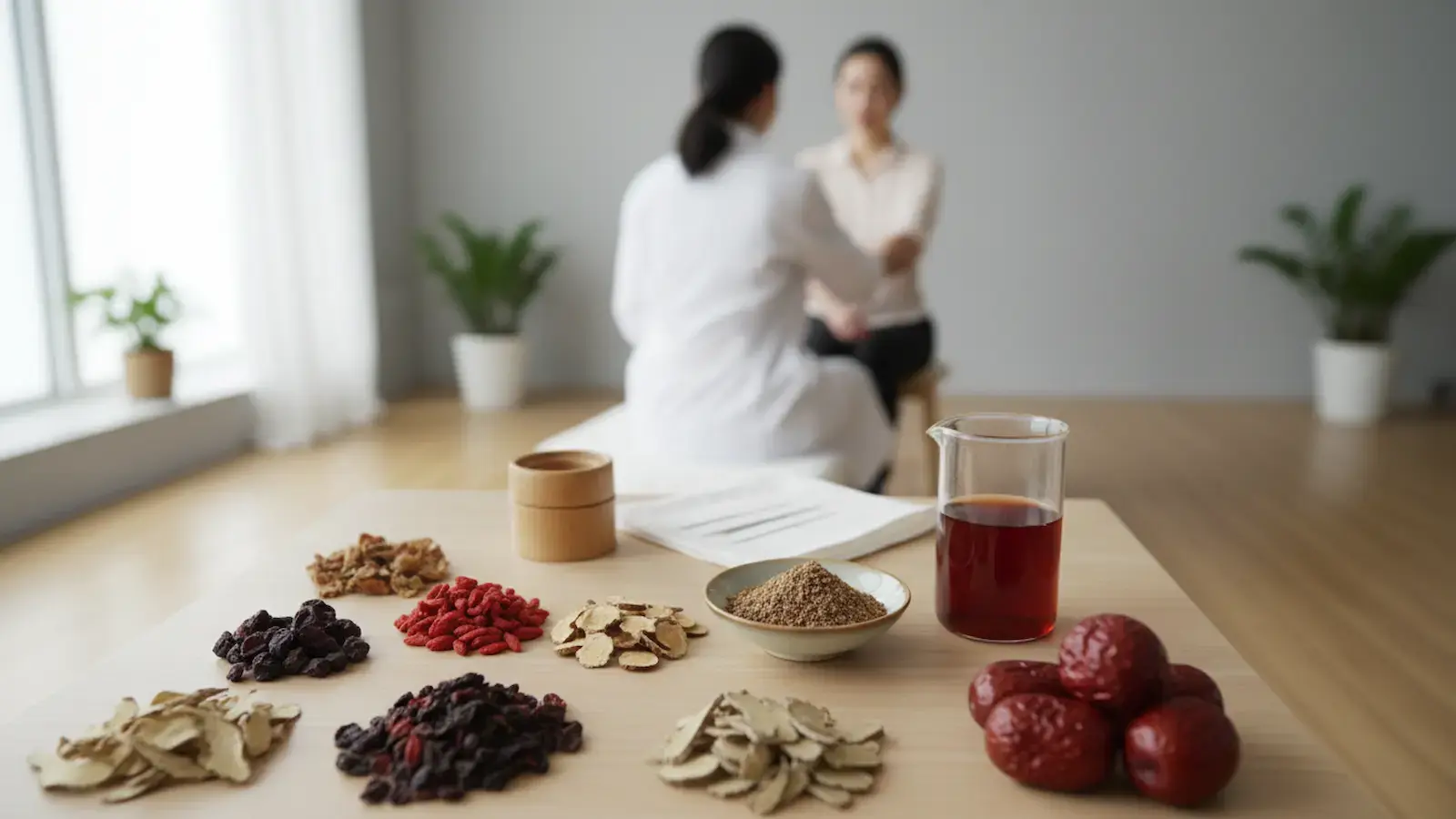
Quick answer: Blood building herbs chinese medicine practitioners use, such as Dang Gui, Shu Di Huang, and Bai Shao, are traditionally combined into formulas meant to nourish what Traditional Chinese Medicine calls Blood deficiency. This pattern is often associated with fatigue, pale complexion, dizziness, and irregular menstrual cycles. A practitioner selects and combines these herbs only after a full diagnosis, since the right formula depends on each person’s unique pattern.
I’m often asked by patients about herbs that can help them feel more energized, sleep better, or regulate their menstrual cycles. Blood building herbs chinese medicine relies on have been studied and refined over centuries, and they remain a core part of how I approach many chronic complaints in my practice. Understanding what these herbs do, and why they’re rarely used alone, can help you have a more informed conversation at your next visit.
In this article
- What “Blood Deficiency” Means in Traditional Chinese Medicine
- Common Blood Building Herbs in Chinese Medicine
- How These Herbs Are Combined Into a Formula
- Why a Personalized Pattern Diagnosis Matters
- Herbs Alongside Acupuncture and Tuina Massage
- New Patients: Start With a Full Diagnosis
- In this series
What “Blood Deficiency” Means in Traditional Chinese Medicine
In Traditional Chinese Medicine, “Blood” refers to more than the fluid that carries oxygen through your body. It’s described as a substance that nourishes your tissues, moistens your skin, calms your mind, and anchors your Qi. When Blood becomes deficient, a person may experience a cluster of symptoms that, on the surface, seem unrelated.
Common Signs of Blood Deficiency
Patients I see with this pattern often describe some combination of the following:
- Persistent fatigue that doesn’t improve with rest
- A pale or sallow complexion
- Dizziness or lightheadedness, especially when standing up
- Dry skin, brittle nails, or thinning hair
- Light or irregular menstrual periods
- Difficulty falling or staying asleep
- A pale tongue with a thin coating
None of these signs on their own confirms Blood deficiency. I look at the full picture, including your tongue, your pulse, and your answers to questions about your health, before working out whether this pattern fits what you’re experiencing.
Common Blood Building Herbs in Chinese Medicine
Several herbs appear again and again in formulas designed to nourish Blood. Each has a distinct role, and most are rarely prescribed in isolation.
Dang Gui (Angelica Sinensis)
Often called “female ginseng,” Dang Gui is one of the most widely used herbs for nourishing Blood and supporting menstrual regularity. It’s frequently paired with other herbs to both build Blood and move it, since Qi and Blood stagnation can accompany deficiency.
Shu Di Huang (Prepared Rehmannia)
This root is considered one of the richest Blood-nourishing herbs in the Chinese herbal tradition. It’s commonly included in formulas aimed at supporting the Liver and Kidney, which are closely tied to Blood storage and production in Traditional Chinese Medicine theory.
Bai Shao (White Peony Root)
Bai Shao is valued for its ability to nourish Blood while also calming the Liver. It’s often included in formulas for patients whose Blood deficiency pattern includes irritability, tension, or menstrual cramping.
Huang Qi (Astragalus) and Longan Fruit
Huang Qi supports Qi, which Traditional Chinese Medicine views as closely linked to Blood production. Longan fruit is gentler and is often used for patients whose pattern includes poor sleep or a racing mind at night.
How These Herbs Are Combined Into a Formula
A single herb rarely addresses the full pattern a patient presents with. Instead, these herbs are combined into a formula, with each ingredient playing a specific role, some nourishing Blood directly, others supporting the Qi needed to produce it, and others addressing accompanying symptoms like tension or poor sleep. The proportions and combinations are adjusted for each person, which is why two patients with similar symptoms may walk away with different formulas.
Why a Personalized Pattern Diagnosis Matters
I’ve found that the biggest difference between an effective formula and one that falls flat is whether it was built from a real diagnosis. Every treatment plan I create at Traditional Healing Centre starts from the patient’s own Traditional Chinese Medicine diagnosis, never an off-the-shelf protocol. That means I ask a lot of questions, look at your tongue, and take your pulse before recommending Chinese Herbal Medicine, because the same symptom can stem from different patterns in different people.
Herbs Alongside Acupuncture and Tuina Massage
Herbal formulas are often one part of a broader course of treatment. I frequently combine them with Acupuncture, Chinese Cupping, Moxibustion, or Tuina massage, depending on what your pattern calls for. For patients dealing with chronic pain, digestive concerns, stress, or sleep difficulties, this combined approach allows me to address both the underlying pattern and the symptoms you came in with.
New Patients: Start With a Full Diagnosis
If you’re curious whether blood building herbs chinese medicine offers could be a fit for what you’re experiencing, the first step is a proper diagnosis rather than guesswork. I welcome new patients to book an appointment or get in touch with any questions before your visit. Learn more about our approach at Traditional Healing Centre.
Herb and formula details: Bencao Index.
In this series
- A Chinese Herb Guide: Understanding Traditional Formulas
- Are Chinese Herbs Safe to Take?
- Chinese Herbs to Lose Weight: What Actually Helps
- Common Chinese Herbs and What They’re Used For
- Choosing a Traditional Chinese Medicine / Herbs Book
- Warming and Cooling Herbs in Chinese Medicine
- Traditional Chinese Herbs: What They Treat and How They Work
- Chinese Herbs for Spleen: Support for Digestion and Energy
- Organic Chinese Herbs Canada: What to Know Before You Buy
- Chinese Fertility Herbs: How Traditional Medicine Approaches Them
- Anxiety Chinese Herbs: Traditional Formulas That Support Calm
- Chinese Herbs for UTI: What Traditional Chinese Medicine Offers
- Can Chinese Herbs Increase Fertility? What to Know
- Chinese Herbs for Liver Cleanse: A TCM Perspective
- Chinese Herbs for Gallbladder Support: What to Know
- Chinese Herbs History: From Ancient Roots to Modern Care
- Rosacea Chinese Herbs: How TCM Approaches Facial Flushing
- Chinese Herbs for Hypertension: What You Should Know
- Top Chinese Herbs: What They Do and How They’re Used
- Chinese Herbs for Menopause: What to Know Before You Start
- Chinese Herbs Side Effects: What to Know Before You Start
- Chinese Herbs for Soaking Feet: A Traditional Approach to Rest
- Chinese Herbs for High Cholesterol: A TCM Perspective
- Best Time to Take Chinese Herbs for Best Results
- Blood-Building Herbs in Chinese Medicine