
Cupping Therapy Massage: What It Is and How It Works
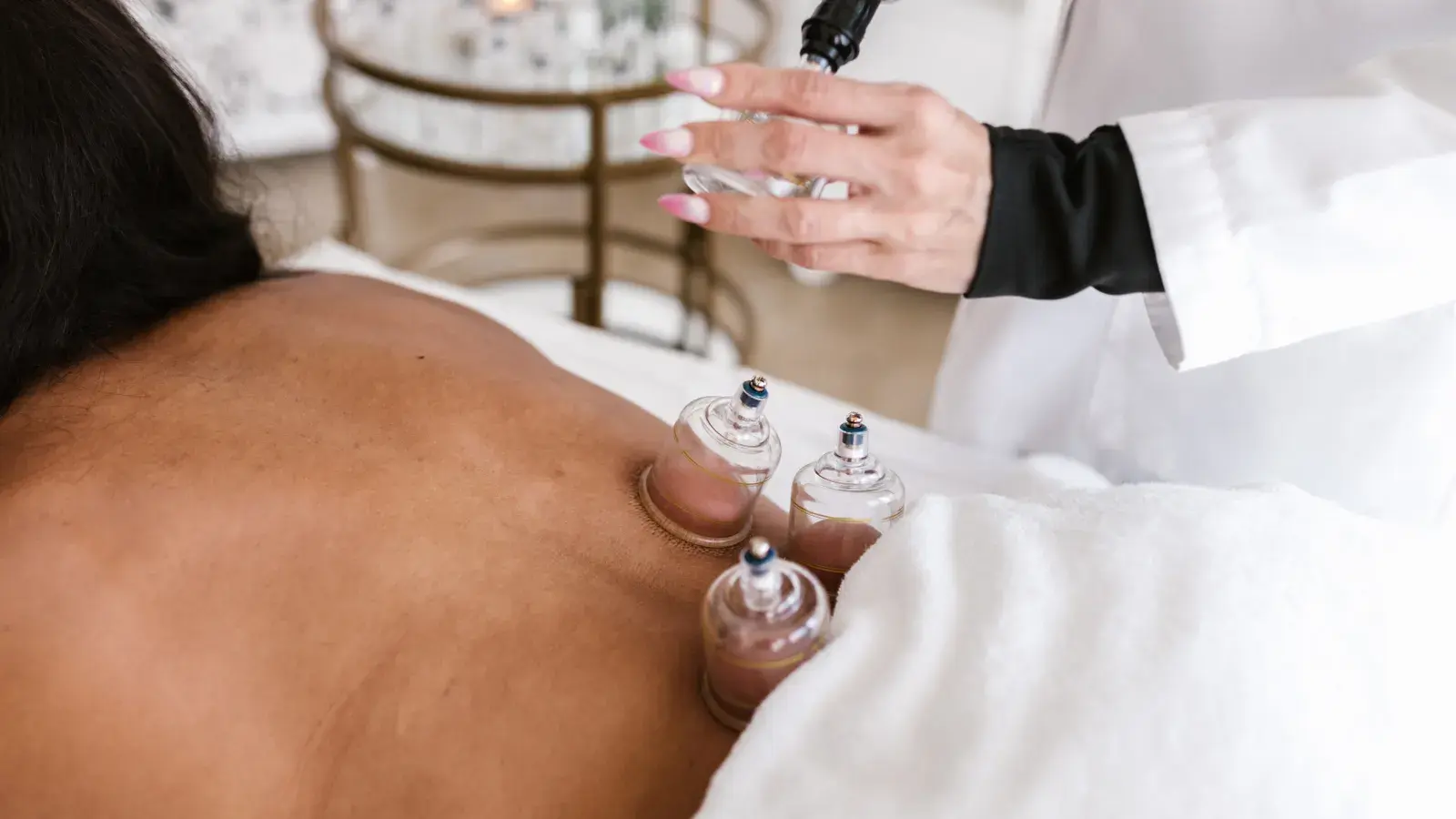
Quick answer: Cupping therapy massage uses suction cups placed on the skin to draw blood to the surface, release tight muscles, and ease Qi and Blood stagnation. It is often combined with acupuncture or Tuina massage and may help with chronic pain, tension, and stress. Most people see the circular marks it leaves fade within a week or two.
Many people searching for relief from stiff shoulders, back pain, or lingering muscle tension come across cupping therapy massage and wonder how it differs from a standard deep-tissue session. Instead of pressing down on the muscle, cupping lifts the skin and soft tissue upward using suction, which changes how the body responds to the treatment.
In this article
- What Is Cupping Therapy Massage?
- How Cupping Therapy Massage Works
- What Cupping Therapy Massage May Help With
- What to Expect During a Visit
- Finding Qualified Care
What Is Cupping Therapy Massage?
Cupping therapy massage pairs traditional cupping with massage techniques, either performed together or in the same visit. In Traditional Chinese Medicine, cupping is used to move Qi and Blood stagnation, a pattern that often shows up as tight, sore, or immobile muscles. The cups create negative pressure that pulls the skin, fascia, and underlying tissue away from deeper structures, which is the opposite sensation of most massage work.
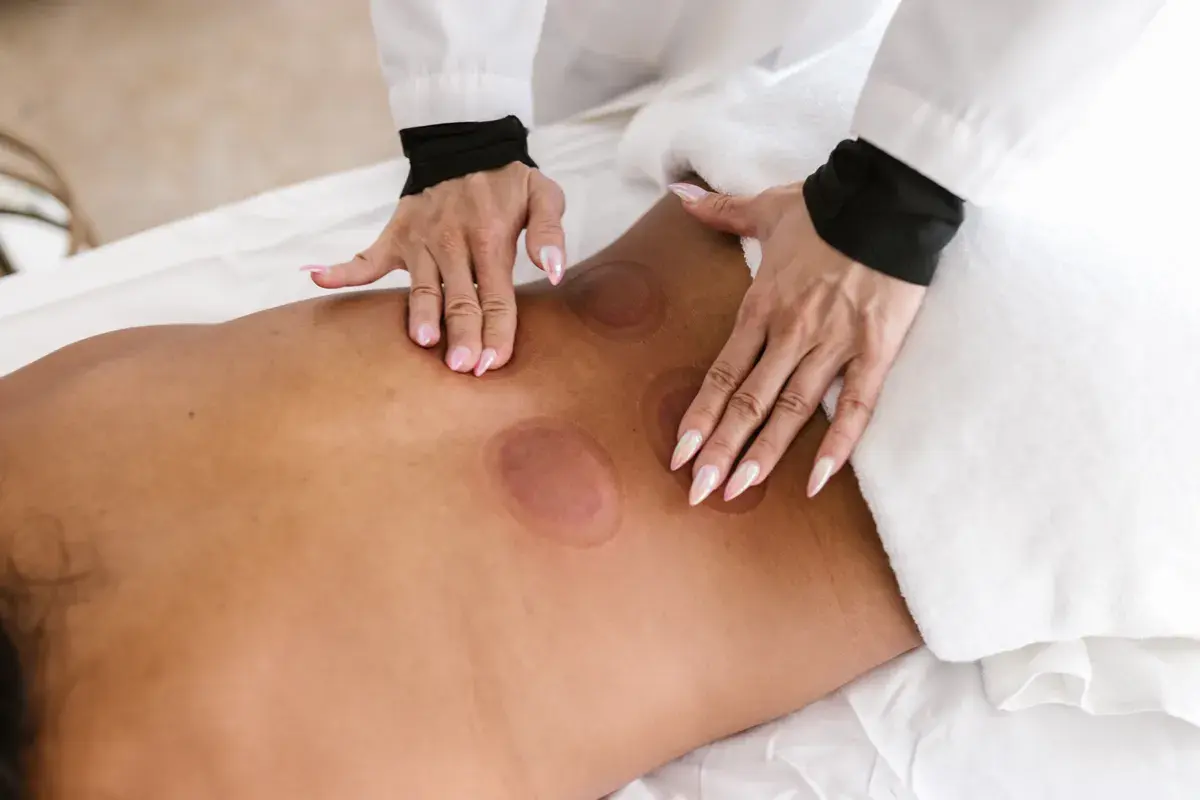
Photo by RDNE Stock project on Pexels
How It Differs from Regular Massage
Regular massage typically applies compression, with the practitioner’s hands or tools pressing into the muscle. Cupping does the reverse: it lifts tissue rather than compressing it. This can reach areas of tension that feel too tender for firm pressure, which is one reason practitioners often combine the two approaches within a single course of treatment. For a broader look at the method and who it tends to help, see Cupping Therapy: How It Works and Who It Helps.
How Cupping Therapy Massage Works
The Suction Mechanism
A cup, typically glass, silicone, or plastic, is placed against the skin after the air inside has been removed, either with heat, a pump, or a squeeze mechanism. The resulting vacuum draws the skin and tissue upward into the cup. The suction encourages blood flow to the area and is thought to help release adhesions in the fascia, the connective tissue that surrounds muscles.
Common Techniques
Cups may be left stationary for several minutes, a method often used over the back or shoulders, or they may be moved slowly across the skin once a thin layer of oil has been applied, which is closer to a massage motion. A practitioner may also use a technique called fire cupping, which relies on a brief flame to create the vacuum before the cup is applied. You can read more about that specific method in Fire Cupping: What It Is, Does It Hurt, and the Marks It Leaves.
What Cupping Therapy Massage May Help With
Chronic Pain and Muscle Tension
Cupping is commonly used for chronic pain conditions such as back pain, sciatica, and neck stiffness, often as part of a broader treatment plan that includes acupuncture or herbal formulas. Neck and shoulder tension in particular responds well to this lifting action, since tight fascia in that area can restrict movement more than muscle tightness alone. For more detail on this specific use, visit Cupping for Neck Pain.
Stress and Relaxation
Beyond pain, many people find the treatment calming. The steady suction and slow movement across the back or limbs can help ease the kind of muscle guarding that builds up with ongoing stress, making it a reasonable addition to a visit focused on sleep or stress concerns.
What to Expect During a Visit
A typical session begins with a conversation about your symptoms and health history, since the pattern behind your tension guides where the cups are placed. The cups are then applied for a set time, usually a few minutes, and the practitioner checks in throughout to make sure the pressure feels appropriate.
The Marks It Leaves
It is normal to see circular, bruise-like marks after a session. These occur because the suction draws blood to the surface, and the color can range from light pink to a deeper purple depending on how much stagnation was present. The marks are not painful in the way a bruise from an injury is, and they typically fade within several days to two weeks.
Finding Qualified Care
Because cupping works best when it is matched to the right pattern rather than applied the same way to every complaint, it helps to see a practitioner who builds a full Traditional Chinese Medicine diagnosis before treating you. At Traditional Healing Centre in Keswick, Ontario, every treatment plan starts from your own diagnosis, not an off-the-shelf protocol. Jason Tarter, R.TCMP, R.Ac, has been in practice for 18 years and is registered with the College of Traditional Chinese Medicine Practitioners and Acupuncturists of Ontario (CTCMPAO), offering Chinese cupping alongside acupuncture, Tuina massage, and custom herbal formulas filled through his own dispensary. Most people plan on five to ten treatments to judge progress, and receipts are issued by a Registered Acupuncturist and Registered Traditional Chinese Medicine Practitioner, which many extended health plans accept even though OHIP does not cover these services.
If you have questions about whether cupping therapy massage fits your symptoms, you can get in touch before your first visit.
Cupping therapy massage can be a practical way to ease stubborn muscle tension and support recovery from chronic pain, especially when it is built around your own diagnosis rather than a generic routine. If you would like to discuss whether it suits your symptoms, book an appointment with Traditional Healing Centre.