
Herbal Plaster Chinese Medicine: How It Works and When to Use It
November 27, 2026 · Jason Tarter, R.TCMP, R.Ac
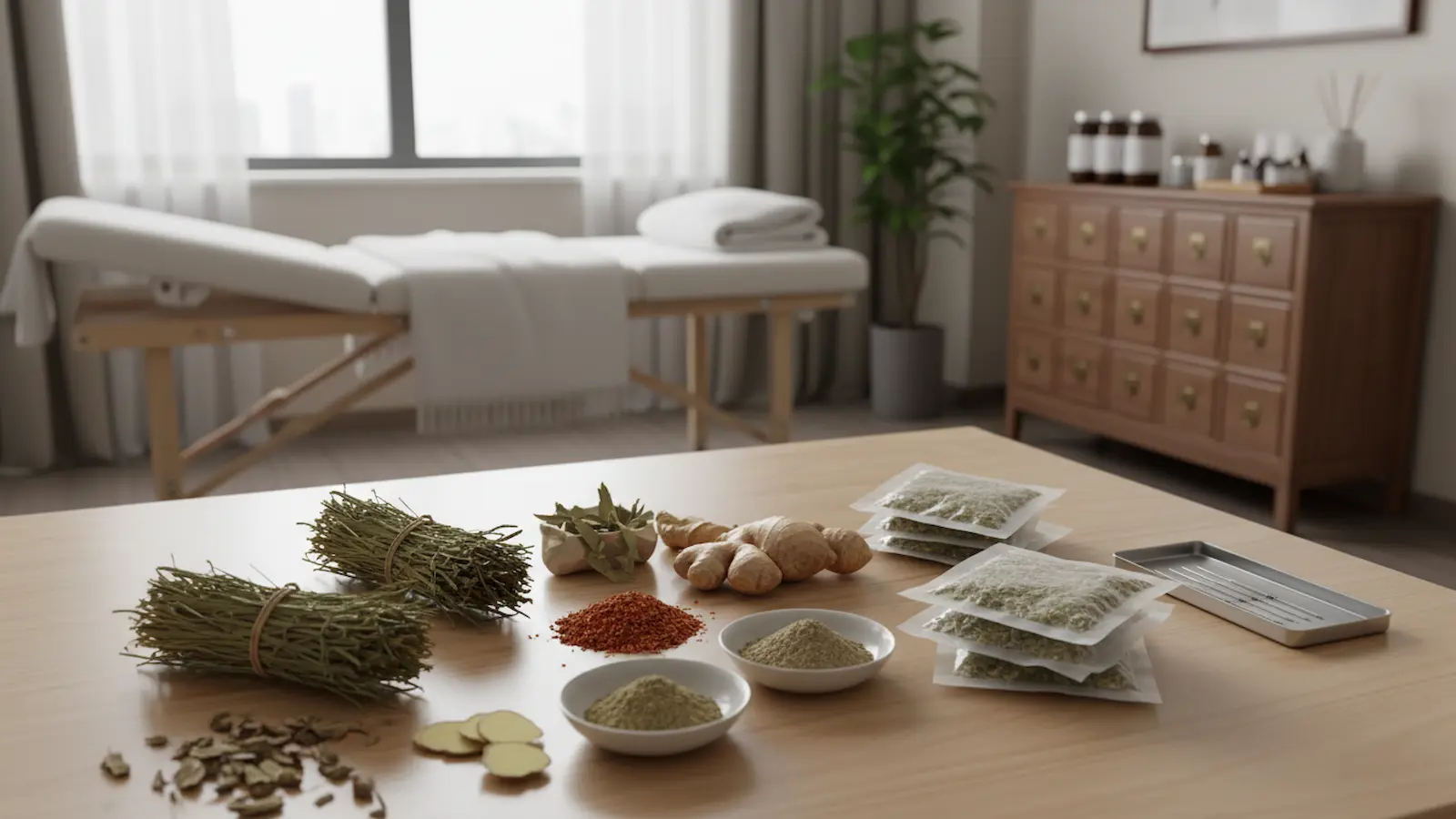
Quick answer: An herbal plaster in Chinese medicine is a topical patch or paste made from medicinal herbs, applied directly to the skin over an acupuncture point or area of pain to move Qi and Blood stagnation. It is commonly used alongside acupuncture and internal herbal formulas for joint pain, muscle strain, and stiffness. Plasters are left on for a set period and work best as part of a broader treatment plan rather than on their own.
Herbal plaster Chinese medicine has been used for centuries as one of the external therapies that complement acupuncture and internally taken herbal formulas. Unlike a formula you drink as tea or take in capsule form, a plaster works through the skin, delivering its herbal properties directly to the site of discomfort. For many patients dealing with aching joints or a strained muscle, it's a familiar addition to a treatment plan that already includes needling and custom herbs.
In this article
- What Is an Herbal Plaster in Chinese Medicine
- How Herbal Plasters Work
- What Conditions Herbal Plasters Address
- Applying an Herbal Plaster Safely
- Herbal Plasters as Part of a Larger Treatment Plan
What Is an Herbal Plaster in Chinese Medicine
A plaster, sometimes called a medicated patch, is a preparation of ground or extracted herbs mixed into a paste or adhesive backing. It's applied over a specific area, often an acupuncture point, a muscle group, or a joint affected by pain. The herbs chosen depend on the pattern identified during diagnosis, since Chinese medicine treats the underlying imbalance rather than only the symptom on the surface.
How Plasters Differ from Liniments and Oils
Liniments and herbal oils are rubbed into the skin and absorbed quickly, while a plaster is designed to stay in place for an extended period, often several hours. This longer contact time allows the herbs to continue working gradually, which is part of why plasters are often chosen for stiffness or Qi and Blood stagnation that builds up over time rather than for sudden, sharp pain.
How Herbal Plasters Work
In Traditional Chinese Medicine, pain and stiffness are frequently understood as a sign that Qi and Blood are not flowing smoothly through a particular area. A plaster's warming or invigorating herbs are intended to help restore that movement. Some plasters also include ingredients meant to reduce swelling or ease tension in the surrounding tissue.
Common Herbs Used in Plasters
Formulations vary, but many plasters draw from herbs traditionally associated with moving stagnation and relieving pain, such as safflower, myrrh, and frankincense. These are the same general categories of herbs used in internal formulas for similar patterns, which is one reason plasters are often paired with other herbal treatments rather than used as a stand-alone remedy. Readers curious about how these herbs are chosen for an individual case may find it useful to look at how Classic Chinese Herbal Formulas are tailored to a patient's pattern rather than applied as a generic protocol.
What Conditions Herbal Plasters Address
Plasters are most often used for musculoskeletal concerns: low back pain, knee pain, shoulder stiffness, and minor muscle strains. They are typically applied as a supportive measure alongside acupuncture visits, rather than as the primary treatment. Because they work locally, they are not intended to address internal patterns such as digestive or sleep concerns, which are more commonly managed through herbal formulas or teas taken internally. For readers interested in that side of herbal treatment, the overview of Chinese Herbal Teas a TCM Practitioner Actually Recommends covers how internal formulas are used for broader wellness concerns.
Applying an Herbal Plaster Safely
A plaster is usually applied to clean, dry skin and left in place for the period recommended, which can range from a few hours to overnight depending on the formulation. It's important to avoid applying a plaster to broken skin, areas of active inflammation, or skin that is unusually sensitive.
Signs to Stop Use
If redness, itching, or irritation develops, the plaster should be removed and the skin cleaned. Some patients find certain herbal combinations too warming for their skin, which is one reason a plaster chosen as part of a visit, after a practitioner has reviewed the pattern, tends to fit better than one purchased without guidance.
Herbal Plasters as Part of a Larger Treatment Plan
A plaster is rarely used in isolation. In practice, it tends to support the work being done through acupuncture and any internal formula a patient is taking. Pain that involves longer-standing Blood stagnation, for example, may call for a plaster alongside herbs aimed at nourishing and moving the Blood; readers can see how that concept is approached in Blood-Building Herbs in Chinese Medicine.
Where Traditional Healing Centre Fits In
At Traditional Healing Centre in Keswick, Ontario, every treatment plan starts from the patient's own Traditional Chinese Medicine diagnosis, never an off-the-shelf protocol. Jason Tarter, R.TCMP, R.Ac, has been in practice for 18 years and combines acupuncture with custom herbal formulas written for the individual patient, filled through the clinic's own herbal dispensary. When a plaster, Chinese Cupping, Moxibustion, or Tuina Massage would support a patient's pattern, it's considered as part of that same individualized plan rather than applied as a generic add-on. Patients are generally advised to plan on 5–10 treatments to judge progress, and receipts are issued by a Registered Acupuncturist (R.Ac) and Registered Traditional Chinese Medicine Practitioner (R.TCMP), which many extended health plans accept for coverage.
If you're dealing with stiffness, joint pain, or stagnation that hasn't responded to topical treatments alone, a proper Traditional Chinese Medicine diagnosis can clarify what's really going on and whether a plaster, acupuncture, or a custom herbal formula is the right fit. Book an appointment with Traditional Healing Centre to find out what approach suits your pattern.