
Acupuncture
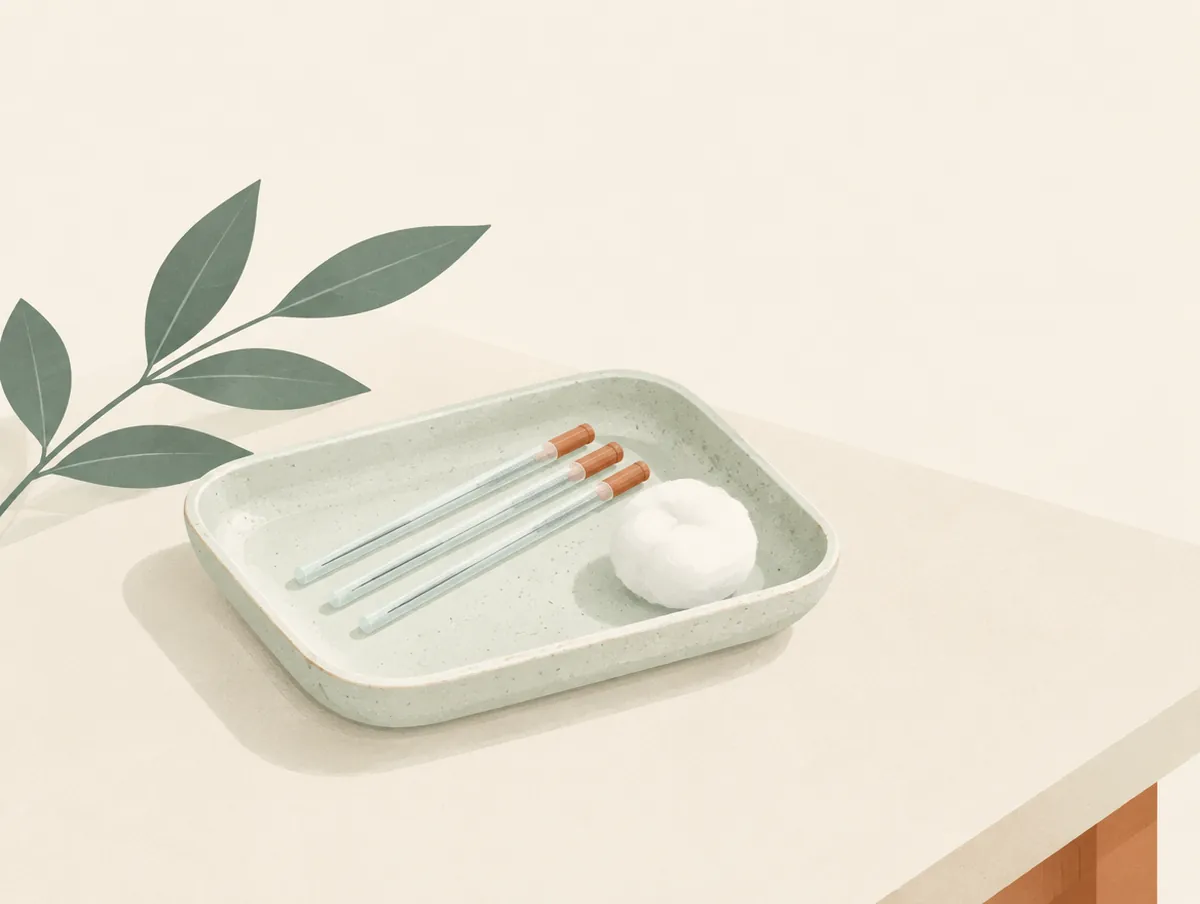
Acupuncture uses very fine, single-use needles at chosen points on the body. The points are picked from a Chinese medicine diagnosis, so two people with the same complaint can get different treatments, and it is often combined with herbal medicine.
What it can help with
- Pain
- Sleep
- Digestion
- Stress and mood
- Period pain
Conditions we often treat
What happens in a session
Your first visit at the clinic in Keswick is 75 minutes and includes both the diagnosis and a treatment. Follow-up visits are 60 minutes.
- Questions. Expect a lot of questions, first about the problem you came in with and then about the rest of your health: sleep, digestion, energy, appetite, and for women the menstrual cycle. In Chinese medicine these all feed into the diagnosis.
- Tongue and pulse. Your tongue is looked at and your pulse is taken at both wrists. For pain, it is also common to check which movements hurt and where the tender spots are.
- The plan. Ask what the diagnosis is in Chinese medicine terms, which points are being used and why, and roughly how many treatments to plan for.
- Needling. You usually lie on a treatment table, clothed where possible. The needles are 0.14 to 0.30 mm thick, solid rather than hollow, and single-use. Most people feel a small pinch or nothing as a needle goes in. Once it is in place, a dull ache, heaviness, warmth or tingling around the point is normal and expected.
- Rest. The needles usually stay in while you rest. Many people find this part relaxing and some fall asleep. Some treatments also add heat, moxibustion or cupping, depending on the diagnosis.
Afterwards you might feel relaxed or a little tired. Drink some water, and avoid hard exercise or alcohol for the rest of the day.
What it is used for
Acupuncture is used most for pain, and also for problems with sleep, digestion, mood and the menstrual cycle. Pages on specific conditions explain how Chinese medicine sees each one:
- Pain: back pain, sciatica, knee pain, tennis elbow, plantar fasciitis, and headaches and migraines
- Sleep and mood: insomnia, anxiety and chronic fatigue
- Digestion: bloating and constipation
- Women’s health: period cramps
- Other: sinusitis
The research below is on chronic pain. For a course, plan on 5–10 treatments to judge progress.
How it works in Chinese medicine
In Chinese medicine, the body is described as a network of channels (often called meridians) that carry Qi and Blood. Acupuncture points are places along those channels. In this theory, pain and many other symptoms come from Qi and Blood not flowing freely, or from one system being too weak or too strong compared to the others.
The diagnosis names that pattern, for example Qi stagnation, Blood deficiency or Cold and Damp. The pattern, not just the symptom, decides the points. That is why two people with headaches may have needles in quite different places.
This is a traditional framework for choosing treatment, not a biomedical explanation. Research is still working out how needling acts on the body, with most studies looking at the nervous system and how the body processes pain.
Safety and who should avoid it
Acupuncture by a trained practitioner has a low rate of serious problems. Common, minor effects are a small bruise or drop of blood where a needle was, brief soreness at a point, and feeling tired or light-headed after treatment. Serious problems, such as a needle reaching the lung, are rare and are avoided with correct technique.
Tell me before treatment if you:
- Are pregnant or trying to conceive. Some points are avoided during pregnancy, and treatment is adjusted.
- Take blood thinners or have a bleeding disorder. Bruising is more likely, and needling may be lighter.
- Have a pacemaker or other implanted device. Electrical stimulation of the needles should not be used.
- Are prone to fainting, or have a strong fear of needles. Treatment can be given lying down, and fewer needles can be used.
- Have diabetes, a skin infection or poor circulation in the area to be treated.
Acupuncture does not replace a medical diagnosis. If you have new, severe or unexplained symptoms, see your doctor first. In Ontario, anyone using the titles R.Ac or R.TCMP must be registered with the College of Traditional Chinese Medicine Practitioners and Acupuncturists of Ontario (CTCMPAO), and you can check any practitioner on the College’s public register.
What the research says
Using raw data from 39 trials and 20,827 patients with chronic musculoskeletal pain, osteoarthritis, chronic headache or shoulder pain, acupuncture did better than both sham and no acupuncture, and most of the effect lasted at one year. The difference over sham acupuncture was small, and the authors note that factors beyond needling the exact points contribute to the effect.
Acupuncture for Chronic Pain: Update of an Individual Patient Data Meta-Analysis. The Journal of Pain, 2018.
Research findings describe groups of people in studies. How you respond depends on your own diagnosis.
Questions about acupuncture
Do acupuncture needles hurt?
Most people feel little or nothing as the needle goes in. The needles are 0.14 to 0.30 mm thick, far finer than a needle used for a blood test, and they are solid, not hollow. Once a needle is in place you may feel a dull ache, heaviness or tingling around it.
How many treatments will I need?
It depends on how long you have had the problem, your general health and the condition itself. Some people notice a change after one treatment, but most conditions need a course. Plan on 5–10 treatments to judge progress.
What should I do before my first appointment?
It helps to eat a light meal an hour or two before, wear loose clothing that rolls up above the knee and elbow, and bring a list of your medications. Try not to brush your tongue that morning, as its colour and coating are part of the diagnosis.
Is acupuncture covered by OHIP?
No. It is not covered by OHIP, but many extended health plans cover treatment by a registered acupuncturist (R.Ac) or TCM practitioner (R.TCMP). Check your plan for the amount. See the fees page for details.