
Tuina Massage
Tuina is Chinese medical massage. It uses pressing, kneading, rolling and stretching on muscles, joints and acupuncture points, chosen from a Chinese medicine diagnosis, and fits into a treatment plan alongside acupuncture.
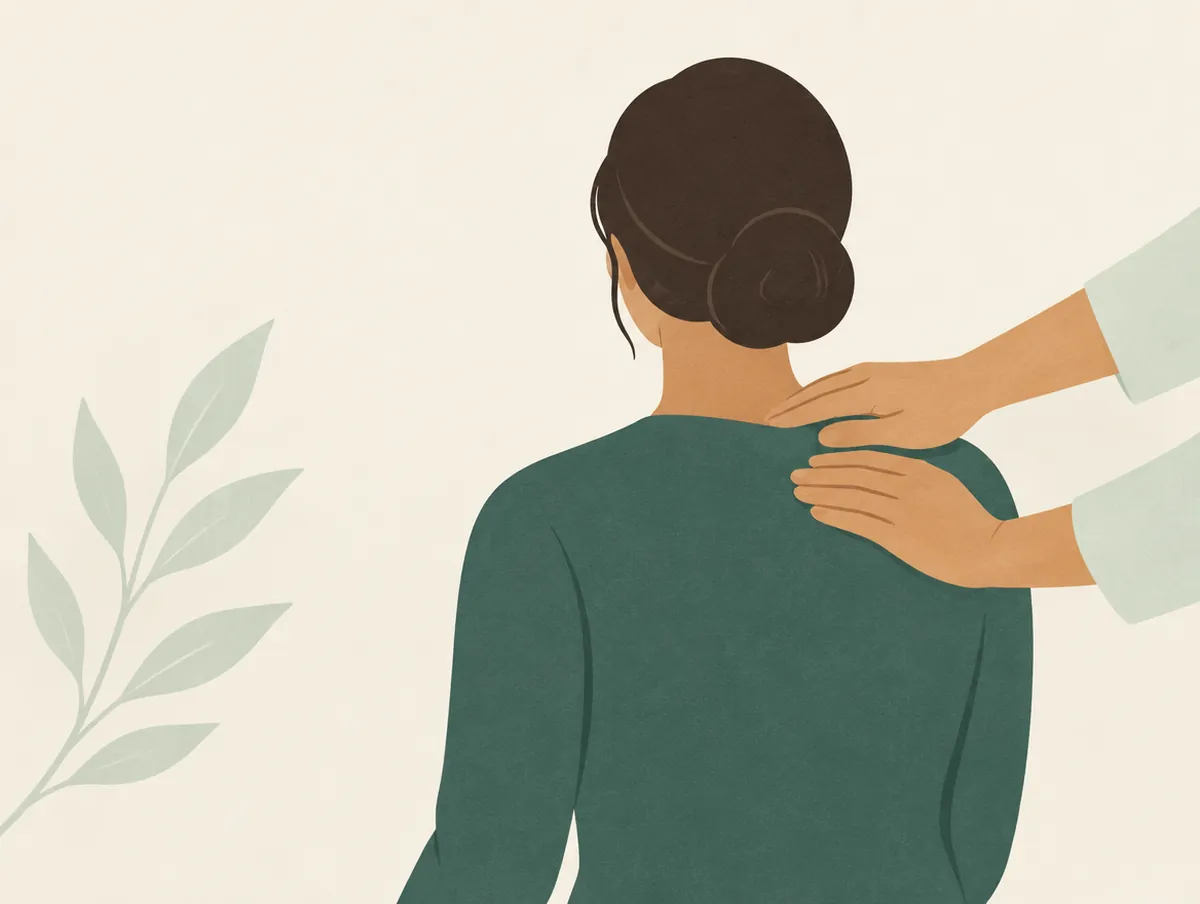
What it can help with
- Muscle and joint pain
- Stiffness and range of movement
- Often combined with acupuncture
Conditions we often treat
What happens in a session
Tuina is often combined with acupuncture in the same treatment, and whether it is used is decided after the diagnosis.
- Finding the problem. Treatment usually starts by checking which movements are restricted or painful and pressing along the muscles to find the tight and tender areas. This feeds into the Chinese medicine diagnosis.
- Positioning. You lie on the treatment table, face down, face up or on your side, or sit for work on the neck and shoulders. Tuina is traditionally done through light clothing or a thin sheet.
- Working the muscles. The common techniques are rolling (a rhythmic rolling of the back of the hand over the muscle), kneading, grasping and pushing along the length of a muscle. The pressure is firm and focused.
- Points and joints. Acupuncture points are pressed with the thumb or fingers. Stiff joints may be moved gently through their range and stretched.
- Finishing. Lighter strokes to settle the area.
The treatment should feel firm but tolerable. Tight spots may be tender while they are being worked on. Tell me if anything is sharp or too much. Some people feel sore the next day, as after a workout; that usually settles within a day or two. Drink water and keep moving gently.
What it is used for
Tuina is mostly used for muscle and joint problems, especially where stiffness and tight muscles are part of the pain. It is commonly combined with acupuncture for:
- Back pain and sciatica
- Knee pain and tennis elbow
- Plantar fasciitis, working on the calf and sole of the foot
- Neck and shoulder tension that goes along with headaches
The research is strongest for chronic low back pain, and even there the certainty is low. Whether tuina belongs in your plan is decided by your diagnosis at the clinic in Keswick.
How it works in Chinese medicine
Tuina means “push and grasp”. It is taught in Chinese medicine schools alongside acupuncture and herbal medicine, and uses the same map of channels and points.
In Chinese medicine, pain in the muscles and joints is usually seen as Qi and Blood not flowing freely through the channels. The cause may be an injury, overuse, cold and damp weather, or long-term weakness. Tuina is used to move what is stuck and to loosen the tendons and muscles, which Chinese medicine calls the sinews. The diagnosis decides where the work is done: sometimes directly on the painful area, and sometimes along the channel that runs through it, above or below the pain.
This is a traditional explanation, not a biomedical one. From a Western point of view, tuina has a lot in common with other forms of massage and manual therapy, and like them it works on muscle tension, joint movement and how pain is felt.
Safety and who should avoid it
Tuina is generally low-risk. The most common side effects are tenderness during treatment and soreness the next day. Bruising is uncommon, and more likely if you bruise easily.
Tuina is avoided or changed if you:
- Have a fracture, a recent injury, or osteoporosis. Firm pressure and joint movement are not used on weak bone.
- Have a blood clot (DVT) or a swollen, painful, red calf. See a doctor first.
- Take blood thinners or have a bleeding disorder. Pressure is lighter.
- Have an infection, open wound, burn or rash in the area.
- Are pregnant. The abdomen, lower back and some points are avoided.
- Had recent surgery, or have cancer in the area being treated.
See your doctor first for pain after a fall, pain with numbness or weakness, or pain with fever. In Ontario, Traditional Chinese Medicine practitioners and acupuncturists must be registered with the College of Traditional Chinese Medicine Practitioners and Acupuncturists of Ontario (CTCMPAO), and you can check any practitioner on the College’s public register.
What the research says
Across 21 trials with 1,612 adults with chronic low back pain, tuina reduced pain and improved function more than the comparison treatments, with no difference in serious side effects. The certainty of the evidence was rated low, and the authors called for more rigorous, standardized trials.
Tuina for chronic non-specific low back pain: A systematic review and meta-analysis of randomized controlled trials. Complementary Therapies in Medicine, 2026.
Research findings describe groups of people in studies. How you respond depends on your own diagnosis.
Questions about tuina massage
How is tuina different from a regular massage?
Tuina is part of a Chinese medicine treatment rather than a relaxation service. The areas and points worked on come from your diagnosis, and the techniques are often firmer and more focused on one area than a spa massage.
Is tuina painful?
It can feel firm, and tight spots may be tender while they are worked on. It should not be sharply painful. Say so and the pressure is changed. Some people feel sore the next day, like after a workout, and that settles within a day or two.
What should I wear?
Loose, comfortable clothing. Tuina is traditionally done through light clothing or a thin sheet, so you may not need to undress fully.
Who should not have tuina?
Tell me before treatment if you have a fracture, osteoporosis, a blood clot, an infection or open wound, or are pregnant. Tuina is avoided or changed in those cases.