
Chinese Cupping
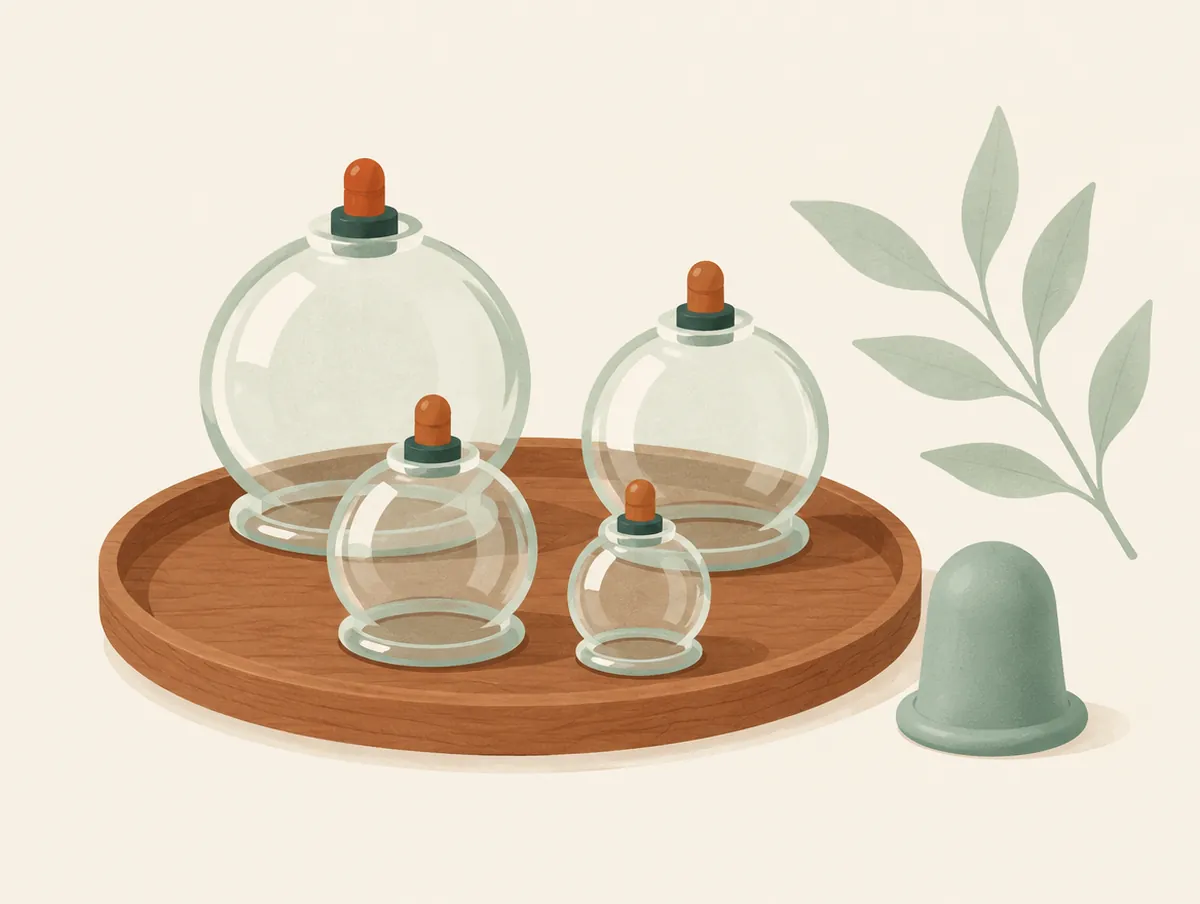
Cupping uses glass, plastic or silicone cups to create suction on the skin. It is mostly used on the back, shoulders and neck for tight, sore muscles, and is often added to an acupuncture treatment.
What it can help with
- Muscle tension in the back and shoulders
- Neck and upper back stiffness
- Often combined with acupuncture
Conditions we often treat
What happens in a session
Cupping is usually one part of a treatment rather than a visit on its own, and it is often combined with acupuncture. Whether it is used is decided after the diagnosis.
- Positioning. You usually lie face down or sit, with the area uncovered. The back, shoulders and neck are the most common areas, because they have enough muscle for the cups to sit on.
- Suction. There are two common ways to create it. In fire cupping, a flame is held inside a glass cup for a second to heat the air, then taken out and the cup placed on the skin. As the air cools, it pulls the skin up into the cup. The flame never touches you. Pump cups do the same thing with a hand pump.
- Holding. Cups are usually left in place for several minutes. You feel a firm pull and a sense of tightness that eases as you relax. Some people find it relaxing enough to doze.
- Sliding cupping. In this variation, a little oil goes on the skin and a cup is moved slowly across the muscle, a bit like a deep massage in reverse.
- Removal. Each cup is released by letting air in at the edge, which takes a second and does not hurt.
The skin under the cups turns red or purple. This is expected and is covered below.
What it is used for
Cupping is mostly used for muscles: tight, sore areas of the back, shoulders and neck, especially where the tension has built up over months. It is commonly combined with acupuncture for:
Cupping usually goes into a wider treatment plan rather than being used on its own for a chronic problem. Your diagnosis at the clinic in Keswick decides whether it belongs in yours.
How it works in Chinese medicine
In Chinese medicine, cupping is used to move Qi and Blood that are said to be stuck in the muscles and channels. Pain that is fixed in one spot, feels tight and eases with pressure or movement is often described as stagnation, and cupping is one of the ways to address it.
Cupping is also used traditionally for what Chinese medicine calls Wind and Cold lodged in the upper back, for example the stiff neck and shoulders that can come with a chill. The colour of the marks is read as a sign of how much stagnation was there, though that is a traditional reading rather than a medical test.
From a Western point of view, the suction lifts and stretches the skin and muscle and draws blood toward the surface. How much of the effect comes from that, and how much from the general effect of hands-on treatment, is still being studied.
Safety and who should avoid it
Cupping is low-risk, but it has side effects you should know about:
- Marks. Round red or purple marks are normal, not a bruise from injury. They usually fade over several days to two weeks.
- Skin. Occasionally the skin blisters or feels sore, especially on thin or fragile skin. With fire cupping there is a small risk of a burn, which careful technique avoids.
- Light-headedness. Rare, and more likely if you have not eaten.
Cupping is avoided or adjusted if you:
- Take blood thinners or have a bleeding disorder, or bruise very easily.
- Are pregnant. Cups are not placed on the abdomen or lower back.
- Have broken, sunburned or inflamed skin, a rash, varicose veins, or a recent injury in the area.
- Have a fever, are very frail, or have a condition that thins the skin, such as long-term steroid use.
Tell me about any of these before treatment. In Ontario, Traditional Chinese Medicine practitioners and acupuncturists must be registered with the College of Traditional Chinese Medicine Practitioners and Acupuncturists of Ontario (CTCMPAO), and you can check any practitioner on the College’s public register.
Questions about chinese cupping
Does cupping leave marks?
Usually, yes. The suction leaves round red or purple marks where the cups were. They are not painful to touch for most people, and they usually fade over several days to two weeks. If you have an event where the marks would show, mention it before treatment so the timing or placement can be planned around it.
Is cupping painful?
Most people feel a strong pulling or tightness, not pain. The suction can be made lighter if it is uncomfortable, so say so during the treatment.
How long does cupping take?
Cups are usually left in place for several minutes. Cupping is often part of a longer treatment that includes acupuncture, rather than a visit on its own.
Can I exercise after cupping?
Light activity is fine. Keep the area warm and covered for the rest of the day, and wait until the next day for a hot tub, sauna or a hard workout.