
Chinese Herbal Medicine
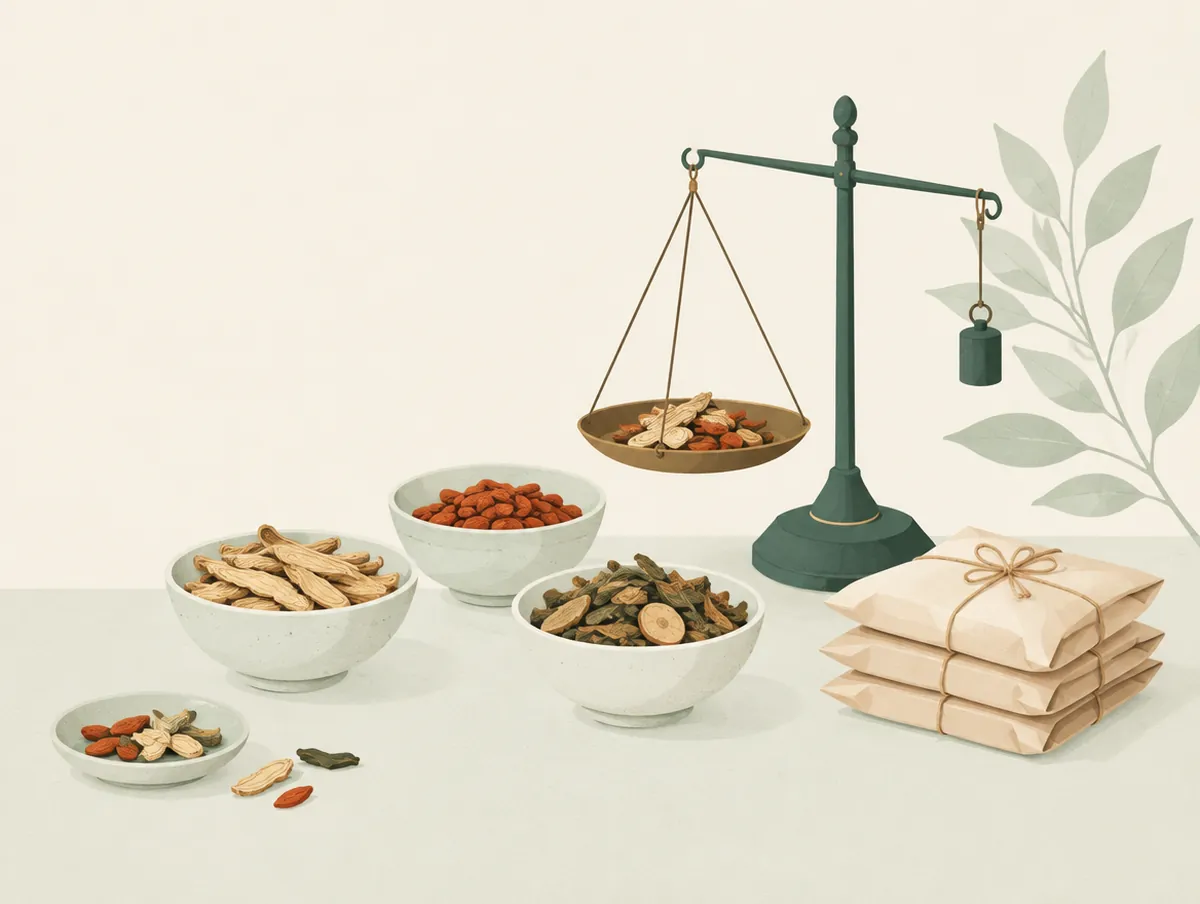
Chinese herbal medicine uses formulas of several herbs, written for your Chinese medicine diagnosis rather than for a symptom alone. Formulas are dispensed at the clinic and adjusted as you change, and they often work alongside acupuncture.
What it can help with
- A formula written for your diagnosis
- Digestion, sleep and energy
- Period and cycle concerns
- Often combined with acupuncture
Conditions we often treat
What happens in a session
A herbal consultation is 30 minutes. Herbal medicine is also often used alongside acupuncture.
- History. Expect questions about the main problem and about sleep, digestion, energy, temperature, thirst, and for women the menstrual cycle. In Chinese medicine these details separate one pattern from another.
- Tongue and pulse. Your tongue is looked at and your pulse is taken at both wrists.
- Medications. Bring a list of everything you take: prescriptions, over-the-counter drugs and supplements. Checking it is a safety step, not a formality.
- The formula. A formula is written for your pattern and filled at the clinic’s dispensary. Formulas are written for the individual, so two people with the same complaint can leave with different formulas. Formulas can come as granules, pills or raw herbs to cook. Make sure you know how to take yours, and ask for the ingredient list to show your doctor or pharmacist.
- Review. A formula is normally reviewed at follow-up visits and adjusted to what has changed. As symptoms shift, the formula shifts with them, and it is stopped when it is no longer needed.
If anything about the herbs bothers you, tell me rather than stopping and starting on your own.
What it is used for
Herbal medicine is used most for internal problems, where a formula taken daily can support what acupuncture does at each visit. The two are often combined. Condition pages that cover herbal treatment include:
- Digestion: bloating and constipation
- Sleep, mood and energy: insomnia, anxiety and chronic fatigue
- Women’s health: period cramps
- Other: sinusitis
It can also be used with acupuncture for long-standing pain, such as back pain, when the diagnosis points to an underlying pattern.
How it works in Chinese medicine
In Chinese medicine, each herb is described by its nature (warming or cooling, for example) and by the organ systems and channels it is said to act on. A formula combines several herbs. Some address the main pattern, some support them, and some balance out side effects of the others.
The formula is chosen for the pattern, not just the symptom. Poor sleep from what Chinese medicine calls Heart and Spleen deficiency gets a different formula from poor sleep with Liver Qi stagnation. That is why herbal medicine starts with a full diagnosis, and why a formula written for someone else is not a good fit for you.
This is a traditional framework for choosing a prescription, not a biomedical explanation. Research on Chinese herbal medicine is still developing.
Herbs are not included in consultation or treatment fees. Formulas generally cost $5–8 a day, depending on the formula. See Fees.
Safety and who should avoid it
Herbs are medicines. They can have side effects and they can interact with drugs, so a few rules apply:
- Tell your doctor and pharmacist that you take a herbal formula, and tell me about any new prescription. Take extra care with blood thinners, heart and blood-pressure drugs, diabetes medication, anti-seizure drugs, transplant or immune drugs, and chemotherapy.
- Pregnancy and breastfeeding. Many herbs are avoided in pregnancy. Tell me if you are pregnant, may be pregnant or are breastfeeding.
- Liver or kidney disease. Tell me first, and follow your doctor’s blood-test schedule.
- Surgery. Tell your surgeon you take herbs, and ask when to stop before the operation.
- Stop and call if you get a rash, severe stomach pain, dark urine, yellowing of the eyes or skin, or unusual tiredness, and see your doctor.
Never share your formula with someone else, and do not replace a prescribed medication with herbs without your doctor’s agreement. In Ontario, Traditional Chinese Medicine practitioners, including those who prescribe Chinese herbs, must be registered with the College of Traditional Chinese Medicine Practitioners and Acupuncturists of Ontario (CTCMPAO). You can check any practitioner on the College’s public register.
Questions about chinese herbal medicine
Can I take Chinese herbs with my prescription medication?
Often yes, but it has to be checked. Some herbs can change how a drug works, most importantly blood thinners. Bring a full list of your medications and supplements, and tell your doctor and pharmacist you are taking a herbal formula.
How is a formula different from buying herbs at a store?
A formula combines several herbs chosen for your diagnosis, and it changes as you change. A store product is the same for everyone who buys it. A formula is also reviewed as you go, so side effects or interactions can be caught early.
How long do I take the herbs for?
It depends on the problem. A recent, short-lived problem may need a short course; a long-standing one usually needs longer. The formula is reviewed at each visit and changed or stopped as things improve.
What does a herbal consultation involve?
A herbal consultation is 30 minutes. It typically covers your health history, your tongue and pulse, and your medications, then the formula and how to take it.