
Moxibustion
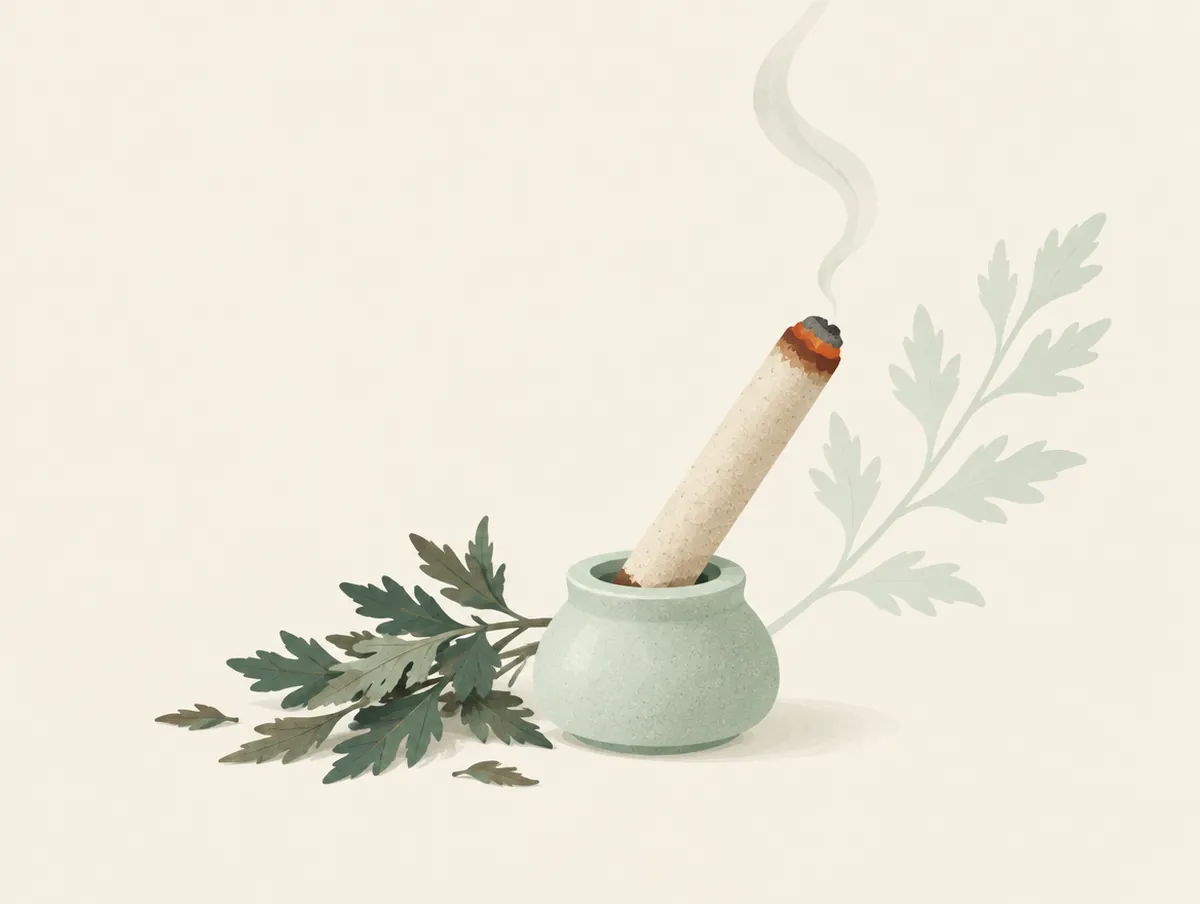
Moxibustion warms acupuncture points with smouldering moxa, made from the dried, processed leaves of mugwort. It is held near the skin or placed on a needle or barrier, kept off the skin, and is usually combined with acupuncture.
What it can help with
- Warming therapy
- Aches that feel better with heat
- Period pain
- Often used with acupuncture
Conditions we often treat
What happens in a session
Moxibustion is usually given as part of an acupuncture treatment rather than on its own. It is used when the diagnosis points to Cold or to weakness that responds to warmth.
- Choosing the points. Moxa goes on the same kinds of points as acupuncture, often on the lower back, abdomen, knees or lower legs.
- Applying the heat. There are several ways to do it, and moxa is normally held above the skin or kept off it rather than placed on it. A moxa stick, which looks like a thick cigar, is lit and held a couple of centimetres above the skin, moving slowly over the point. A small ball of moxa can be placed on the handle of an acupuncture needle so the warmth travels down. A small cone can sit on a thin slice of ginger, which keeps it off the skin.
- What you feel. A deep, spreading warmth, often pleasant. The skin may go pink.
- Your job. Say so the moment anything feels hot or sharp, so the moxa can be moved back or taken off straight away. Each point usually gets a few minutes.
- Afterwards. The ash is cleared away and the skin is checked. Mild redness fades within an hour or so.
Moxa is smoky and has a strong smell. Smokeless moxa sticks give off much less smoke; ask about them if smoke bothers you.
What it is used for
In Chinese medicine, moxibustion is used when a problem feels worse with cold and better with heat, or when there are signs of what is called deficiency, such as tiredness and feeling cold. Common uses alongside acupuncture include:
- Period cramps, especially cramps that ease with a hot water bottle
- Knee pain and back pain that ache more in cold, damp weather
- Chronic fatigue with feeling cold
- Digestive complaints such as bloating that come with loose stools and cold hands and feet
It is not used when the diagnosis points to Heat, for example with a fever, or red, hot, swollen joints. Whether moxa belongs in your plan is decided by your diagnosis at the clinic in Keswick.
How it works in Chinese medicine
Moxa is made from mugwort leaves that are dried, aged and ground into a soft wool. In Chinese medicine it is described as warming, and its heat is said to travel into the channels, warm the organ systems and move Qi and Blood where cold has slowed them down.
That is why it is chosen for Cold patterns. A cold, cramping pain, or an ache that stiffens in winter, is read as Cold contracting the channels, and warmth is the direct answer in this theory. Moxa is also used to strengthen what Chinese medicine calls Yang, the warming and activating side of the body, when someone is chronically tired and cold.
This is a traditional explanation, not a biomedical one. Warmth itself relaxes muscle and increases local blood flow.
Safety and who should avoid it
The main risk with moxibustion is a burn. Redness is normal, but a blister is a burn and should not happen with careful technique. If one does, keep it clean and covered and let me know. Other reported problems are allergic skin reactions and irritation from the smoke.
Moxa is avoided or used with extra care if you:
- Have reduced feeling in the skin, for example from diabetes or nerve damage, because you may not notice when it is too hot.
- Are pregnant. Moxa is not used on the abdomen or lower back, and any use in pregnancy should be discussed with your midwife or doctor.
- Have asthma, COPD or smoke sensitivity. Tell me first; smokeless moxa or a different treatment may suit you better.
- Have a fever, an infection, or red, hot, swollen areas.
- Have broken skin, a rash or scars at the point, or fragile skin.
Moxa is not used on the face or near the eyes. In Ontario, Traditional Chinese Medicine practitioners and acupuncturists must be registered with the College of Traditional Chinese Medicine Practitioners and Acupuncturists of Ontario (CTCMPAO), and you can check any practitioner on the College’s public register.
Questions about moxibustion
Does moxibustion hurt?
It should not. You feel a spreading warmth. If a spot starts to feel hot rather than warm, say so right away and the moxa is moved back. That is the main safety rule of the treatment.
Does moxa smell?
Yes. Burning moxa has a strong, earthy smell a bit like sage or incense, and the smoke can cling to hair and clothes for a few hours. Smokeless moxa has much less smell.
Can I do moxibustion at home?
Sometimes. For some diagnoses, people are shown how to use a moxa stick safely at home. Do not start on your own without being shown, because burns are one of the most commonly reported problems with moxa.