
Facial Cupping Therapy: What It Is and How It Works

Quick answer: Facial cupping therapy uses small, soft silicone cups to create a light vacuum on the skin of the face, gently lifting tissue instead of compressing it the way a regular massage would. In Traditional Chinese Medicine, it is used to help move Qi and Blood stagnation in the face and support the skin’s natural tone and circulation. Sessions are short, generally painless, and often paired with facial acupuncture for a fuller course of treatment.
Many people first hear about facial cupping because they have seen body cupping marks on an athlete and wonder whether the same tool can be used somewhere as delicate as the face. It can, though the cups, the suction, and the technique are all scaled down considerably. I want to walk through what facial cupping actually involves, what it may help with, and how it fits alongside other Traditional Chinese Medicine treatments.
In this article
- What Is Facial Cupping Therapy?
- What Facial Cupping May Help With
- What to Expect During a Session
- How Facial Cupping Fits Into Traditional Chinese Medicine
- Finding the Right Practitioner
- In this series
What Is Facial Cupping Therapy?
Facial cupping uses miniature cups, usually made of soft, flexible silicone rather than the glass or plastic cups used on the back or legs. The practitioner squeezes the cup to release air, places it against the skin, and lets it form a gentle seal. Instead of leaving the cup stationary, it is glided slowly across the cheeks, forehead, jawline, and neck. The suction is light enough that, unlike cupping used for Qi and Blood stagnation in the shoulders or back, it is not meant to leave visible marks.
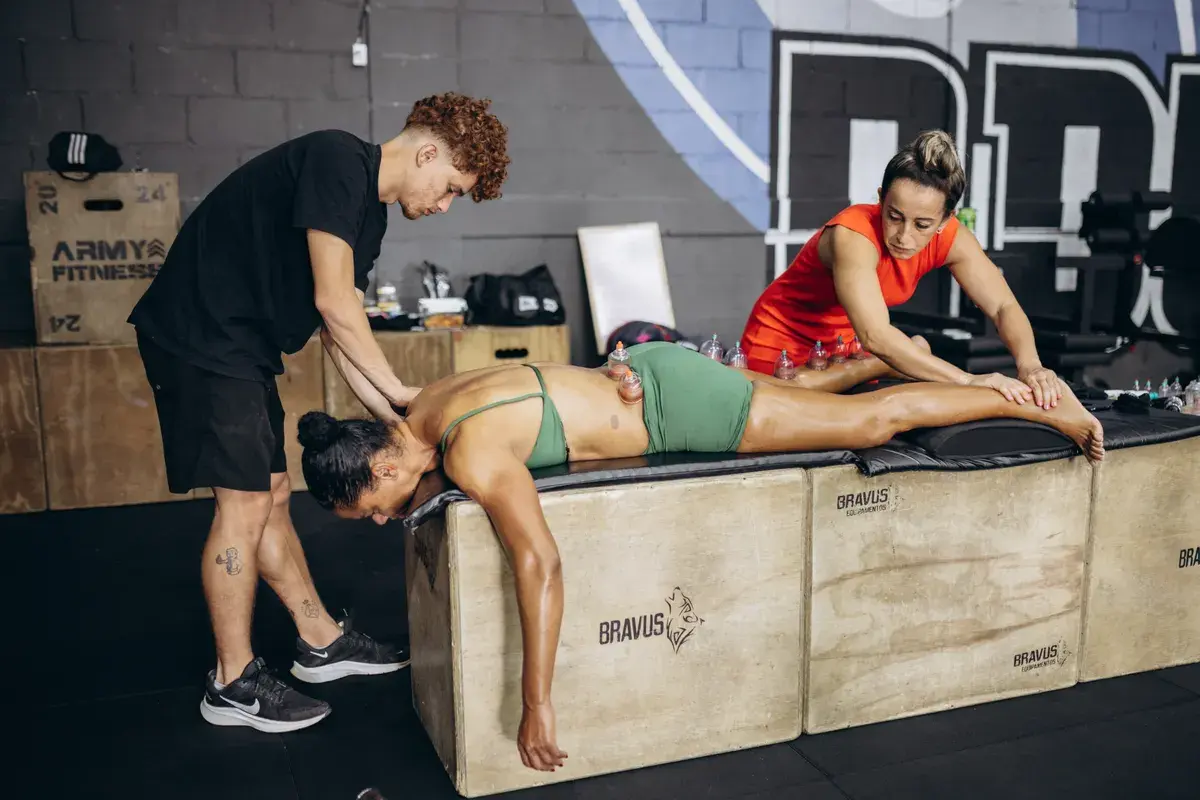
Photo by Jonathan Borba on Pexels
How It Differs From Body Cupping
Body cupping often uses stronger suction and is left in place for several minutes to work on deeper muscle layers, which is why it can leave temporary marks. If you have read about cupping therapy massage or cupping for neck pain, you already have a sense of how that stronger version works. Facial cupping is gentler by design, since facial skin and the tissue beneath it are thinner and more sensitive. The goal is to glide and lift rather than to hold and release deep pressure, which is closer in spirit to the gliding technique described in myofascial cupping therapy.
What Facial Cupping May Help With
Patients ask about facial cupping for a range of reasons, from general relaxation to specific cosmetic goals. In Traditional Chinese Medicine terms, I look at facial cupping as a way to support local circulation and encourage the smoother movement of Qi and Blood in the face, which may support overall tone and a refreshed appearance. It is also commonly combined with facial acupuncture, since the two techniques target the same areas from slightly different angles, one with needles and one with gentle suction.
It is worth being clear that facial cupping is not a stand-alone cosmetic procedure and should not be expected to produce dramatic or permanent changes on its own. It works best as one part of a broader course of treatment.
What to Expect During a Session
A typical visit starts the same way any Traditional Chinese Medicine treatment does: with questions about your health, a look at your tongue, and a reading of your pulse, so the practitioner understands your pattern before any tool touches your skin. From there, a light facial oil or cream is usually applied so the cups can glide smoothly. The practitioner moves the cups across the face in gentle strokes, often following the direction of the muscles, and may pause briefly over areas of tension. Most people find it relaxing rather than uncomfortable, and because the suction is mild, any temporary redness tends to fade quickly.
How Facial Cupping Fits Into Traditional Chinese Medicine
Facial cupping is not used in isolation. It sits within a larger framework that also includes cosmetic acupuncture, herbal formulas, and lifestyle guidance, all chosen based on your individual pattern rather than a fixed routine applied to everyone who walks in.
Why a Diagnosis Comes First
At Traditional Healing Centre in Keswick, every treatment plan starts from your own Traditional Chinese Medicine diagnosis, never an off-the-shelf protocol. Jason Tarter, R.TCMP, R.Ac, has been in practice for 18 years and has also trained in the Meizen facial protocol, which he uses for cosmetic acupuncture. That combination means facial cupping, when it is part of your plan, is applied alongside a diagnosis built from your tongue, pulse, and history, not as a generic add-on. As with most Traditional Chinese Medicine care, plan on a course of several treatments to judge progress, since a single session rarely tells the full story.
Finding the Right Practitioner
If you are considering facial cupping, look for a practitioner registered with a recognized body, such as the College of Traditional Chinese Medicine Practitioners and Acupuncturists of Ontario (CTCMPAO), and ask how the technique fits into their overall approach to your pattern. Many extended health plans cover acupuncture and Chinese medicine services, so it is worth checking your coverage before booking, and keep in mind that receipts from a Registered Acupuncturist (R.Ac) and Registered Traditional Chinese Medicine Practitioner (R.TCMP) are typically what insurers ask for.
Facial cupping is a gentle, well-tolerated technique, but it works best when it is built on a proper diagnosis and paired with the rest of your Traditional Chinese Medicine care. If you would like to know whether it makes sense for you, book an appointment or get in touch with questions, or visit traditionalhealingcentre.com to learn more.
In this series
- Fire Cupping: What It Is, Does It Hurt, and the Marks It Leaves
- How Often Should You Get Cupping?
- Cupping for Neck Pain
- Cupping Therapy: How It Works and Who It Helps
- Cupping Side Effects, Bruises and Dangers: What’s Normal
- Facial Cupping Therapy: What It Is and How It Works