
Conditions · Women’s health
Acupuncture for Breech Baby (Moxibustion)
A breech baby is lying bottom or feet first late in pregnancy. Moxibustion is a traditional Chinese medicine method sometimes used at this stage, only with your midwife's or doctor's knowledge and alongside your prenatal care.
Common symptoms
- Your midwife or doctor has found the baby lying bottom or feet first
- Firm, round pressure (the baby's head) high up under the ribs
- Kicks felt low in the belly or toward the bladder
- Hiccups felt higher up than expected
- An ultrasound confirming a breech position late in the third trimester
Common causes
- Earlier stages of pregnancy, when many babies are still breech and turn on their own
- Extra or low amniotic fluid
- The shape of the uterus, or fibroids
- A low-lying placenta (placenta previa)
- Twins, or a baby born early
How Chinese medicine understands a breech baby
Chinese medicine does not see a breech position as a disease. In its view, the baby’s position reflects how well the mother’s Qi and Blood are moving and whether there is enough to support the pregnancy in its last weeks.
The patterns traditionally described are:
- Qi and Blood deficiency. A tired, run-down mother, pale complexion, shortness of breath, perhaps a history of anaemia. The theory is that there is not enough Qi to guide the baby.
- Qi stagnation. Stress, a tight, full feeling under the ribs, sighing and irritability. In this view the flow is blocked rather than weak.
- Cold. Cold hands and feet and a general feeling of being chilled, which Chinese medicine thinks of as slowing movement in the lower body.
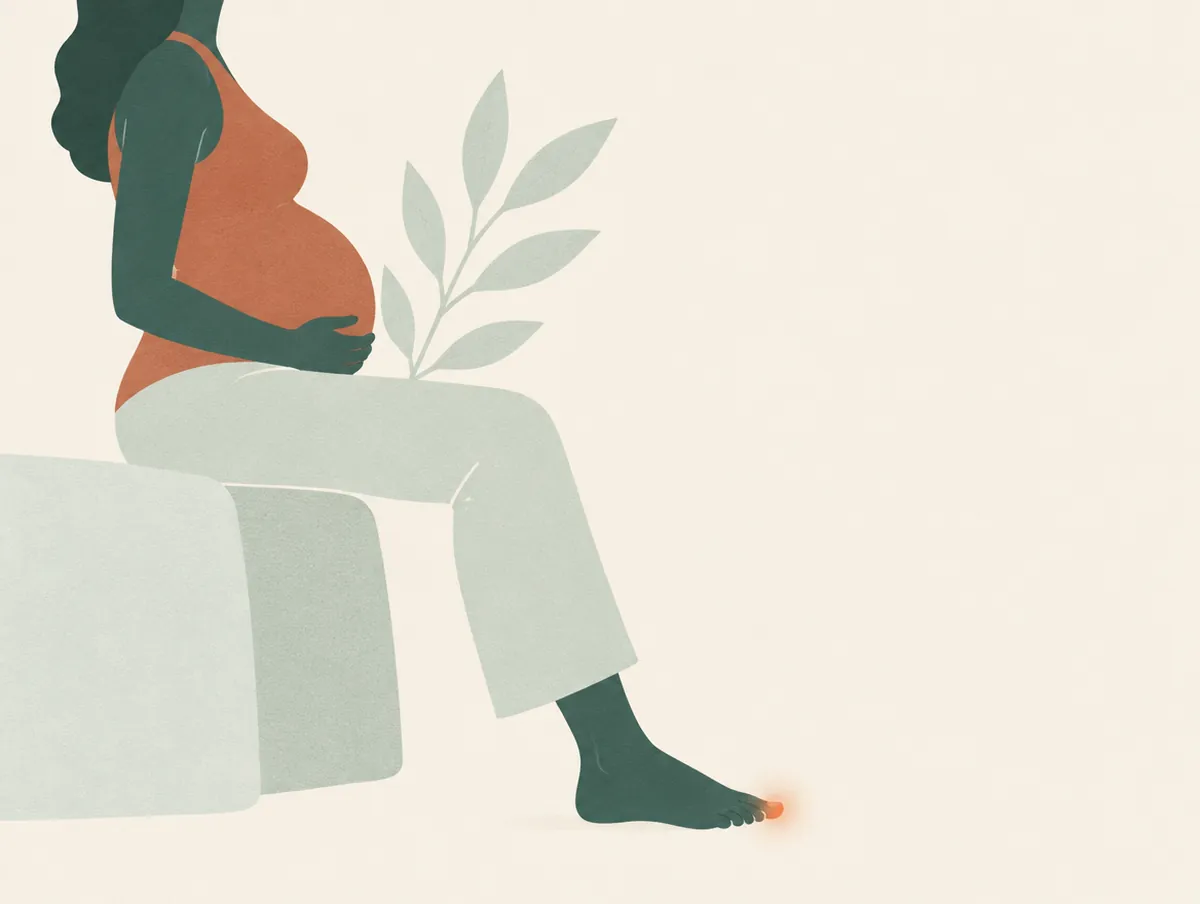
The classic method is moxibustion at a point on the outer corner of the little toe, used on both feet. Warming this point is traditionally thought to encourage the baby to move. The pattern shapes the rest of the plan, such as whether the mother also needs support for tiredness or stress.
What treatment involves
Treatment is only arranged with your midwife’s or doctor’s knowledge, once they have confirmed the position, usually by ultrasound. It sits alongside your prenatal care, never in place of it.
The first visit at the Keswick clinic includes a lot of questions about your pregnancy, your health and anything your midwife or doctor has flagged. I look at your tongue and take your pulse. Moxibustion is then shown: a lit stick of dried mugwort held a short distance from the little toe, usually for 10 to 20 minutes a side. Because it is often used daily for a short period, you and a partner are commonly shown how to do it safely at home.
Acupuncture may be added, with gentle needling. Some points are avoided in pregnancy, and treatment is adjusted for that. Herbs are generally not used for a breech position.
Your midwife or doctor keeps checking the baby’s position. Moxibustion does not replace their advice about ECV, a planned caesarean or a vaginal breech birth. Research on moxibustion for breech is still developing.
Between visits
- Keep every prenatal appointment and let your midwife or doctor know you are using moxibustion.
- Count your baby’s movements each day as your care provider advises, and know your baby’s usual pattern.
- Use moxa safely. Hold it away from the skin, keep a dish of water or sand nearby to put it out, and never leave it lit unattended. Ventilate the room.
- Stop if anything feels wrong, including tightening, pain or feeling unwell, and call your midwife or doctor.
- Ask your care provider about positions they are comfortable with you trying. Do not try manual turning at home.
When to see your doctor first
Call your midwife or doctor, or go to the hospital, right away if you have:
- Any vaginal bleeding.
- Fewer baby movements than usual, or a change in the pattern.
- Fluid leaking from the vagina, which may mean your waters have broken.
- Regular tightening or contractions, or pelvic pressure, before 37 weeks. These can be signs of preterm labour.
- Severe or constant belly pain.
- A bad headache, changes in vision, or sudden swelling of the face or hands.
If you cannot reach them and are worried, call 911.
Questions about breech baby (moxibustion)
Will moxibustion turn my baby?
No one can promise that. Many babies turn on their own, some do not, and moxibustion does not change that for certain. It is a traditional method used alongside your prenatal care, and your midwife or doctor will keep checking the baby's position and talk with you about options such as external cephalic version (ECV).
When in pregnancy is it used?
It is usually considered in the third trimester, once your midwife or doctor has confirmed the baby is breech, often from around 33 to 35 weeks. Ask your care provider first, and tell them you are having it.
Is it safe?
Moxibustion here is indirect: a lit stick of dried mugwort is held near the skin, not on it, so it feels warm, not hot. Some people notice more baby movement, and a few have mild side effects such as nausea or tightening. Stop and call your midwife or doctor if you have contractions, bleeding, fluid leaking or less movement. It is not used in some pregnancies, such as with a low-lying placenta, and some acupuncture points are avoided in pregnancy.