
In short
When you search chinese cupping near me, the most useful filter isn't distance but training — choose a clinic where a registered Traditional Chinese Medicine practitioner builds your cupping treatment from an actual diagnosis of your pattern, not a generic wellness add-on. Traditional Healing Centre in Keswick, Ontario offers Chinese cupping as part of individualized TCM care, alongside acupuncture and custom herbal formulas.
Searching chinese cupping near me usually returns a long list of spas, clinics, and wellness studios, and sorting through them can feel harder than deciding to try cupping in the first place. The real differences between providers rarely show up in a map listing. They show up in how a practitioner reaches a pattern, how they combine cupping with other Traditional Chinese Medicine tools, and how honestly they talk about what the treatment can and cannot do for you.
In this article
- What Chinese Cupping Is and How It Works
- What to Look for When Searching "Chinese Cupping Near Me"
- What a Cupping Visit Typically Involves
- Conditions People Often Seek Cupping For
- How Chinese Cupping Fits Into a Larger Treatment Plan
- How Often You Might Need Cupping
- Finding Cupping Care Near Keswick, Ontario
- In this series
What Chinese Cupping Is and How It Works
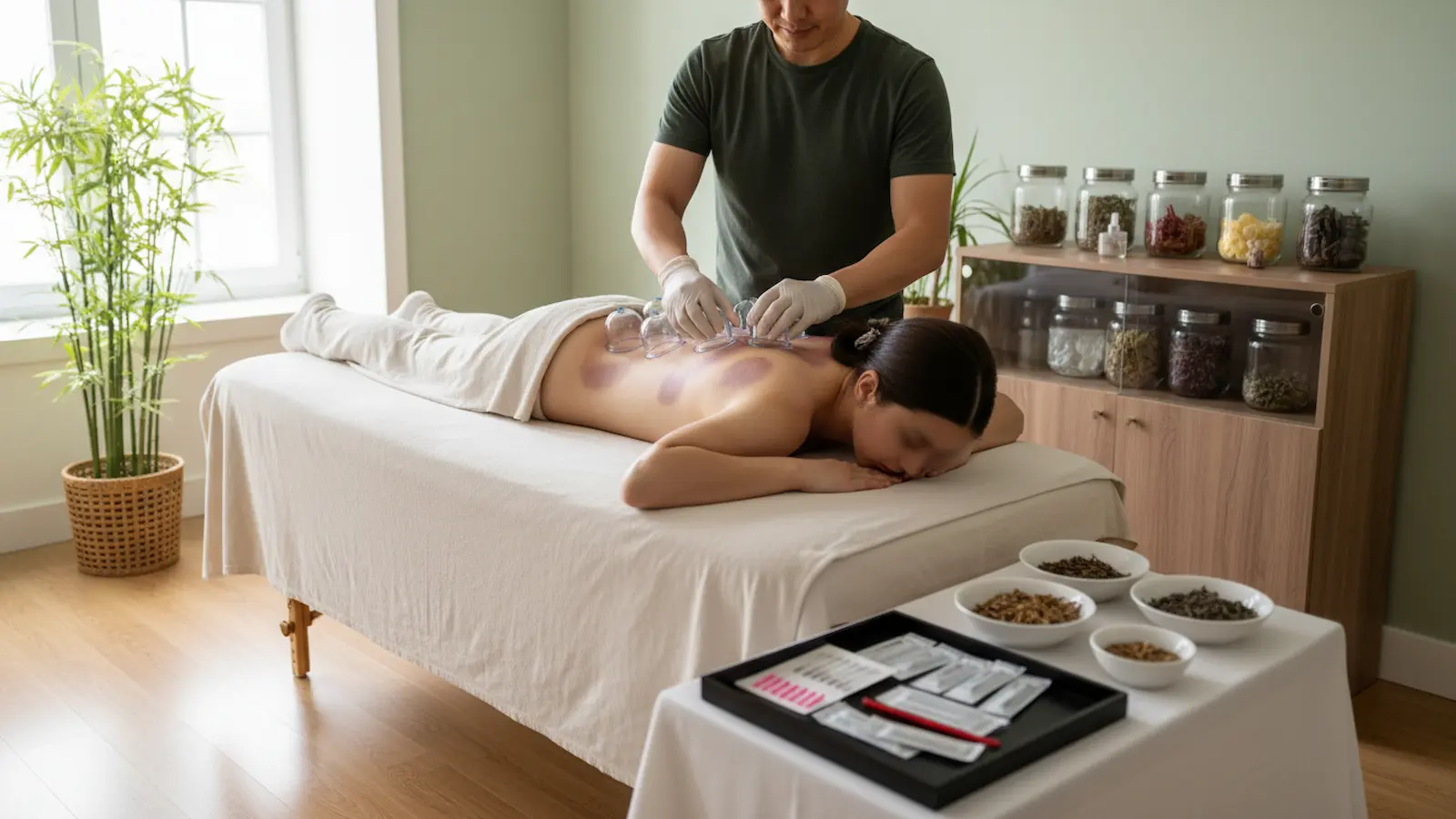
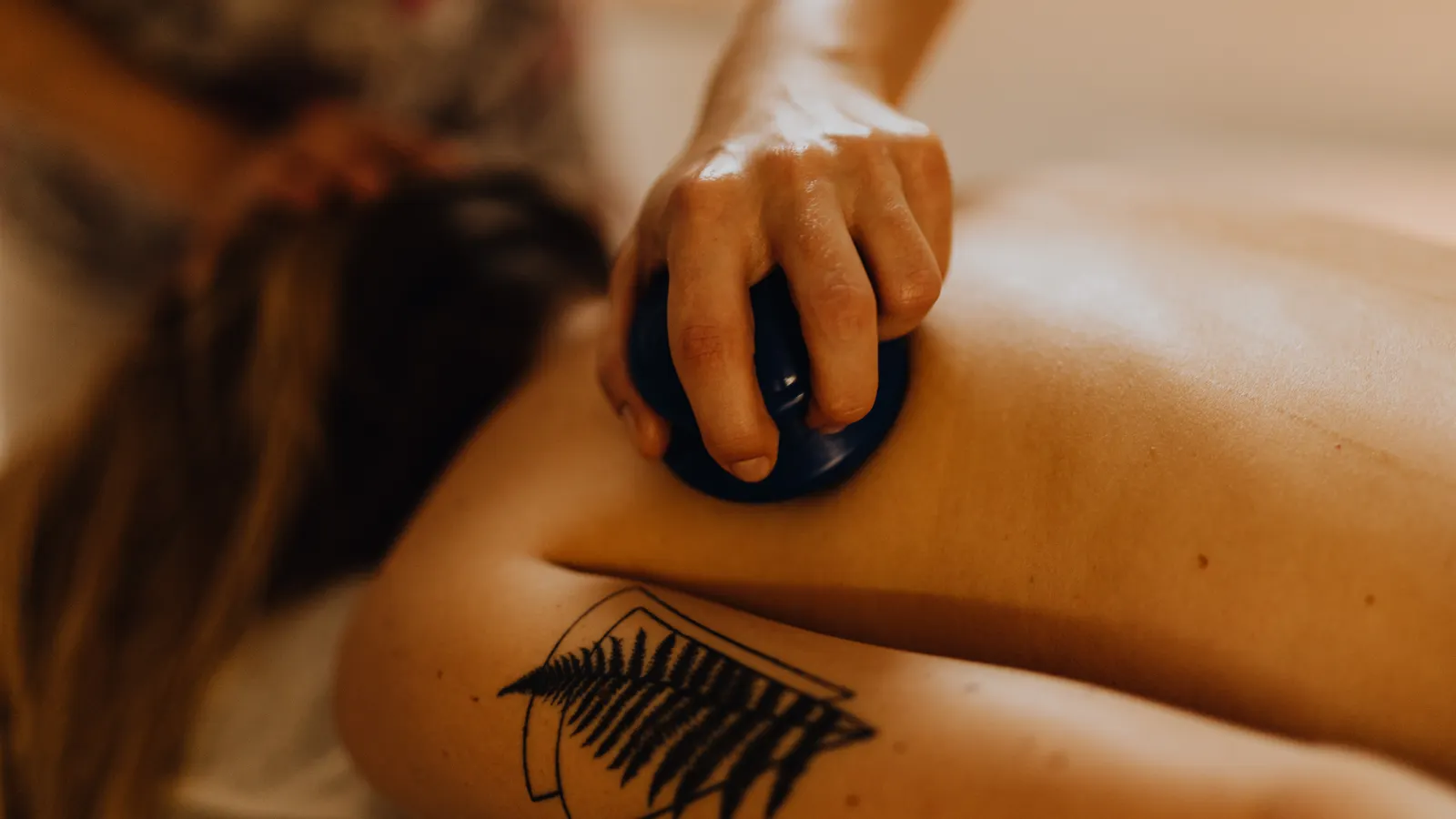
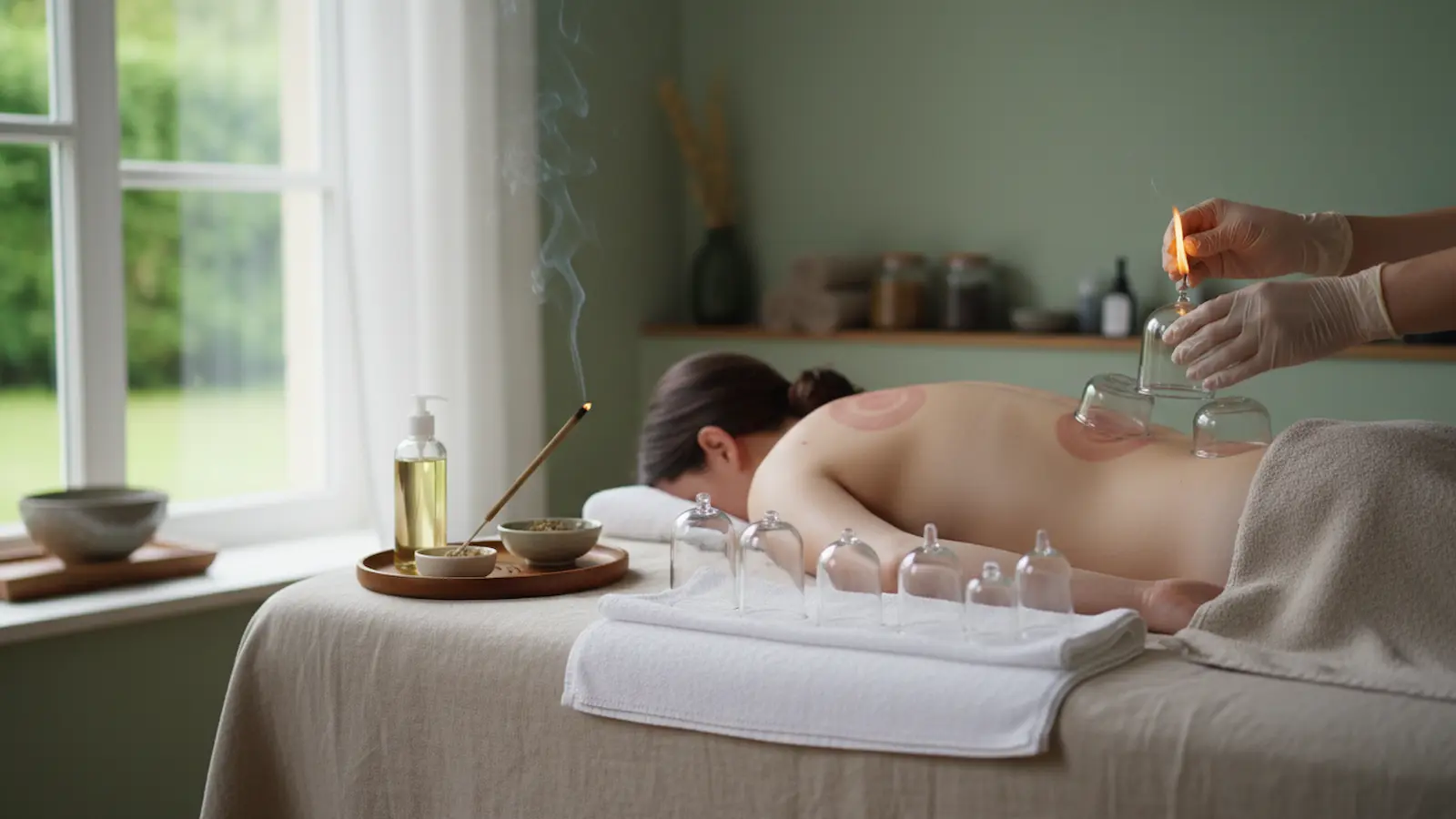
Chinese cupping uses glass, silicone, or bamboo cups to create suction on the skin. The suction draws the skin and superficial muscle layer upward, which is meant to encourage movement where Qi and Blood have become stagnant. The cups may stay still or be glided along the skin, depending on what the practitioner is treating.
The Traditional Chinese Medicine View of Cupping
In Traditional Chinese Medicine, pain and tension are often understood as a sign that Qi and Blood are not moving smoothly through an area. Cupping is one of several tools used to address that stagnation, alongside acupuncture, Tuina massage, and herbal formulas. The point isn't the cupping itself but the pattern it's meant to correct.
What to Look for When Searching "Chinese Cupping Near Me"
A map full of pins doesn't tell you much about training, experience, or approach. Before booking, it's worth looking past the listing and into who is actually doing the treatment.
Credentials and Training to Check
Book a time
Pick a time that suits you.
Book a time- Phone: (647) 346-2780
- Email: jasontcm@traditionalhealingcentre.com
- Address: 213 Queensway S. Unit 400, Keswick, Ontario, L4P2A7
Related articles
In Ontario, Traditional Chinese Medicine practitioners and acupuncturists are regulated by the College of Traditional Chinese Medicine Practitioners and Acupuncturists of Ontario (CTCMPAO). A practitioner registered with the college can issue receipts as a Registered Acupuncturist (R.Ac) or Registered Traditional Chinese Medicine Practitioner (R.TCMP), which matters if you plan to submit a claim to an extended health plan. OHIP does not cover acupuncture or Chinese medicine services, so this receipt is often the only route to reimbursement.
Questions Worth Asking Before You Book
A short conversation before your first visit can tell you a lot. Ask whether the practitioner will take a full history, look at your tongue, and check your pulse before treating you. Ask whether cupping will be used on its own or combined with acupuncture, herbs, or Tuina massage. And ask how many visits they'd expect before you'd notice whether the course of treatment is working for you.
What a Cupping Visit Typically Involves
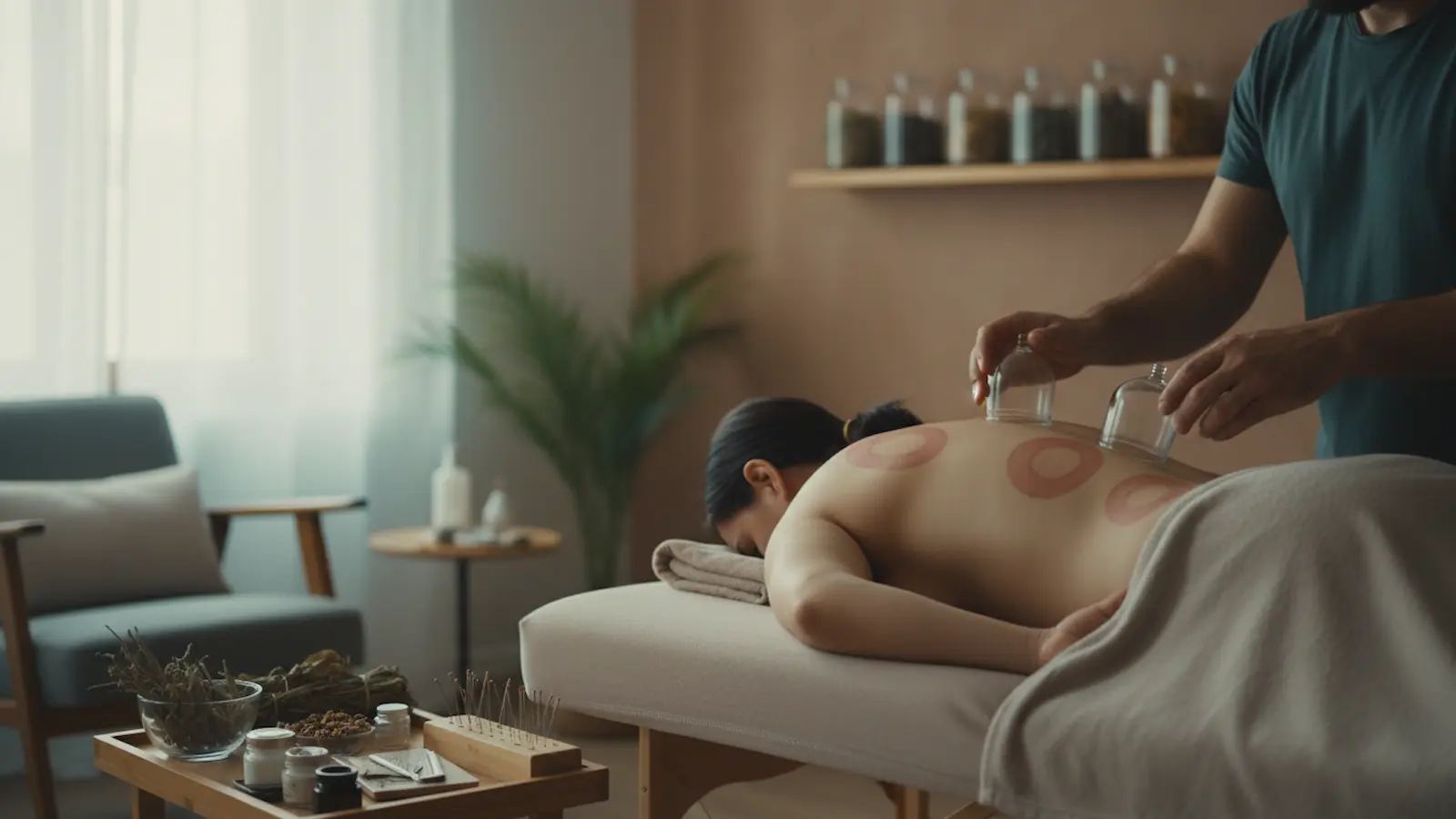
Most visits begin the same way any Traditional Chinese Medicine visit does: with questions about your symptoms and health history, a look at your tongue, and a reading of your pulse. From there, the practitioner decides where cupping fits and how it should be applied. For a closer look at what a session involves, including how long cups are typically left in place and what marks to expect afterward, see The Chinese Cupping Method: What to Expect From Treatment.
Conditions People Often Seek Cupping For
People typically look into cupping for chronic pain conditions such as back pain, sciatica, knee pain, and headaches, as well as neck and shoulder tension that builds up from desk work or stress. Cupping for neck pain in particular is one of the more common requests, and the approach there is detailed in Cupping for Neck Pain.
How Chinese Cupping Fits Into a Larger Treatment Plan
Cupping is rarely the whole plan. It's one piece that a practitioner may bring in alongside acupuncture, Chinese herbal formulas, moxibustion, or Tuina massage, depending on the pattern they find during your diagnosis. This is why the "best" cupping clinic for one person's low back pain may not be the right fit for someone dealing with digestive or sleep concerns — the treatment has to follow the diagnosis, not the other way around.
Why I Approach Cupping This Way at Traditional Healing Centre
At Traditional Healing Centre, every treatment plan starts from your own Traditional Chinese Medicine diagnosis, never an off-the-shelf protocol. I'm Jason Tarter, R.TCMP, R.Ac, and I've been in practice for 18 years, registered with the CTCMPAO. Cupping sits alongside acupuncture, Chinese herbal medicine, moxibustion, and Tuina massage in my practice, and when herbs are part of your formula, I fill them myself through the clinic's own herbal dispensary rather than sending you elsewhere. If you'd like to talk through whether cupping makes sense for your symptoms, you can get in touch or go ahead and book an appointment.
How Often You Might Need Cupping
One course of cupping rarely tells the full story. Plan on 5–10 treatments before you and your practitioner can really judge how things are progressing. The right frequency depends on your pattern and how your body responds, which is covered in more detail in How Often Should You Get Cupping?
Finding Cupping Care Near Keswick, Ontario
If you're in or around Keswick and searching chinese cupping near me, it's worth looking for a clinic that treats cupping as part of a documented Traditional Chinese Medicine diagnosis rather than a stand-alone spa service. That distinction tends to matter more for ongoing concerns like chronic pain, digestive issues, or stress than it does for a single relaxing visit.
Ready to book, or have a question?
Book with Traditional Healing CentreIn this series
- Fire Cupping: What It Is, Does It Hurt, and the Marks It Leaves
- How Often Should You Get Cupping?
- Cupping for Neck Pain
- Chinese Cupping Therapy at Home: What to Know First
- Cupping Therapy: How It Works and Who It Helps
- Cupping Side Effects, Bruises and Dangers: What's Normal
- Understanding the Cupping Procedure: What to Expect
- Facial Cupping Therapy: What It Is and How It Works
- Flame Cupping: How It Works and What to Expect
- Massage Cupping Therapy Near Me: What to Expect
- Chinese Cupping Near Me: What to Know Before You Book