
Conditions · Pain
Acupuncture for Achilles Tendinitis
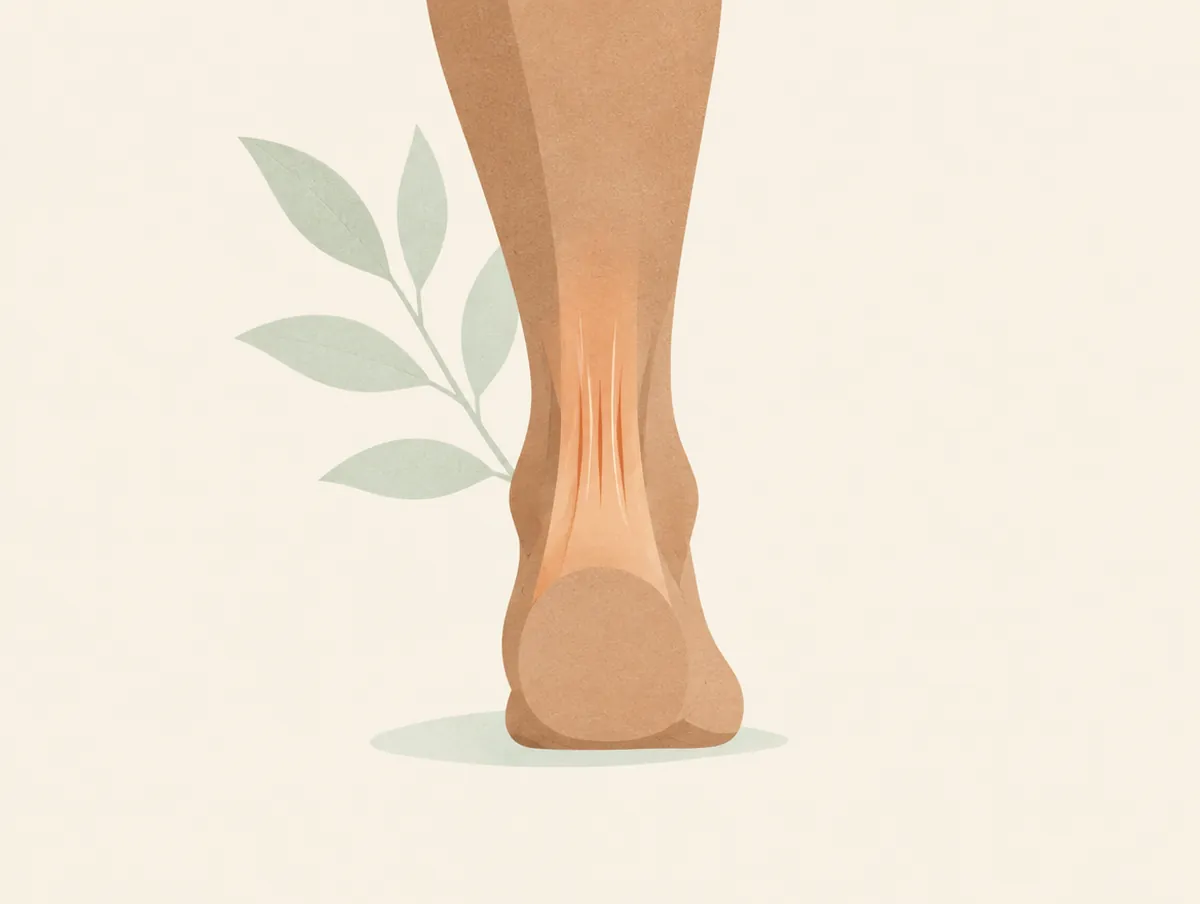
Achilles tendinitis is pain and stiffness in the thick tendon at the back of the ankle, usually from overuse. Acupuncture and related treatments can help ease pain and tightness while you load the tendon back up with the right exercises.
Common symptoms
- Pain and stiffness at the back of the heel or a few centimetres above it
- Stiffness that is worst with the first steps in the morning and eases as you warm up
- Pain that flares when you start running, climbing stairs or going up on your toes
- Tenderness or a thickened lump in the tendon
- A creaking or grating feel when the ankle moves
Common causes
- Overuse from running, jumping or court sports, especially after a sudden increase in training
- Tight or weak calf muscles
- Running uphill or on hard surfaces, or changing to flatter shoes
- Age, as tendons become less elastic from middle age on
- Some medicines, notably fluoroquinolone antibiotics
How Chinese medicine understands Achilles tendinitis
In Chinese medicine, tendons belong to the sinews, and the sinews rely on the Liver’s Blood to keep them supple. The back of the heel sits on the Bladder and Kidney channels, which run up through the calf. Achilles pain is usually seen as a blockage of Qi and Blood in those channels, on top of sinews that are not being nourished well enough to recover from the load you put on them.
The common patterns are:
- Qi and Blood stagnation. Sharp, fixed pain after a jump in training, a new hill route or new shoes. The tendon is tender to squeeze. Treatment moves circulation through the calf and heel.
- Cold and Damp. A stiff, aching tendon that is worst in the morning and in cold weather, loosens up with movement and warmth, and may feel thick or puffy. Treatment warms the area.
- Liver Blood deficiency. The tendon is slow to heal and tightens easily, and you may have cramping calves, dry skin or poor sleep. Treatment aims to nourish the sinews as well as move them.
- Kidney deficiency. A dull, long-standing ache in an older runner or walker, often with a tired low back or knees. In Chinese medicine this is seen as a lack of support from within, so treatment also builds you up.
If your pain is under the heel and along the arch instead, see the page on plantar fasciitis.
What treatment involves
Your first visit at the clinic in Keswick starts with a lot of questions: when the pain began, what you were doing in training or at work, your shoes, your sleep and your general health. I also look at your tongue and take your pulse. An assessment usually includes finding exactly where the tendon is sore and how tight the calf is.
Acupuncture is usually the main treatment. Points are commonly chosen around the ankle and through the calf, and on other parts of the body for your pattern. I treat the whole body at every treatment, not only the area that hurts. A sore heel changes how you walk and run, and the knees, hips and low back often take up the slack.
Moxibustion can warm a stiff, cold tendon. Cupping and tuina massage can loosen tight calves. When the pattern is one of deficiency, Chinese herbal medicine can be added: a formula written for you and dispensed at the clinic.
Tendons change slowly. Treatment works best alongside a gradual strengthening program from a physiotherapist. Plan on 5–10 treatments to judge progress.
Between visits
- Keep loading it, gently. Calf raises done slowly, as your physiotherapist shows you, are the usual starting point. Mild discomfort is fine. Pain that is worse the next morning means back off.
- Cut back, don’t stop. Reduce running distance, hills and speed work for a while. Cycling and swimming keep your fitness up with less strain.
- Check your shoes. Worn-out shoes, or a sudden switch to much flatter ones, can load the tendon more.
- Warm up before activity. A few minutes of walking and gentle calf movement before you run.
- Tell your doctor about new pain on antibiotics. If the tendon started hurting while taking a fluoroquinolone, let your doctor know promptly.
When to see your doctor first
See a doctor, or go to emergency, if:
- You felt a sudden snap or a kick at the back of the ankle, or heard a pop.
- You cannot push up onto your toes, or walk with a flat-footed limp.
- There is a gap you can feel in the tendon.
- The calf is swollen, hot, red or tender. This needs checking for a blood clot.
- The area is red and hot and you have a fever.
- Tendon pain started while taking a fluoroquinolone antibiotic.
- Both heels hurt along with other joints, or with back pain and morning stiffness that lasts over an hour.
Questions about achilles tendinitis
How is this different from plantar fasciitis?
Both hurt around the heel and both are often worst first thing in the morning. Achilles tendinitis is at the back of the heel and up the tendon. Plantar fasciitis is under the heel and along the arch. Some people have both, since tight calves feed into each.
Should I stop running completely?
Usually not. Tendons tend to respond to the right amount of load and weaken with complete rest. Cut back to a level that does not make the tendon worse the next morning, and ask a physiotherapist about a calf-strengthening program.
Can you needle directly into the tendon?
Points are commonly placed around the tendon and in the calf, and elsewhere on the body, rather than into the tendon itself. The aim is to ease pain and relax the calf muscles that pull on it.
Related conditions
- Ankle Sprain
- Back Pain
- Bursitis
- Carpal Tunnel Syndrome
- Fibromyalgia
- Frozen Shoulder
- Golfer's Elbow
- Gout
- Headaches & Migraines
- Hip Pain
- Knee Pain
- Neck Pain
- Osteoarthritis
- Peripheral Neuropathy (Numbness & Tingling)
- Piriformis Syndrome
- Plantar Fasciitis
- Repetitive Strain Injury
- Rheumatoid Arthritis
- Sciatica
- Shin Splints
- Shoulder Pain (Rotator Cuff & Impingement)
- Sports Injuries
- Tennis Elbow
- Trigger Finger
- Upper Back Pain
- Whiplash
- Wrist Pain & Tendinitis