
Conditions · Pain
Acupuncture for Hip Pain
Hip pain can sit in the groin, on the outer side of the hip or in the buttock, and each place points to a different cause. We use acupuncture and related treatments to ease pain and stiffness, based on a Chinese medicine diagnosis of what is driving it.
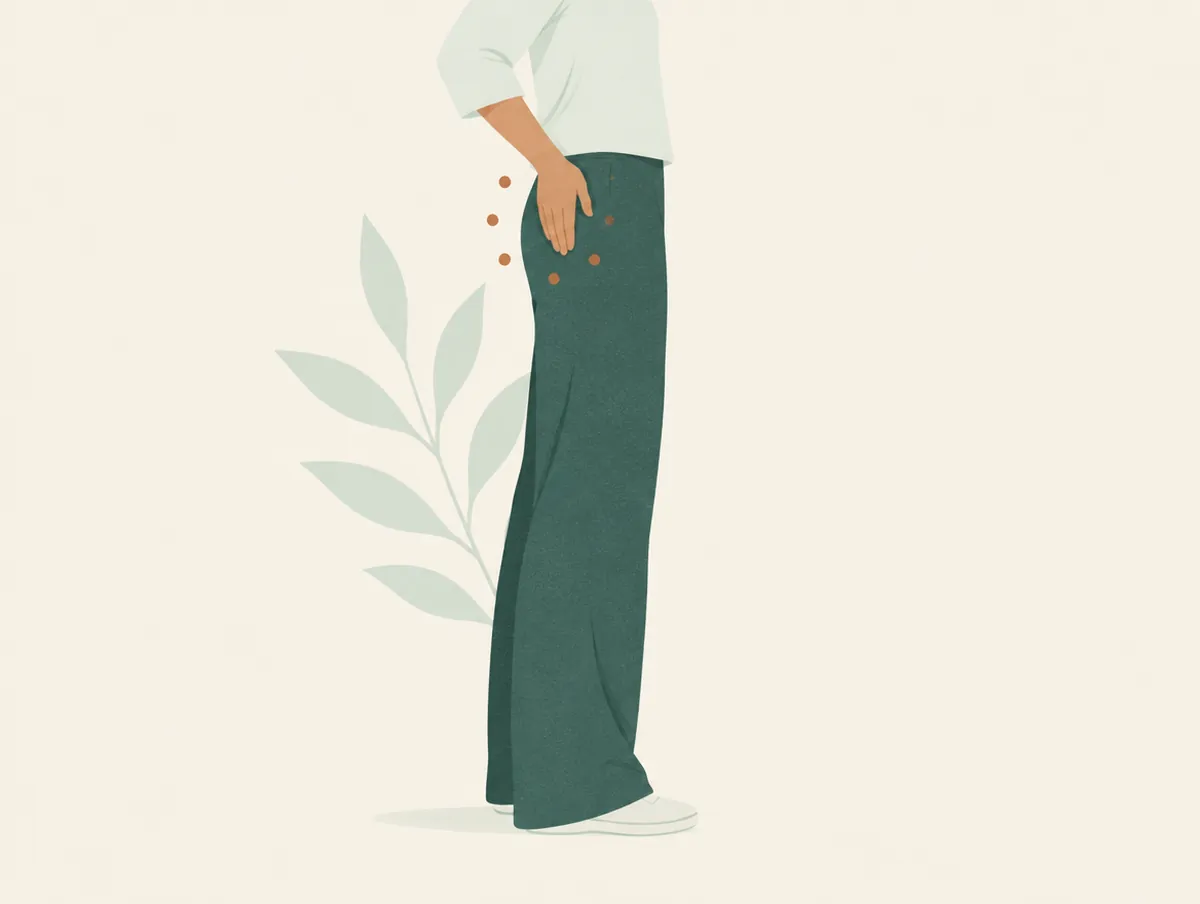
Common symptoms
- Aching in the groin or front of the hip, often worse when you first get up
- Pain on the outer side of the hip, and trouble lying on that side at night
- Stiffness putting on socks and shoes or getting in and out of the car
- Pain walking, climbing stairs or standing for a long time
- A limp, or a hip that clicks or catches
Common causes
- Irritated tendons and bursa on the outer hip (greater trochanteric pain syndrome), common in middle age
- Wear-related change in the hip joint (osteoarthritis)
- Strain of the muscles around the hip and groin from sport, running or a sudden movement
- Pain referred from the lower back or sacroiliac joint
- A tear of the cartilage rim of the joint (labral tear) or an old hip problem from childhood
How Chinese medicine understands hip pain
In Chinese medicine, most hip pain is a form of Bi syndrome: pain from Qi and Blood that are blocked in the channels around the joint. Where the pain sits matters. The Gallbladder channel runs down the outer side of the hip and thigh, so pain on the outer hip is usually read along that channel. Pain in the groin lies closer to the Liver and Stomach channels. Pain in the buttock often involves the Bladder channel and the lower back.
What is causing the blockage decides the rest of the treatment. The common patterns are:
- Wind, Cold and Damp. The hip is stiff and heavy, worse in cold, wet weather and first thing in the morning, and better with warmth and movement. Treatment warms the area and clears the channels.
- Qi and Blood stagnation. Sharp, fixed pain, often after a fall, a strain or a sudden jump in running or walking. Treatment moves circulation through the area.
- Liver and Kidney deficiency. A deep, dull ache with weak legs and a sore low back, often in older people or after long illness. In Chinese medicine the Kidneys govern the bones and the Liver the tendons, so treatment also builds these up.
Most people have a mix of these, which is why two people with the same X-ray can get quite different treatment. Pain that shoots down the leg is a different problem, covered on the sciatica page.
What treatment involves
Your first visit at the clinic in Keswick starts with a lot of questions: where the pain sits, which movements bring it on, how you sleep, how far you can walk, and your general health. I look at your tongue and take your pulse. An assessment usually also includes checking how the hip moves in each direction and whether the low back is part of the picture.
Acupuncture is usually the main treatment. Points are commonly chosen around the hip and buttock, along the leg, and elsewhere on the body for your pattern. I treat the whole body at every treatment, not only the area that hurts. The aim is to ease pain and let the muscles around the hip relax so it moves more freely.
For a Cold pattern, moxibustion can warm the points. Cupping and tuina massage can help release the buttock and outer thigh muscles, which often tighten as you start to limp. Where the pattern calls for it, Chinese herbal medicine is a formula written for you and dispensed at the clinic.
The first appointment is 75 minutes, including the diagnosis and first treatment. Follow-ups are 60 minutes. Plan on 5–10 treatments to judge progress.
Between visits
- Keep walking, within comfort. Shorter, more frequent walks usually suit a sore hip better than one long one.
- Sleep with a pillow between your knees. If the outer hip hurts, this takes pressure off it. Avoid lying on the sore side.
- Don’t cross your legs or sit in low, soft chairs for long periods. Both load the outer hip.
- Strengthen gradually. Gentle exercises for the buttock and hip muscles from your physiotherapist or doctor tend to help most kinds of hip pain.
- Use heat for stiffness. A warm shower or heat pack for 10 to 15 minutes can ease a stiff hip in the morning.
When to see your doctor first
See your doctor before starting treatment, or promptly if you are already coming in, if:
- You fell and now cannot put weight on the leg, or the leg looks shorter or turned out. A hip fracture needs emergency care.
- The hip is hot, red or swollen, or you have a fever.
- A child or teenager has hip or knee pain or a new limp.
- You have taken steroid medication for a long time, or drink heavily, and have new deep groin pain.
- You have pain at night that does not ease with rest, unexplained weight loss, or a history of cancer.
- You have a bulge in the groin, or numbness, weakness or bladder or bowel changes with the pain.
Questions about hip pain
My hip hurts on the outside when I lie on it. Is that arthritis?
Not usually. Pain on the outer point of the hip that is worse lying on that side is more often the tendons and bursa there. Arthritis of the hip joint itself tends to be felt in the groin or front of the thigh. Your doctor can confirm which it is.
How is hip pain different from sciatica?
Sciatica is nerve pain that runs from the low back or buttock down the leg, often below the knee, with tingling or numbness. Hip pain stays around the joint, groin or outer hip and changes with how you move the hip. Some people have both, and the assessment looks at the back as well.
Can I have acupuncture if I am waiting for a hip replacement?
Yes. Treatment can run alongside your surgeon's plan while you wait, with the aim of easing pain and keeping you moving. Tell your surgeon, and keep to any exercises your physiotherapist gave you.
Related conditions
- Achilles Tendinitis
- Ankle Sprain
- Back Pain
- Bursitis
- Carpal Tunnel Syndrome
- Fibromyalgia
- Frozen Shoulder
- Golfer's Elbow
- Gout
- Headaches & Migraines
- Knee Pain
- Neck Pain
- Osteoarthritis
- Peripheral Neuropathy (Numbness & Tingling)
- Piriformis Syndrome
- Plantar Fasciitis
- Repetitive Strain Injury
- Rheumatoid Arthritis
- Sciatica
- Shin Splints
- Shoulder Pain (Rotator Cuff & Impingement)
- Sports Injuries
- Tennis Elbow
- Trigger Finger
- Upper Back Pain
- Whiplash
- Wrist Pain & Tendinitis