
Conditions · Pain
Acupuncture for Gout
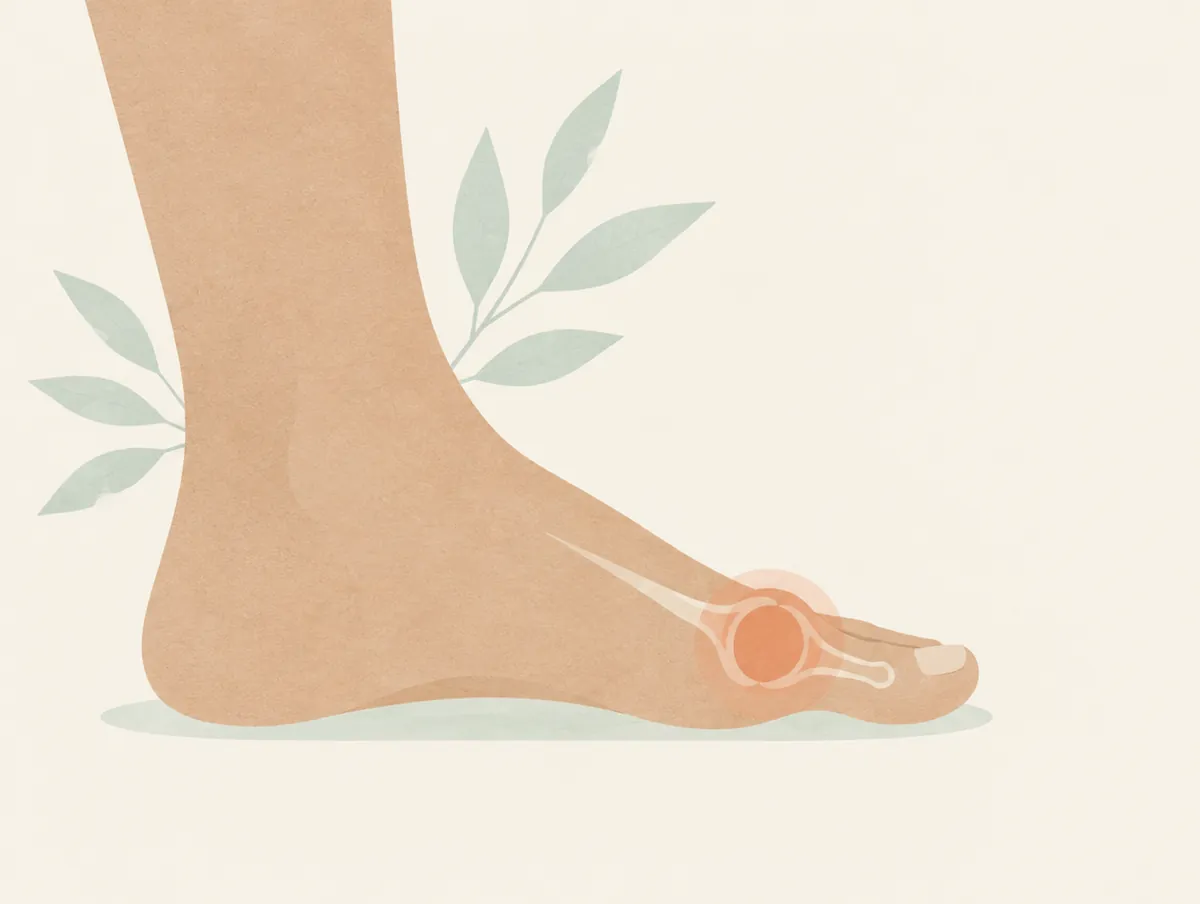
Gout is a form of arthritis where uric acid crystals build up in a joint and set off sudden, intense attacks of pain and swelling. Acupuncture and Chinese medicine can support you between and around attacks, alongside the medical care that controls uric acid.
Common symptoms
- Sudden, severe pain in one joint, often the big toe, that peaks within a day
- A joint that is red, hot, swollen and too tender to touch, even with a bedsheet
- Attacks that often start at night
- Lingering stiffness or aching after an attack settles
- Firm lumps under the skin (tophi) near joints after years of repeated attacks
Common causes
- High levels of uric acid in the blood, from making too much or clearing too little
- Alcohol, especially beer, and drinks sweetened with fructose
- Diets high in red meat, organ meats and some seafood
- Kidney disease, and medicines such as some diuretics
- Family history, being male, and excess body weight
How Chinese medicine understands gout
In Chinese medicine, gout is a type of Bi syndrome, which means pain from an obstruction in the channels. It is usually the “hot” kind. A joint that is red, burning and swollen is seen as Damp-Heat collecting in the joint and blocking the flow of Qi and Blood.
The patterns change with the stage of the condition:
- Damp-Heat in the joint. This is the acute attack: sudden, burning pain, redness and swelling, often with thirst and a greasy yellow coating on the tongue. Rich food and alcohol are seen as the usual triggers, which fits what doctors say about diet and gout.
- Spleen deficiency with Damp. Between attacks, the digestion is seen as not transforming fluids and food well, so Damp keeps building up. People with this pattern often feel heavy and tired and may carry extra weight.
- Blood stasis. After years of attacks, the joint stays stiff and aches in one fixed spot, and lumps may form. Treatment focuses more on moving circulation.
- Kidney deficiency. In longer-standing gout, especially with age, the Kidney system is seen as weaker, and the aim shifts to building up as well as clearing.
The pattern matters because it changes what treatment does. Cooling and clearing during an attack is different from strengthening digestion between attacks.
What treatment involves
Gout is a medical condition first. Treatment in Chinese medicine is support alongside your family doctor or rheumatologist, who diagnoses gout and manages uric acid.
Your first visit includes a lot of questions: how your attacks started, how often they come, what you eat and drink, and your other health conditions and medicines. I also look at your tongue and take your pulse. From that comes a pattern diagnosis.
Acupuncture during or just after an attack usually avoids the hot joint itself and uses points further away. Between attacks, treatment aims to ease lingering pain and stiffness and to address the pattern behind it. I treat the whole body at every treatment, not only the area that hurts.
Chinese herbal medicine can be part of the plan: a formula written for your pattern and dispensed at the clinic. Tell your doctor about any herbs you take. Kidney function matters in gout, and your doctor may want to know. Heat treatments such as moxibustion are not used on a hot, swollen joint.
The clinic is in Keswick. Plan on 5–10 treatments to judge progress. Research on acupuncture for gout is still developing.
Between visits
- Keep taking your prescribed medicine, including on days you feel fine. Uric acid-lowering treatment works over months.
- Drink water through the day unless your doctor has told you to limit fluids.
- Cut back on alcohol, especially beer and spirits, and on pop and juices sweetened with fructose.
- Go easy on red meat, organ meats and shellfish. A dietitian can help you plan meals that work for you.
- During an attack, rest and raise the joint. A cool pack wrapped in a cloth for short periods can ease the heat.
When to see your doctor first
See your doctor before starting treatment, and promptly if you are already coming in, if:
- This is your first attack of a hot, swollen joint. Gout needs a proper diagnosis, and other conditions can look the same.
- You have a fever or feel unwell with a hot joint. A joint infection is an emergency. Go to the emergency department.
- More than one joint is swollen, or an attack does not settle within a few days.
- You notice lumps near your joints, or kidney stones, blood in your urine or pain in your side.
- You have kidney disease, heart disease or diabetes, or you take blood thinners or diuretics.
- Your attacks are getting more frequent, even on treatment.
Questions about gout
Can I have acupuncture during a gout attack?
Yes, but the painful joint itself is usually left alone while it is hot and swollen. Points further away on the leg, the other side of the body and elsewhere can still be used. If this is your first attack, or you have a fever, see your doctor first.
Should I keep taking my gout medicine?
Yes. Medicines that lower uric acid are what prevent new crystals and joint damage over time. Chinese medicine is support alongside them, not a replacement. Never stop or change a prescribed medicine without talking to your doctor.
How is gout different from osteoarthritis?
Osteoarthritis is wear in a joint that builds slowly and aches with use. Gout comes in sudden attacks of hot, red swelling caused by crystals, often in the big toe. The Chinese medicine patterns differ too: gout is usually seen as Damp-Heat, while osteoarthritis tends to involve cold, stiffness and weakness.
Related conditions
- Achilles Tendinitis
- Ankle Sprain
- Back Pain
- Bursitis
- Carpal Tunnel Syndrome
- Fibromyalgia
- Frozen Shoulder
- Golfer's Elbow
- Headaches & Migraines
- Hip Pain
- Knee Pain
- Neck Pain
- Osteoarthritis
- Peripheral Neuropathy (Numbness & Tingling)
- Piriformis Syndrome
- Plantar Fasciitis
- Repetitive Strain Injury
- Rheumatoid Arthritis
- Sciatica
- Shin Splints
- Shoulder Pain (Rotator Cuff & Impingement)
- Sports Injuries
- Tennis Elbow
- Trigger Finger
- Upper Back Pain
- Whiplash
- Wrist Pain & Tendinitis