
Conditions · Pain
Acupuncture for Ankle Sprain
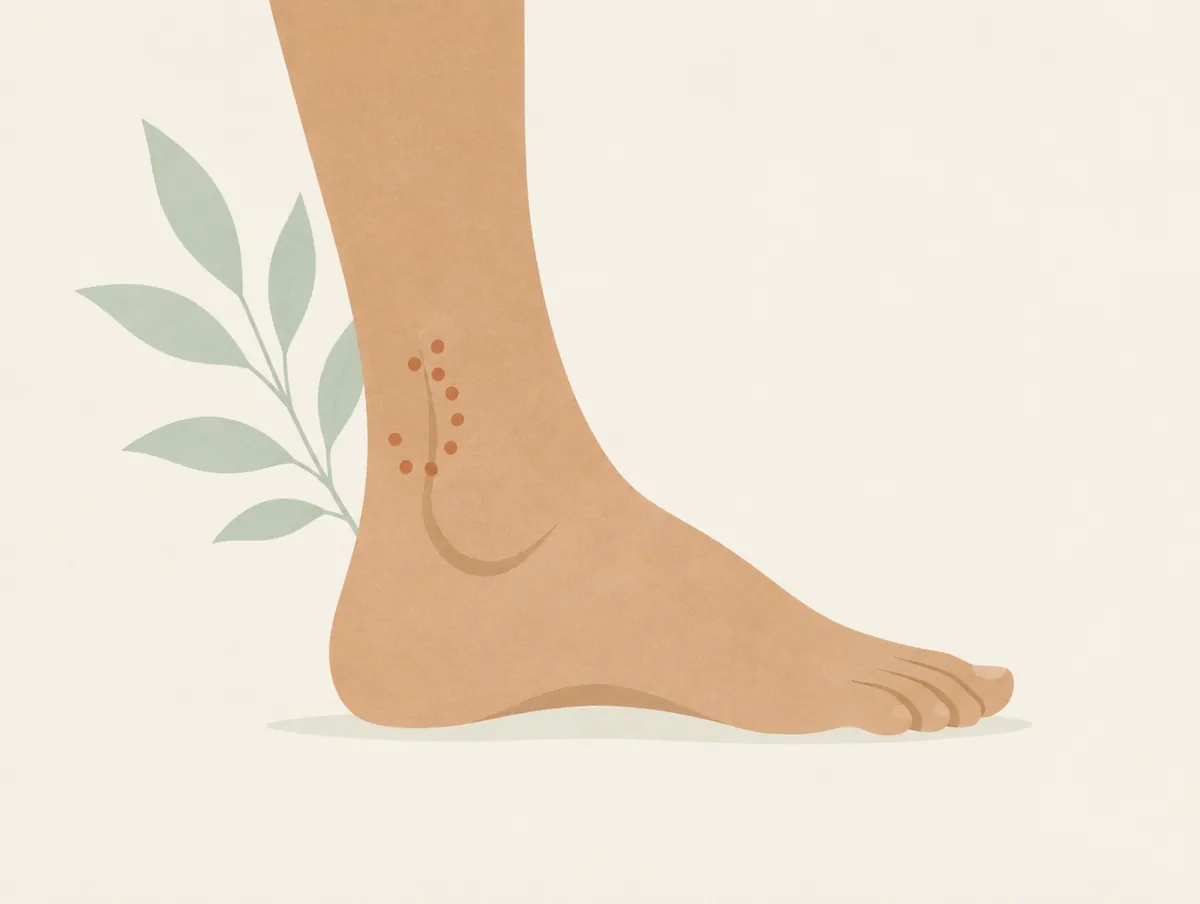
A sprained ankle is a stretched or torn ligament, usually from rolling the foot inwards. Acupuncture and related treatments can help ease pain, swelling and stiffness while the ligament heals and you rebuild strength and balance.
Common symptoms
- Pain on the outside of the ankle, worse when you put weight on it
- Swelling and bruising, which can spread down to the foot
- Stiffness and trouble walking normally
- An ankle that feels loose or gives way on uneven ground
- Aching that returns months later after long walks or sport
Common causes
- Rolling the foot inwards on a curb, a stair or uneven ground
- Landing awkwardly from a jump, or a sudden change of direction in sport
- A previous sprain that left the ligaments and balance weaker
- Unsupportive footwear or high heels
How Chinese medicine understands an ankle sprain
In Chinese medicine, a sprain is an injury to the sinews, the tissue that holds joints together. The twist damages the channels that run over the outside of the ankle, and Qi and Blood pool there. That pooling is what you see as swelling and bruising, and feel as throbbing pain.
The pattern changes as the ankle heals, and so does the treatment:
- Fresh Qi and Blood stagnation. The first days to weeks: swelling, purple bruising, sharp pain and heat. Treatment aims to move circulation and reduce pain, often using points on the other ankle, the wrist or higher up the leg, so the injured area is not disturbed.
- Lingering stagnation with Damp. The bruising has gone but the ankle stays puffy, stiff and sore, especially at the end of the day. Treatment works around the joint to clear the remaining swelling and free up movement.
- Cold settling into an old sprain. Months or years later, the ankle aches in cold, damp weather and feels better with warmth. Treatment warms the area.
- Weak sinews. The ankle gives way easily and feels unstable rather than sore. In Chinese medicine the ligaments are not being nourished well enough, so treatment also aims to build you up.
What treatment involves
Your first visit at the clinic in Keswick starts with questions about how and when the ankle went over, whether it has happened before, what you are doing for it now, and your general health. I also look at your tongue and take your pulse. An assessment usually includes looking at the swelling and bruising and checking which movements hurt.
Acupuncture is usually the main treatment. For a fresh sprain, points are commonly chosen away from the injury at first, then closer to the ankle as it settles. I treat the whole body at every treatment, not only the area that hurts. Limping changes how you walk, and the calf, knee, hip and low back often tighten as a result.
For an old sprain that aches in the cold, moxibustion can warm the area. Tuina massage can help loosen a stiff ankle and the tight calf that often comes with it, once the acute stage has passed. When healing is slow, Chinese herbal medicine can be added, a formula written for you and dispensed at the clinic.
Research on acupuncture for ankle sprains is still developing. Treatment fits alongside a physiotherapy program, which is the best way to rebuild strength and balance. Plan on 5–10 treatments to judge progress.
Between visits
- Protect it early, then move it. Rest, ice for 10 to 15 minutes at a time, and keep the foot raised in the first couple of days. After that, gentle movement helps more than complete rest.
- Walk as normally as you can. Once you can bear weight comfortably, a normal walking pattern is better than limping on it for weeks.
- Work on balance. Standing on one leg for 30 seconds while you brush your teeth is a simple start. A physiotherapist can progress it.
- Support it for sport. A brace or tape can help while you return to running, court and field sports.
When to see your doctor first
Get the ankle checked by a doctor, or go to urgent care, if:
- You could not take four steps right after the injury, or still cannot.
- There is pain when you press on the bony knobs of the ankle or the outer edge of the foot. These can be signs of a fracture.
- The ankle or foot looks deformed, or the foot is numb, cold or pale.
- You felt a snap at the back of the ankle or cannot push up onto your toes. This can be an Achilles tendon rupture.
- The swelling is getting worse after a few days, or the calf becomes swollen, hot or tender.
- The ankle is red and hot and you have a fever.
Questions about ankle sprain
How soon after a sprain can I have acupuncture?
Once a fracture has been ruled out where needed, treatment can start in the first days. Early on, points are often chosen away from the swollen area. As the swelling settles, treatment works more directly around the ankle.
My ankle keeps rolling. Can treatment help with that?
Repeated sprains usually come down to weak ligaments and poor balance, and the answer to that is balance and strengthening exercises. Treatment can help with lingering pain and stiffness so those exercises are easier to do. Ask a physiotherapist for a program.
My sprain was months ago but it still aches. Is it too late?
No. An ankle that still aches, stiffens in the cold or swells after a long day is common after a sprain. In Chinese medicine this is usually a different pattern from a fresh injury, so treatment is different too.
Related conditions
- Achilles Tendinitis
- Back Pain
- Bursitis
- Carpal Tunnel Syndrome
- Fibromyalgia
- Frozen Shoulder
- Golfer's Elbow
- Gout
- Headaches & Migraines
- Hip Pain
- Knee Pain
- Neck Pain
- Osteoarthritis
- Peripheral Neuropathy (Numbness & Tingling)
- Piriformis Syndrome
- Plantar Fasciitis
- Repetitive Strain Injury
- Rheumatoid Arthritis
- Sciatica
- Shin Splints
- Shoulder Pain (Rotator Cuff & Impingement)
- Sports Injuries
- Tennis Elbow
- Trigger Finger
- Upper Back Pain
- Whiplash
- Wrist Pain & Tendinitis