
Conditions · Pain
Acupuncture for Piriformis Syndrome
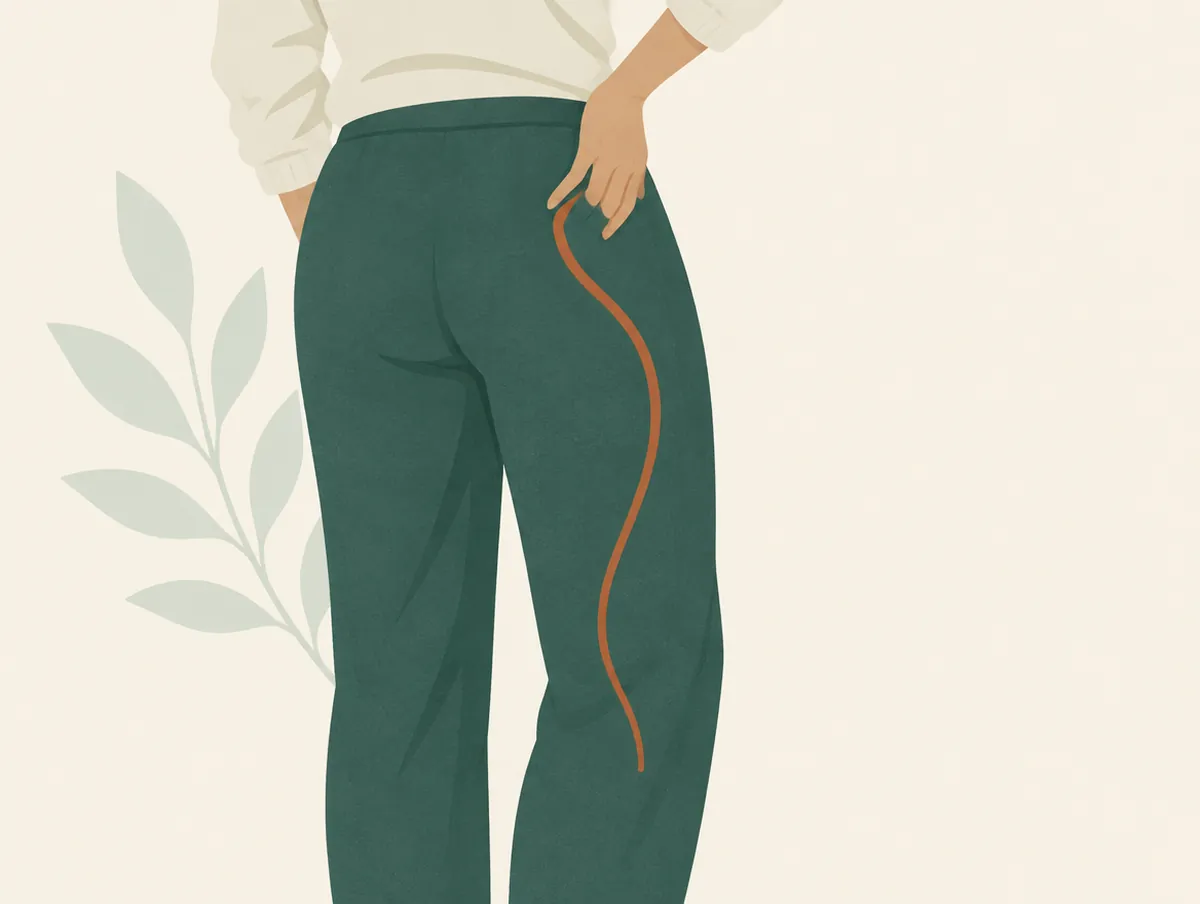
Piriformis syndrome is a deep ache in the buttock from a small hip muscle that tightens and can irritate the sciatic nerve beside it. We use acupuncture and hands-on treatment to ease the muscle and the pain, based on a Chinese medicine diagnosis.
Common symptoms
- A deep ache in one buttock, often in the middle of the cheek
- Pain that is worse after sitting, especially on a hard seat or a wallet
- Pain or tingling that can spread down the back of the thigh
- Pain when climbing stairs, running uphill or crossing the leg
- Tenderness when pressing deep into the buttock
Common causes
- Tightness or spasm of the piriformis muscle, which runs from the base of the spine to the top of the thigh
- Long hours of sitting, or sitting on a wallet or phone
- Running, cycling or other repeated hip movement, especially with weak hip muscles
- A fall onto the buttock or a direct blow
- Normal variations in where the sciatic nerve runs past the muscle
How Chinese medicine understands piriformis syndrome
Piriformis syndrome is not a term from Chinese medicine, but the pain it causes fits well-known patterns. The buttock and the back of the leg are crossed by the Gallbladder and Bladder channels. In Chinese medicine, deep, fixed pain along these channels is usually seen as a type of Bi syndrome, an obstruction of Qi and Blood.
What causes the obstruction guides the treatment:
- Qi and Blood stagnation. The pain is sharp or boring, fixed in one spot, and worse with sitting still. It often follows an injury, a fall, or months of long days in a chair. Treatment moves circulation through the hip.
- Cold and Damp. The buttock aches more in cold, damp weather, feels stiff first thing in the morning, and eases with heat and movement. Treatment warms the area and clears the channel.
- Liver Blood not nourishing the sinews. In Chinese medicine the Liver is linked to the tendons and muscles. When it is weak, muscles tighten easily and cramp, and the problem keeps coming back. Treatment also builds you up.
The label from your doctor tells you which muscle is involved. The pattern tells a practitioner of Chinese medicine why it keeps tightening, and that is what the treatment targets.
What treatment involves
Your first visit includes a lot of questions: how the pain started, what you do for work and exercise, how long you sit, and your general health. I also look at your tongue and take your pulse. An assessment usually includes checking how the hip moves and which positions bring on the pain.
Acupuncture is usually the main treatment. Points over the buttock and hip aim to release the tight muscle, and points along the leg and elsewhere address the pattern behind it. I treat the whole body at every treatment, not only the area that hurts, so a stiff low back or tight shoulders get attention too.
Tuina massage can work into the hip and gluteal muscles. Cupping is often used over the buttock and the side of the thigh to loosen the tissue. For a Cold pattern, moxibustion adds warmth. If you also have the tired, crampy picture of a deficiency pattern, Chinese herbal medicine is a formula written for you and dispensed at the clinic.
Treatment can sit alongside a physiotherapy program. Plan on 5–10 treatments to judge progress. The clinic is in Keswick, and the first visit takes 75 minutes, including the diagnosis and first treatment.
Between visits
- Break up sitting. Stand and walk for a minute or two every half hour. Take your wallet out of your back pocket.
- Stretch gently. The figure-four stretch, lying on your back with one ankle over the opposite knee, is a common choice. Hold it without forcing, and stop if it sends pain down the leg.
- Strengthen the hips. Weak outer hip muscles make the piriformis work harder. Ask your physiotherapist for exercises that suit you.
- Use heat. A heat pack on the buttock for 10 to 15 minutes before stretching often helps the muscle let go.
When to see your doctor first
Buttock and leg pain can come from the spine, the hip joint or blood vessels as well as a tight muscle. If you have sciatica from a disc, see the sciatica page. See your doctor promptly, or go to emergency, if you have:
- Numbness in the groin or inner thighs, or new trouble controlling your bladder or bowels. Go to emergency.
- Weakness in the leg or foot, or a foot that drops or catches when you walk.
- Pain after a significant fall or accident.
- Fever, feeling unwell, or unexplained weight loss with the pain.
- Pain in the calf or buttock that comes on with walking and eases with rest, which can be a circulation problem.
- A history of cancer, or pain that is worse at night and does not ease with rest.
Questions about piriformis syndrome
How is piriformis syndrome different from sciatica from a disc?
Both can send pain down the leg. With piriformis syndrome the worst of it is usually deep in the buttock, and sitting on that side makes it worse. Disc-related sciatica more often starts in the low back and runs below the knee, sometimes with numbness in the foot. Your doctor can examine you to tell them apart, and the treatment plan changes with the answer.
Where are the needles placed for piriformis syndrome?
Usually some go into the buttock and hip over the tight muscle, and others go along the leg and elsewhere on the body. The piriformis sits deep, under the large gluteal muscles, so the points are chosen with that in mind. You lie comfortably, usually on your side or front.
Should I keep running while I have treatment?
It depends on how sore it is. Many people can keep some activity going if they cut back on distance, hills and speed and stop before the pain builds. If running makes the pain spread down the leg, rest from it and let your doctor or physiotherapist know.
Related conditions
- Achilles Tendinitis
- Ankle Sprain
- Back Pain
- Bursitis
- Carpal Tunnel Syndrome
- Fibromyalgia
- Frozen Shoulder
- Golfer's Elbow
- Gout
- Headaches & Migraines
- Hip Pain
- Knee Pain
- Neck Pain
- Osteoarthritis
- Peripheral Neuropathy (Numbness & Tingling)
- Plantar Fasciitis
- Repetitive Strain Injury
- Rheumatoid Arthritis
- Sciatica
- Shin Splints
- Shoulder Pain (Rotator Cuff & Impingement)
- Sports Injuries
- Tennis Elbow
- Trigger Finger
- Upper Back Pain
- Whiplash
- Wrist Pain & Tendinitis