
In short
Cupping therapy for legs uses suction cups placed on the thighs, calves, or hamstrings to release tight muscles and move Qi and Blood stagnation. It is often used alongside acupuncture for sciatica, knee pain, or general leg tension, with most patients needing several visits to see meaningful change.
Cupping has been part of Traditional Chinese Medicine for centuries, and in recent years it has become a familiar sight on athletes and everyday patients alike. When applied to the legs, cupping targets the large muscle groups that carry us through every walk, workout, and long day on our feet. I want to walk you through how it works, what a session involves, and where it fits into a broader treatment plan for leg pain or tension.
In this article
What Is Cupping Therapy for Legs?
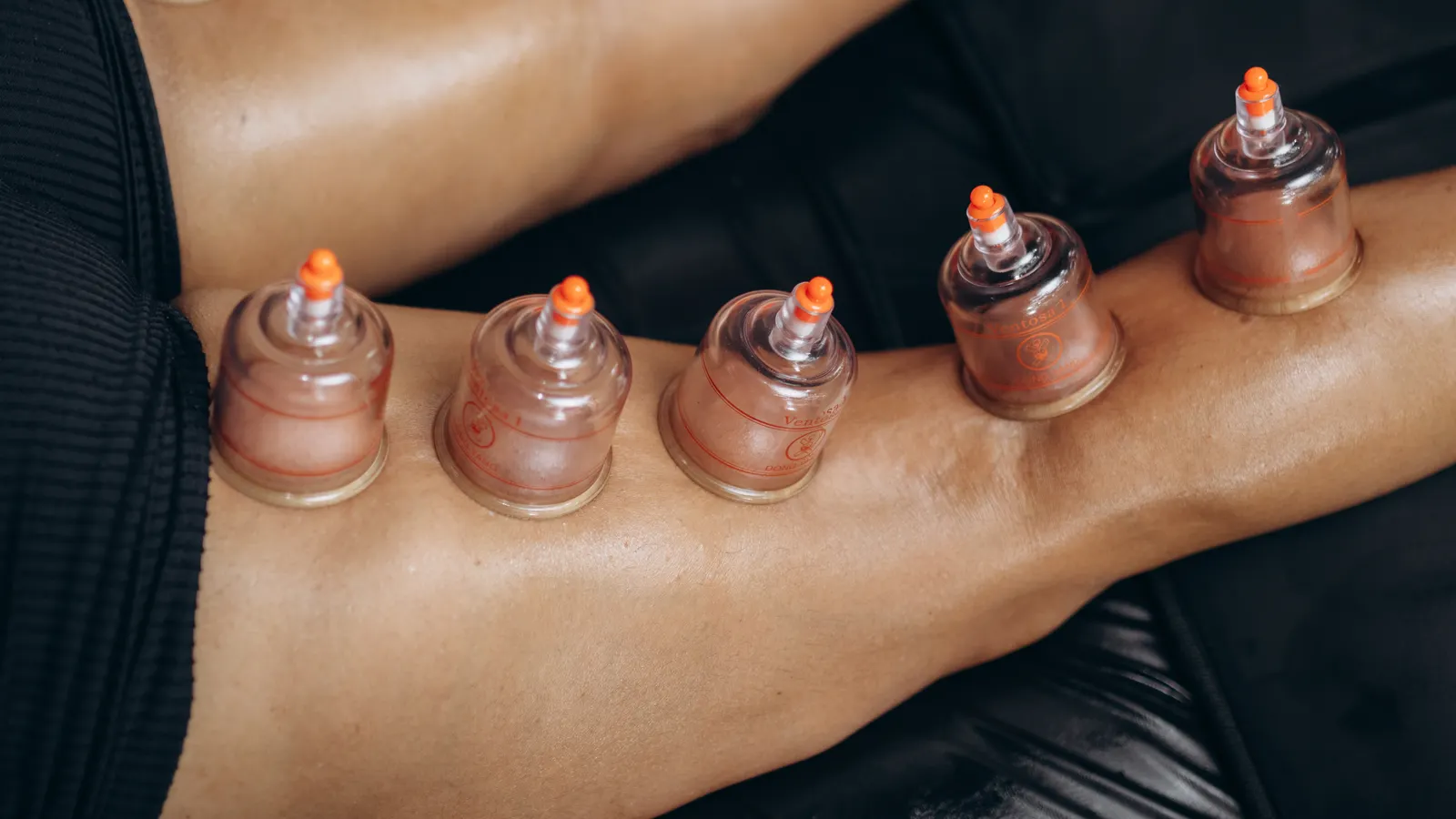
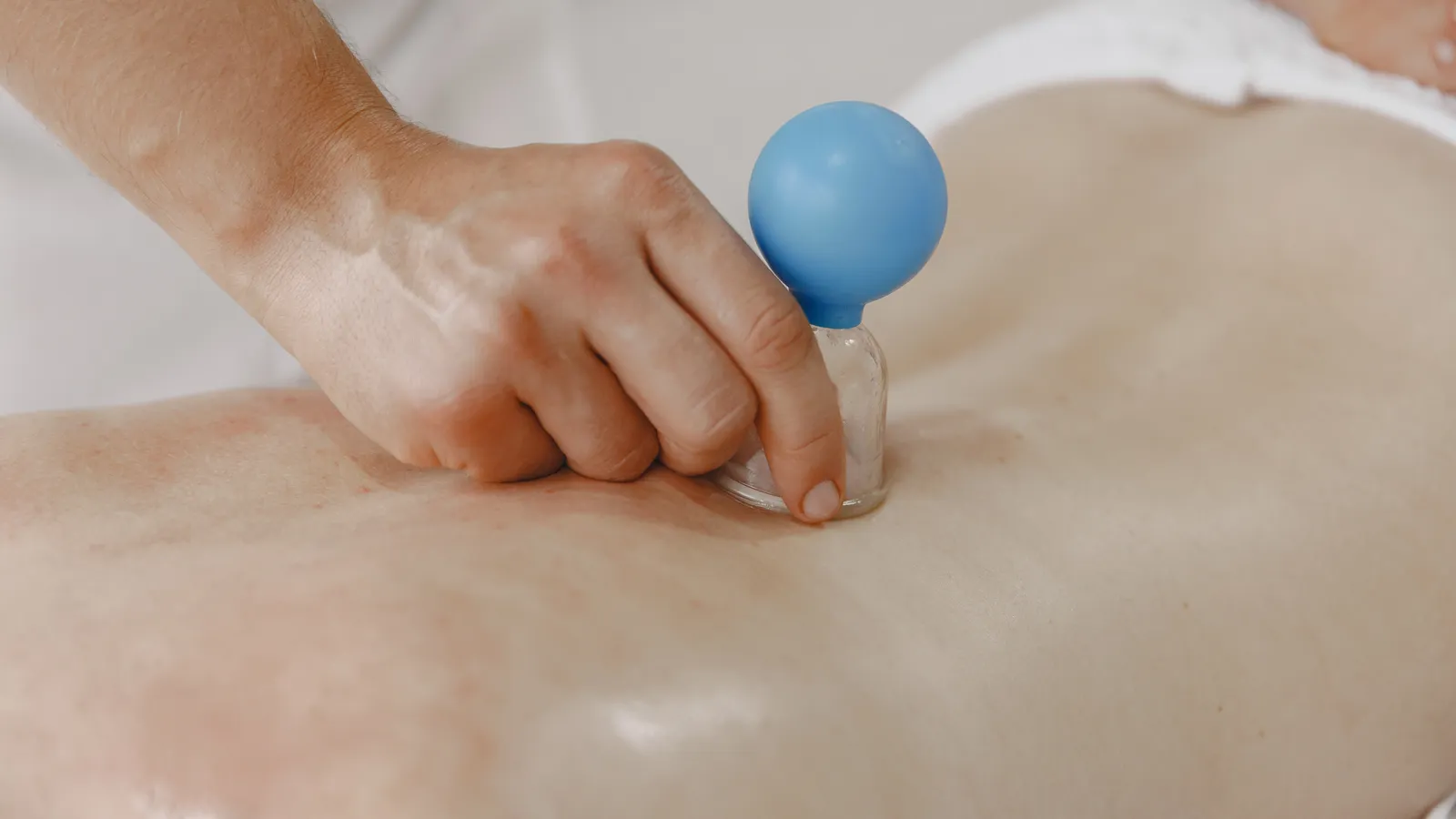
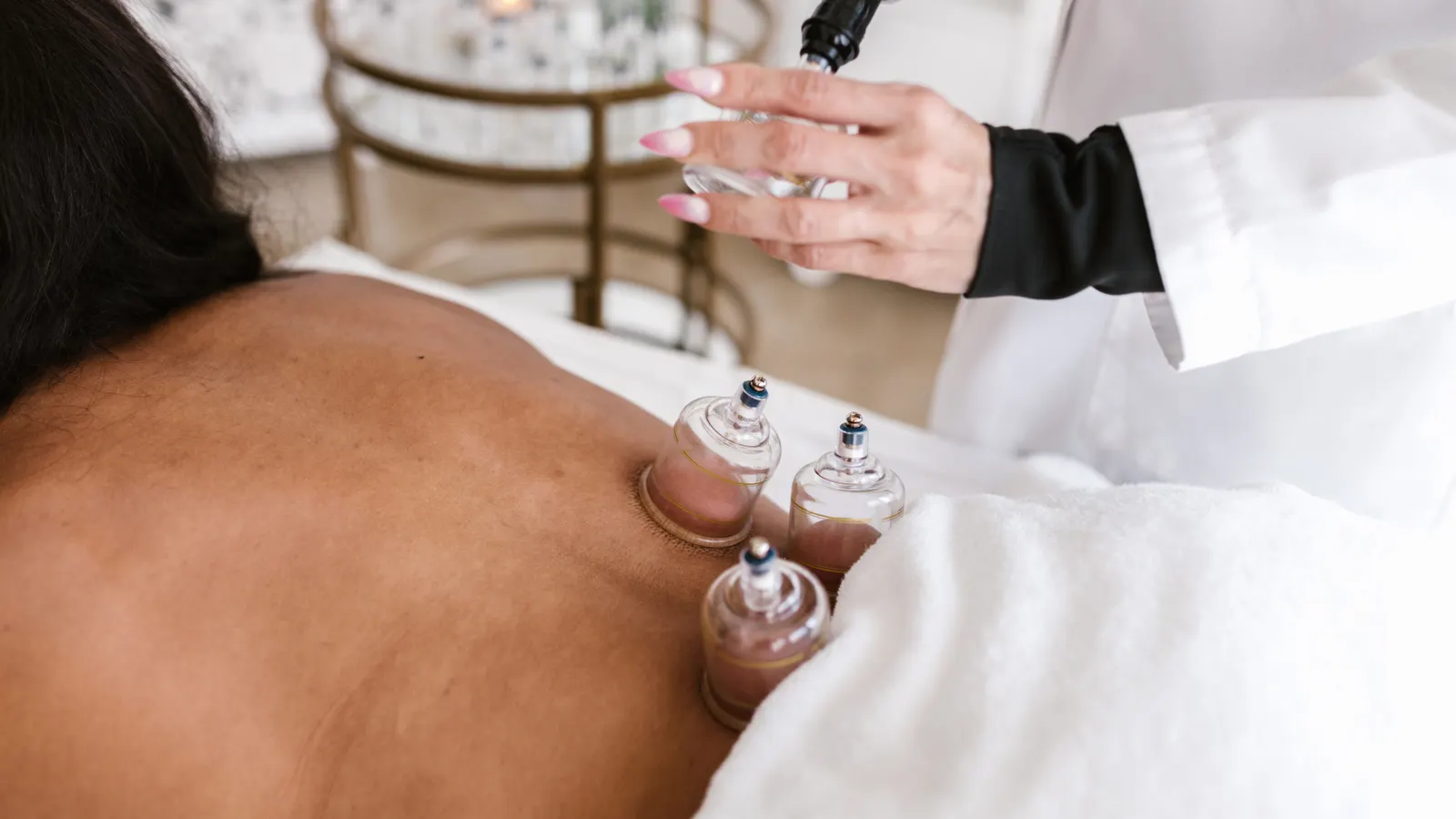
Cupping involves placing glass or silicone cups on the skin and creating suction, either with heat or a hand pump. That suction draws the skin and the tissue just beneath it upward into the cup. On the legs, this is commonly done along the thighs, calves, hamstrings, and sometimes the outer hip, depending on where tightness or pain is concentrated.
How It Works
The suction lifts the skin and superficial muscle layer away from the tissue below, which creates space and encourages fluid and Blood to move through the area. This is different from a deep-tissue massage, which pushes down into tissue. Cupping pulls, and that pulling motion is what helps loosen tight bands of muscle and connective tissue that have become stuck over time.
The TCM View of Leg Pain
In Traditional Chinese Medicine, persistent leg pain, tightness, or heaviness is often linked to Qi and Blood stagnation along the channels that run through the legs. When Qi and Blood do not move freely, the result can be stiffness, soreness, or a dull ache that lingers after activity. Cupping is one tool used to address that stagnation directly, by mechanically encouraging movement in the area where the cups are applied. If you are curious how this compares to cupping applied elsewhere on the body, I covered a related use of the technique in my piece on cupping for neck pain.
Benefits of Cupping Therapy for Legs
Book a time
Pick a time that suits you.
Book a time- Phone: (647) 346-2780
- Email: jasontcm@traditionalhealingcentre.com
- Address: 213 Queensway S. Unit 400, Keswick, Ontario, L4P2A7
Related articles
Easing Muscle Tightness and Qi and Blood Stagnation
The most immediate benefit patients notice is a reduction in muscle tightness. Runners, cyclists, and people who spend long hours standing often carry tension in the calves and thighs that does not fully release with stretching alone. Cupping can reach that tightness from a different angle, working on the stagnation that keeps the area from relaxing.
Supporting Circulation and Recovery
Because cupping draws fluid and Blood toward the surface, many patients report a feeling of lightness in the legs after a session, along with a visible temporary mark where the cup was placed. This is a normal response to the suction and typically fades within a few days. For people recovering from overuse or working through chronic tightness, cupping can be a useful complement to an existing exercise or recovery routine.
What to Expect During a Cupping Session
Before Your Visit
Before applying cups, a practitioner will usually ask about your pattern of pain or tightness, how long it has been present, and what activities make it better or worse. This matches how Traditional Chinese Medicine approaches any visit: understanding the pattern behind the symptom, not just the symptom itself. You can read more about how cupping is applied as part of a broader massage approach in Cupping Therapy Massage: What It Is and How It Works.
During and After Treatment
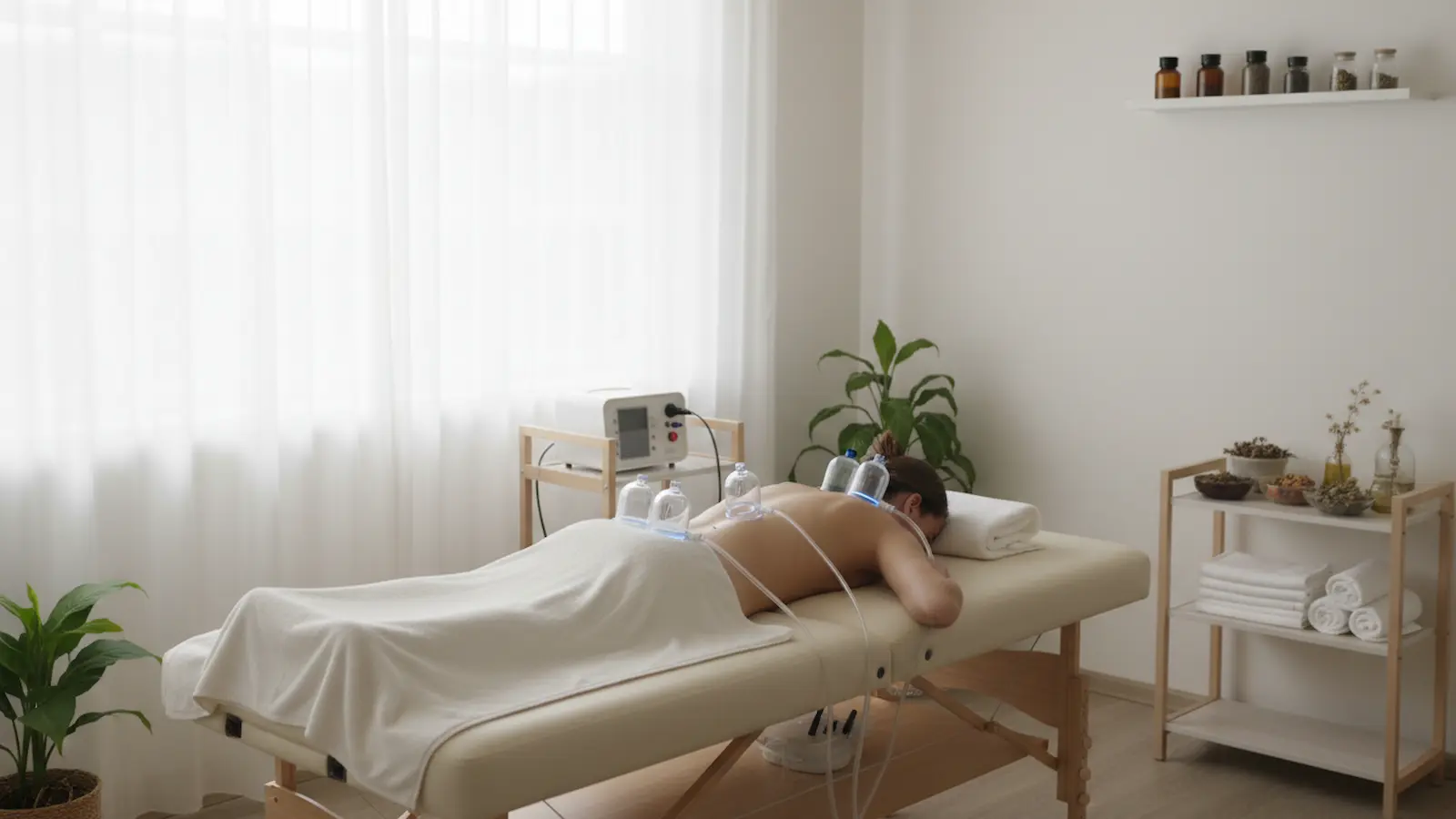
Cups are left in place for several minutes, either stationary or gently moved across the skin with oil, depending on the technique being used. Most patients describe the sensation as a firm pulling pressure rather than pain. Afterward, it is common to see round marks on the skin, and the treated area may feel tender for a day or two, similar to the feeling after an intense workout.
Who Can Benefit from Leg Cupping
Common Conditions
Cupping therapy for legs is often used for sciatica-related tightness, knee pain with surrounding muscle tension, calf tightness from running or standing work, and general stiffness that has not responded well to stretching alone. It is typically used as one part of a larger course of treatment rather than a single standalone fix.
Why a Full Diagnosis Matters
Not every case of leg tightness comes from the same pattern. One person's calf tightness may stem from Qi and Blood stagnation after an injury, while another's may relate to a longer-standing imbalance elsewhere in the body. This is why I believe every treatment plan should start from your own Traditional Chinese Medicine diagnosis, never an off-the-shelf protocol. At Traditional Healing Centre in Keswick, Ontario, I build each plan, whether it includes cupping, acupuncture, Chinese herbal medicine, or Tuina massage, around a full assessment: a lot of questions about your health, a look at your tongue, and a reading of your pulse. I have been treating patients since 2008 and am registered with the College of Traditional Chinese Medicine Practitioners and Acupuncturists of Ontario (CTCMPAO), and I generally recommend planning on 5 to 10 visits to judge how well a course of treatment is working for your legs.
Finding the Right Cupping Treatment for Your Legs
Ready to book, or have a question?
Book with Traditional Healing CentreIn this series
- Fire Cupping: What It Is, Does It Hurt, and the Marks It Leaves
- How Often Should You Get Cupping?
- Cupping for Neck Pain
- Chinese Cupping Therapy at Home: What to Know First
- Cupping Therapy: How It Works and Who It Helps
- Cupping Side Effects, Bruises and Dangers: What's Normal
- Understanding the Cupping Procedure: What to Expect
- Facial Cupping Therapy: What It Is and How It Works
- Flame Cupping: How It Works and What to Expect
- Cupping Therapy Chinese Medicine: What to Expect
- Back Pain Cupping Therapy: What to Expect and How It Helps
- Cupping Placement Chart: What It Shows and Why It Varies
- Massage Cupping Therapy Near Me: What to Expect
- Chinese Cupping Near Me: What to Know Before You Book
- How Often Should You Do Cupping? A Practical Guide
- Cupping Therapy for Legs: Benefits and What to Expect