

In short
Cups are placed over areas of Qi and Blood stagnation, most often the back, shoulders, neck, and sometimes the abdomen or limbs, based on the specific pattern a Traditional Chinese Medicine practitioner identifies during your diagnosis. There is no single "right spot" that works for every patient; placement follows the individual's symptoms and constitution.
Patients who come in for their first course of treatment often want to know where to place cups for cupping before they even lie down on the table. The short answer is that placement depends on what I find during your diagnosis, but there are patterns that most practitioners follow because certain areas of the body tend to hold stagnation more often than others.
In this article
Understanding Cupping Placement in Traditional Chinese Medicine
Cupping uses suction to draw blood toward the skin's surface, which is thought to move Qi and Blood that has become stagnant. If you want a deeper look at the technique itself, I've written about it in Cupping Method Acupuncture: What It Is and How It Works. The placement question comes after that groundwork, because where the cups go is never arbitrary. It follows directly from the pattern a practitioner identifies.
Why Placement Follows a Pattern, Not a Formula
I ask a lot of questions about your pain and your health in general, then look at your tongue and read your pulse. This is how Traditional Chinese Medicine works out why you are experiencing your symptoms, not just where they show up on your body. Two patients with the same complaint, say, lower back pain, can have different patterns underneath it, and that changes where I place the cups. One patient's stagnation may sit higher along the spine; another's may run through the hips and down the leg.
Common Areas Where Cups Are Placed
Back and Shoulders
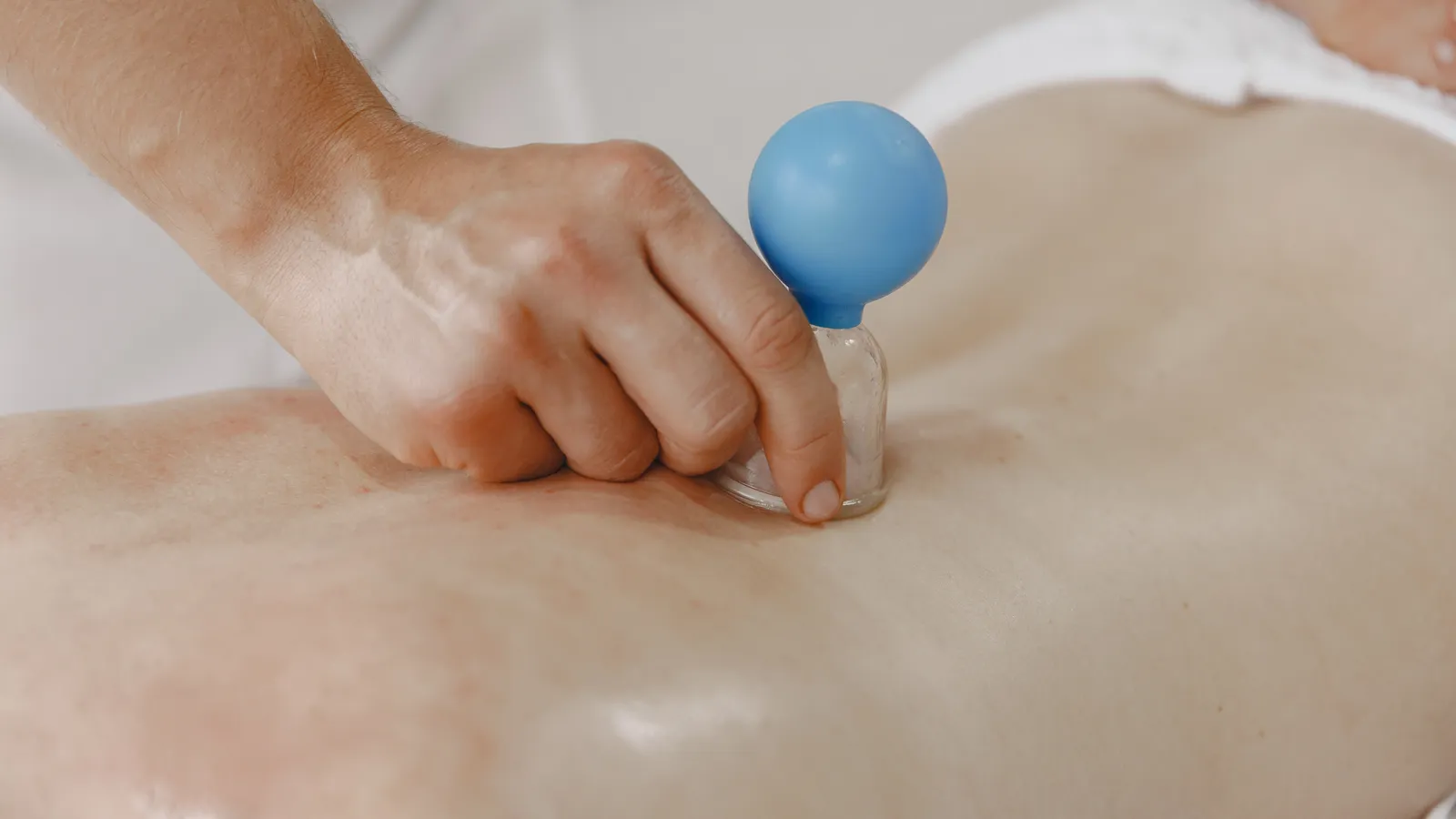
The back is the most common area for cupping, largely because the muscles along the spine and shoulder blades are prone to holding tension and stagnation from both posture and stress. Cups placed along the Bladder meridian, which runs parallel to the spine, are a frequent choice for general tightness and chronic back pain.
Neck and Upper Back
Book a time
Pick a time that suits you.
Book a time- Phone: (647) 346-2780
- Email: jasontcm@traditionalhealingcentre.com
- Address: 213 Queensway S. Unit 400, Keswick, Ontario, L4P2A7
Related articles
Neck and upper back stiffness often responds to cupping placed across the trapezius and the base of the skull. I've covered this area in more detail in Cupping for Neck Pain, since it's one of the most frequent requests I hear from patients who spend long hours at a desk or behind a wheel.
Abdomen and Limbs
Cupping is not limited to the back. For digestive concerns, cups may be placed over the abdomen. For sciatica, knee pain, or stiffness in the arms and legs, cups are placed directly over the affected muscle groups or along the meridian associated with the complaint. The principle stays the same wherever the cups land: find the stagnation, then address it.
How Cupping Fits Into a Broader Treatment Plan
Cupping rarely stands alone in a course of treatment. It's often combined with acupuncture, Tuina massage, or Chinese herbal formulas, depending on the pattern. If you're curious how cupping compares with hands-on bodywork, I've outlined the difference in Cupping Therapy Massage: What It Is and How It Works. Many patients receive a combination of these therapies within the same visit, since they work on Qi and Blood stagnation from slightly different angles.
What to Expect During a Cupping Session
Cups are typically left in place for several minutes, and you may notice circular marks afterward where the suction drew blood to the surface. These marks fade over several days and are a normal part of the process, not a sign of harm. Placement may shift slightly from one visit to the next as your pattern changes and your symptoms improve.
A Tailored Approach at Traditional Healing Centre
Every treatment plan at Traditional Healing Centre starts from your own Traditional Chinese Medicine diagnosis, never an off-the-shelf protocol. I'm Jason Tarter, R.TCMP, R.Ac, registered with the College of Traditional Chinese Medicine Practitioners and Acupuncturists of Ontario, and I've been in practice for 18 years. Alongside acupuncture and cupping, I also run the herbal dispensary that fills the custom formulas I write for each patient, and I offer Moxibustion, Tuina massage, and cosmetic acupuncture using the Meizen facial protocol. Most patients plan on five to ten treatments before judging their progress, since placement and technique are adjusted as your pattern shifts. Receipts are issued by a Registered Acupuncturist and Registered Traditional Chinese Medicine Practitioner, and many extended health plans cover these services, though OHIP does not. If you have questions before your first visit, you're welcome to Get in touch.
Ready to Begin?
Ready to book, or have a question?
Book with Traditional Healing CentreIn this series
- Fire Cupping: What It Is, Does It Hurt, and the Marks It Leaves
- How Often Should You Get Cupping?
- Cupping for Neck Pain
- Chinese Cupping Therapy at Home: What to Know First
- Cupping Therapy: How It Works and Who It Helps
- Cupping Side Effects, Bruises and Dangers: What's Normal
- Understanding the Cupping Procedure: What to Expect
- Facial Cupping Therapy: What It Is and How It Works
- Flame Cupping: How It Works and What to Expect
- Cupping Therapy Chinese Medicine: What to Expect
- Back Pain Cupping Therapy: What to Expect and How It Helps
- Cupping Placement Chart: What It Shows and Why It Varies
- Massage Cupping Therapy Near Me: What to Expect
- Chinese Cupping Near Me: What to Know Before You Book
- How Often Should You Do Cupping? A Practical Guide
- Cupping Therapy for Legs: Benefits and What to Expect
- Chinese Cupping Benefits: What This Therapy Can Do for You
- Chinese Cupping Weight Loss: What Traditional Chinese Medicine Says
- Where to Place Cups for Cupping: A Regional Guide