
Anxiety Chinese Herbs: Traditional Formulas That Support Calm
In short
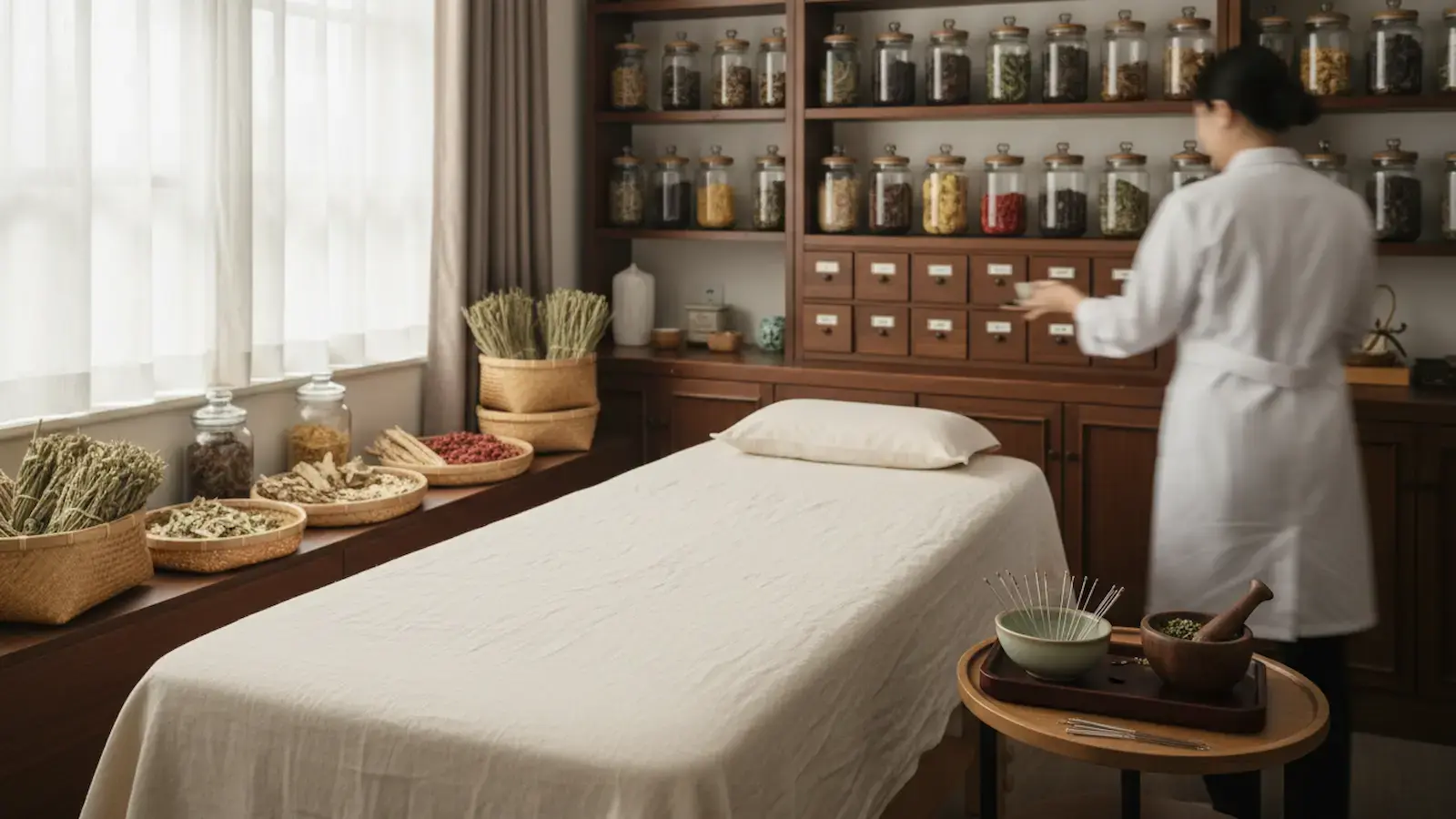
Traditional Chinese Medicine treats anxiety by identifying the underlying pattern—often Heart and Spleen deficiency, Liver Qi stagnation, or Qi and Blood stagnation—and matching it to a specific herbal formula rather than a single herb. These formulas are typically combined with acupuncture and are meant to support emotional balance alongside, not instead of, a doctor's care.
Many people searching for anxiety Chinese herbs want to know whether Traditional Chinese Medicine has something concrete to offer for the racing thoughts, restless sleep, or chest tightness that anxiety can bring. It does, but the approach looks different from picking a single herb off a shelf. Chinese herbal medicine works through formulas built around a person’s individual pattern, and understanding that pattern is the first step toward understanding which herbs might help.
In this article
Understanding Anxiety Through a Traditional Chinese Medicine Lens
In Traditional Chinese Medicine, anxiety is rarely viewed as one isolated problem. It is usually connected to how Qi, Blood, and the organ systems are functioning together, particularly the Heart, Liver, and Spleen.
Qi and Blood Stagnation and the Mind
When Qi and Blood stagnation is present, a person may feel mentally “stuck,” irritable, or tight in the chest, often alongside physical tension in the neck and shoulders. This pattern can show up during periods of prolonged stress, when the smooth flow of Qi through the body is disrupted.
Common Patterns Linked to Anxiety
Other patterns associated with anxiety include Heart and Spleen deficiency, which can produce worry, fatigue, and poor sleep, and Liver Qi stagnation, often linked to irritability and a feeling of being overwhelmed. Each pattern calls for a different herbal approach, which is why no single herb is considered a universal answer.
Chinese Herbs Often Used for Anxiety
Book a time
Pick a time that suits you.
Book a time- Phone: (647) 346-2780
- Email: jasontcm@traditionalhealingcentre.com
- Address: 213 Queensway S. Unit 400, Keswick, Ontario, L4P2A7
Related articles
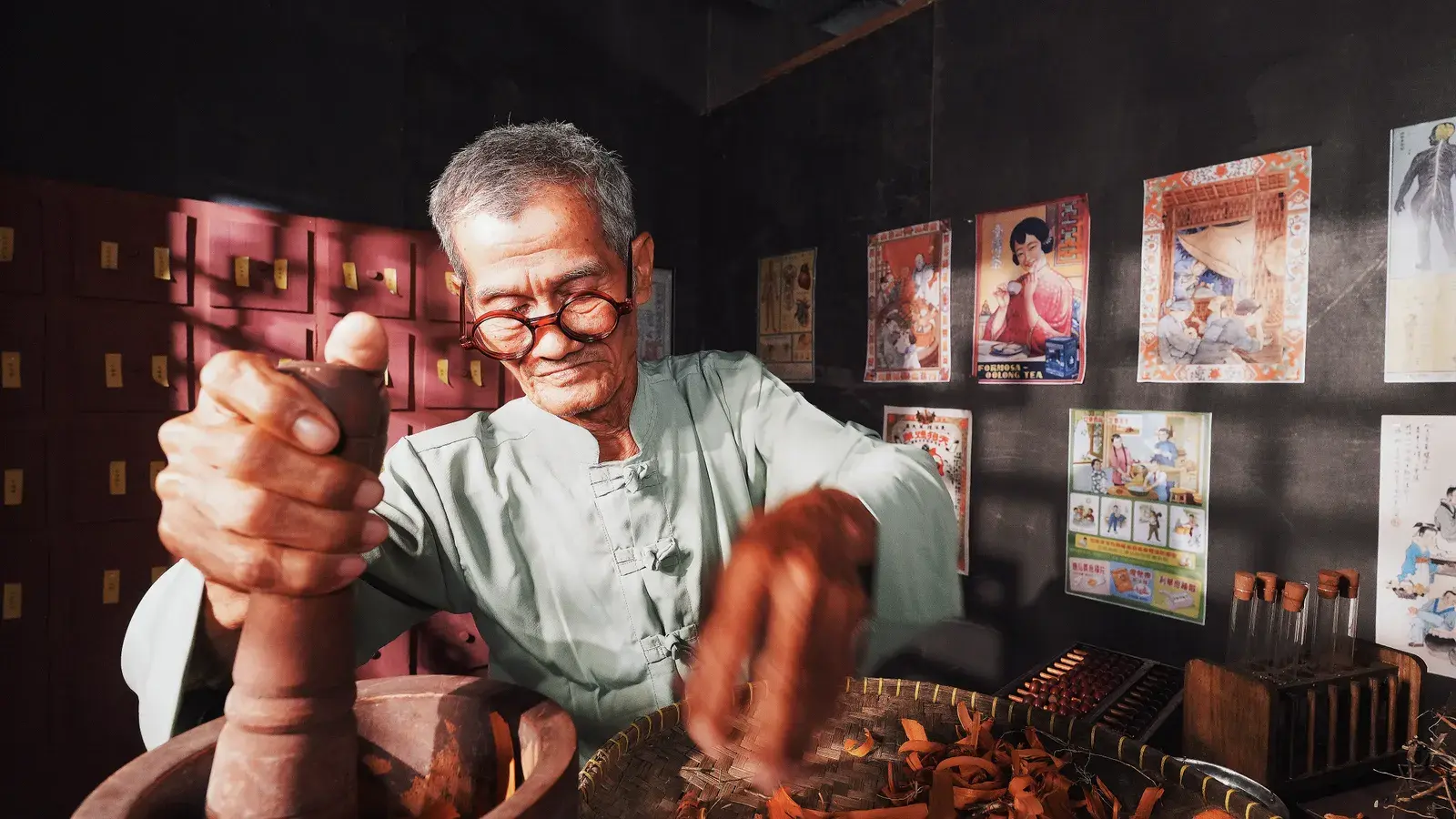
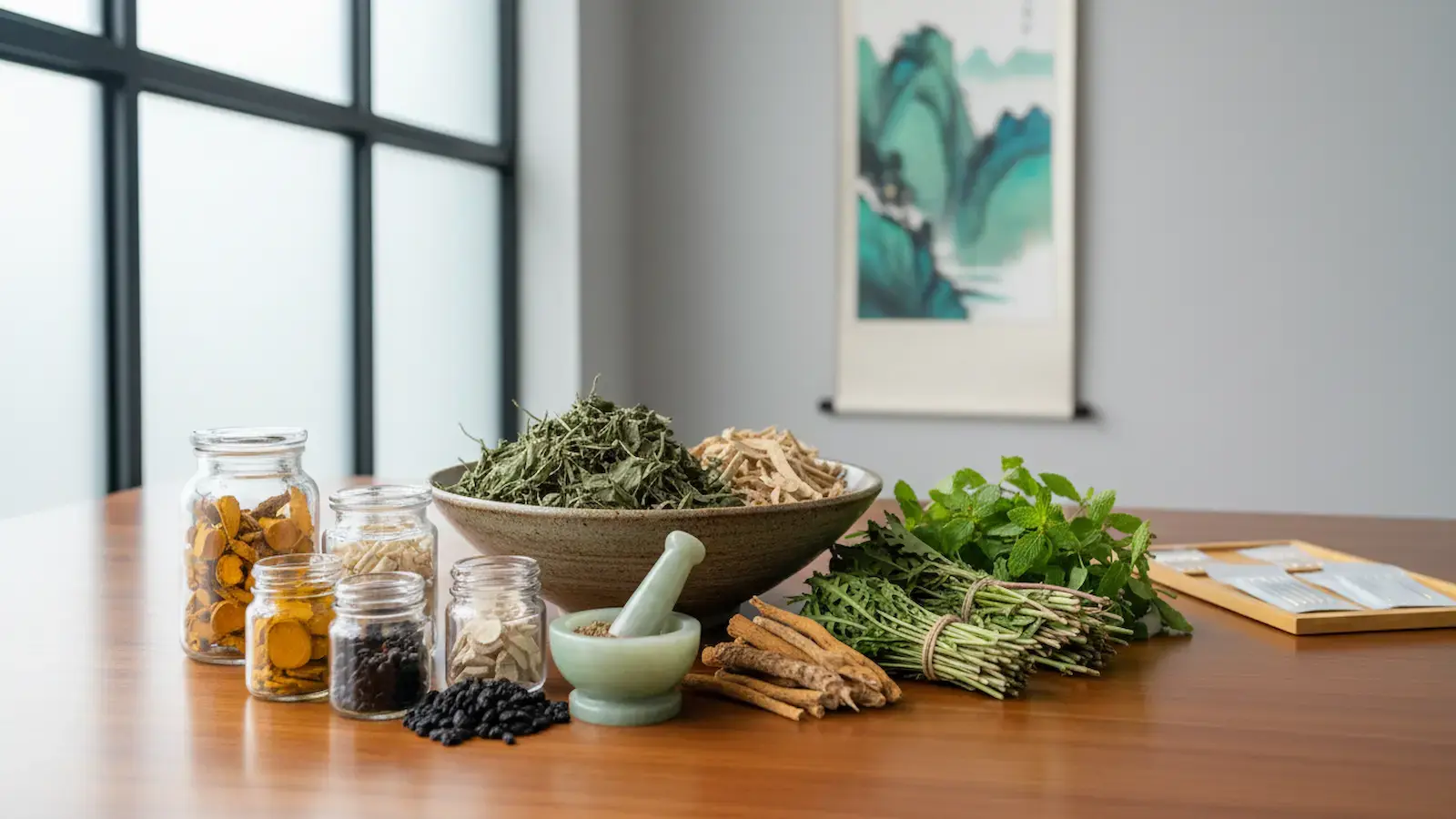
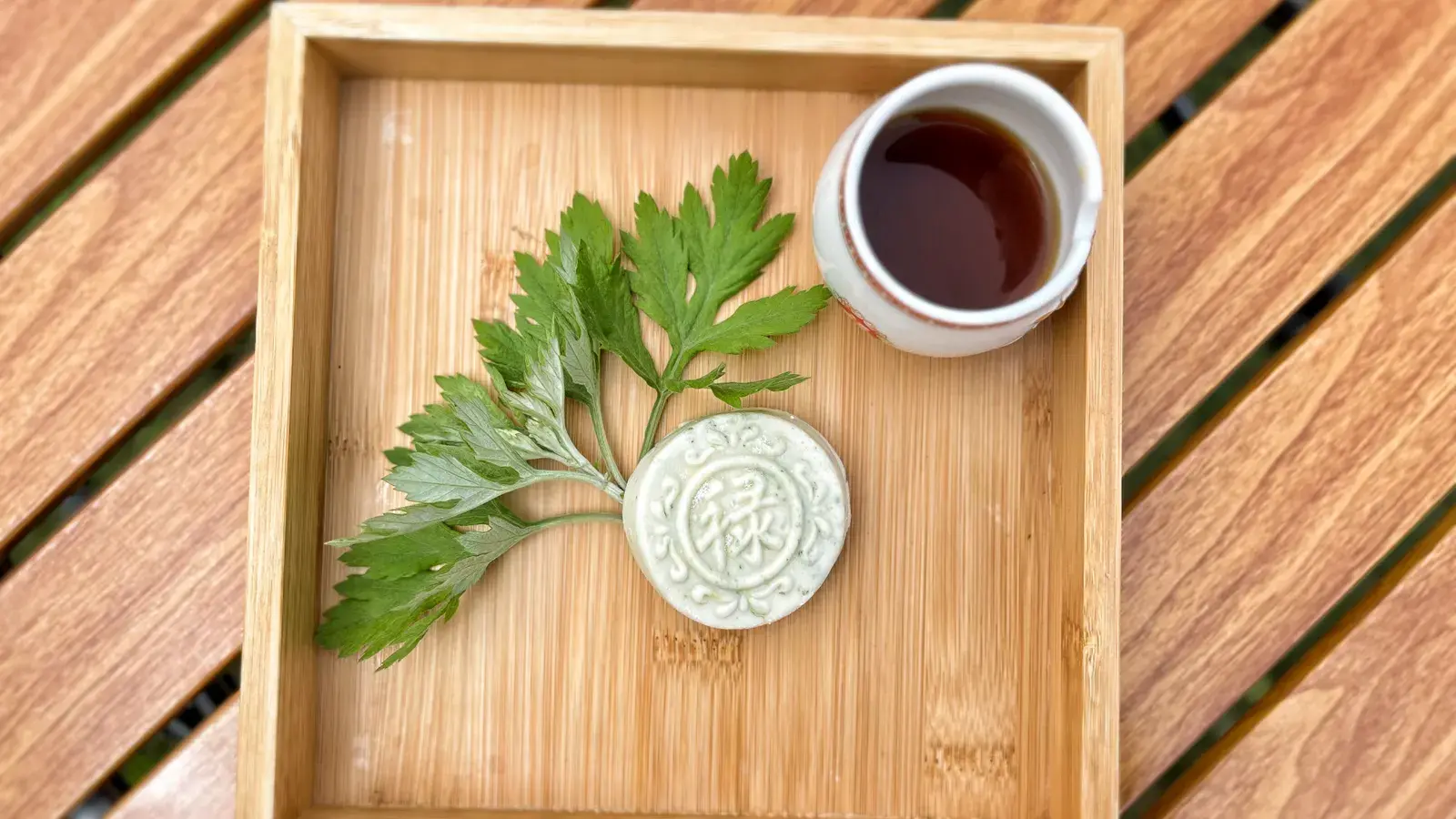
Several herbs appear frequently in formulas aimed at calming the mind and supporting restful sleep.
Herbs That Calm the Shen (Spirit)
Herbs such as suan zao ren (sour jujube seed), fu ling (poria), and he huan pi (mimosa bark) are commonly included in formulas intended to settle the Shen, the aspect of the mind associated with emotional stability in Traditional Chinese Medicine. These herbs are generally paired with others that support Qi and Blood rather than used on their own.
Formulas Rather Than Single Herbs
A well-known example is Gui Pi Tang, traditionally used for patterns involving Heart and Spleen deficiency with worry and poor sleep. Formulas like this are built from multiple herbs working together, adjusted for the person’s full pattern rather than applied as a fixed recipe. For readers who want a broader look at commonly used herbs and their traditional applications, our guide to common Chinese herbs and what they’re used for offers a helpful starting point.
Acupuncture and Other Traditional Chinese Medicine Approaches
Herbal formulas are often used alongside acupuncture, which targets points associated with calming the mind and regulating Qi flow. Tuina massage may also be included in a course of treatment to help release physical tension that frequently accompanies anxiety.
Why a Personalized Diagnosis Matters
Because anxiety can stem from different patterns, the same formula will not suit everyone. A full diagnosis—a lot of questions about sleep, digestion, mood, and general health, followed by a look at the tongue and a reading of the pulse—is how a practitioner works out which pattern is present before recommending any formula. This is the same diagnostic process used for other conditions treated with Traditional Chinese Medicine, as described in our article on Chinese Medicine for rosacea, where pattern identification similarly guides the treatment plan.
Bringing Chinese Herbal Medicine Into a Treatment Plan
What a Visit at Traditional Healing Centre Involves
At Traditional Healing Centre in Keswick, Ontario, every treatment plan starts from the patient’s own Traditional Chinese Medicine diagnosis, never an off-the-shelf protocol. During a visit, I ask detailed questions, check the tongue, and take the pulse before discussing whether Chinese Herbal Medicine, Acupuncture, or a combination of both fits the pattern I find. This process means the formula suggested is matched to the individual, not applied as a generic anxiety remedy. Readers who want to learn more about how herbal formulas are chosen and studied may also find our guide to choosing a Traditional Chinese Medicine or herbs book useful for further reading.
When to Seek Additional Support
Anxiety can have many contributing factors, and Traditional Chinese Medicine is best used as part of a broader approach to wellness rather than a stand-alone solution. Anyone experiencing significant anxiety should continue working with their doctor, bringing Chinese herbal medicine and acupuncture in as complementary support once a pattern has been properly assessed.
Ready to book, or have a question?
Book with Traditional Healing CentreIn this series
- A Chinese Herb Guide: Understanding Traditional Formulas
- Are Chinese Herbs Safe to Take?
- Chinese Herbs to Lose Weight: What Actually Helps
- Common Chinese Herbs and What They’re Used For
- Choosing a Traditional Chinese Medicine / Herbs Book
- Warming and Cooling Herbs in Chinese Medicine
- Traditional Chinese Herbs: What They Treat and How They Work
- Chinese Herbs for Spleen: Support for Digestion and Energy
- Organic Chinese Herbs Canada: What to Know Before You Buy
- Chinese Fertility Herbs: How Traditional Medicine Approaches Them
- Chinese Herbs for UTI: What Traditional Chinese Medicine Offers
- Chinese Herbs for Liver Cleanse: A TCM Perspective
- Chinese Herbs for Gallbladder Support: What to Know
- Chinese Herbs History: From Ancient Roots to Modern Care
- Rosacea Chinese Herbs: How TCM Approaches Facial Flushing
- Chinese Herbs for Menopause: What to Know Before You Start
- Chinese Herbs Side Effects: What to Know Before You Start
- Chinese Herbs for High Cholesterol: A TCM Perspective
- Anxiety Chinese Herbs: Traditional Formulas That Support Calm