
Best Chinese Herbs for Acid Reflux: A TCM Guide
In short
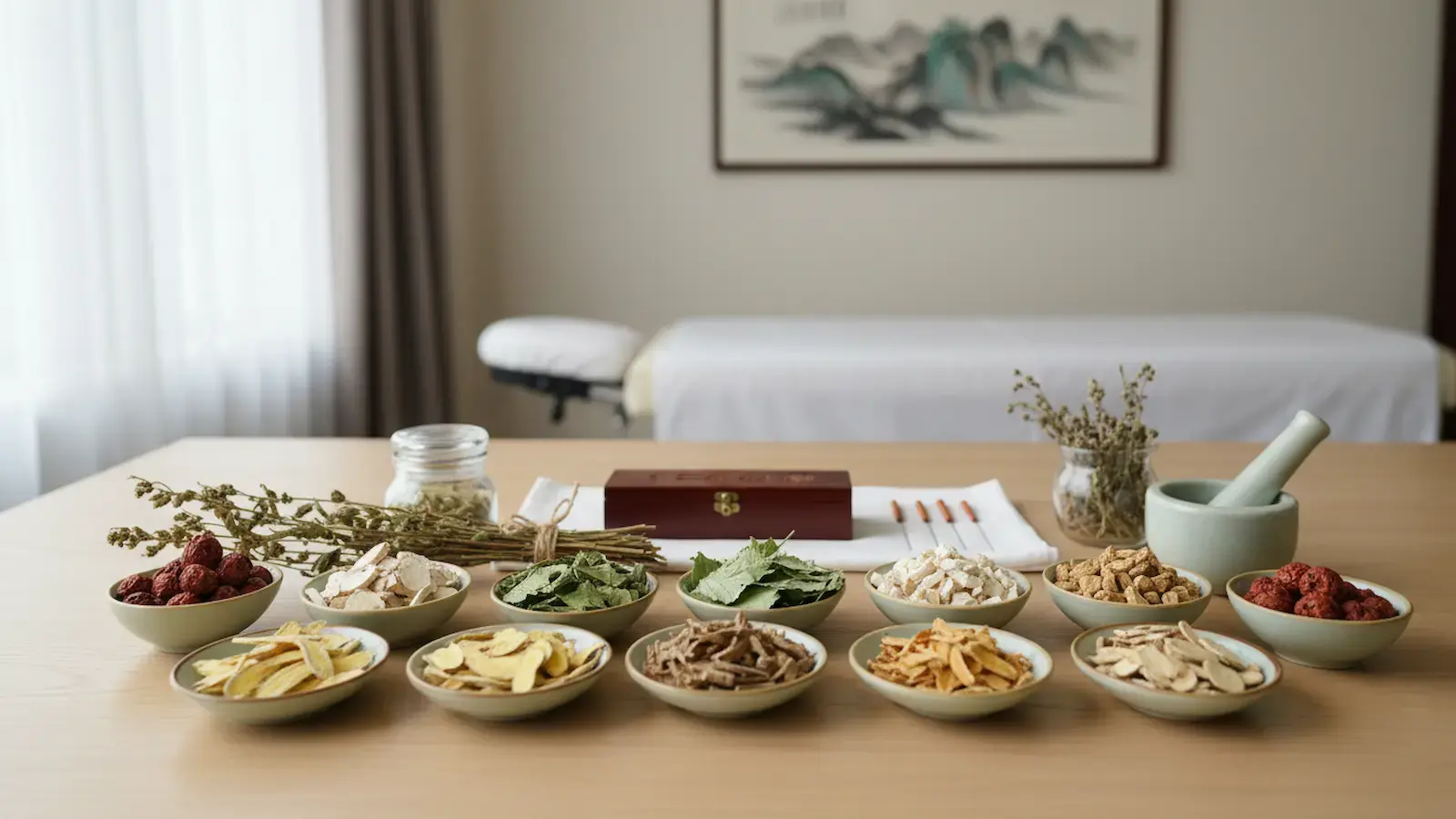
In Traditional Chinese Medicine, herbs such as Huang Lian (Coptis), Wu Zhu Yu (Evodia), Fuling (Poria), and Chen Pi (tangerine peel) are frequently combined into formulas like Zuo Jin Wan to calm what is described as rebellious Stomach Qi and ease heartburn. These herbs are rarely taken alone; a qualified practitioner selects and adjusts the combination based on your individual pattern. Because dosing and combinations vary from person to person, it's best to work with a registered practitioner rather than self-prescribing.
When people search for the best Chinese herbs for acid reflux, they are often hoping for a quick list of names to pick up at a health food store. Traditional Chinese Medicine takes a different view of heartburn and reflux: rather than treating the burning sensation as an isolated problem, it looks at the sensation as a sign that Stomach Qi is moving in the wrong direction and that the digestive system as a whole is out of balance. Understanding that background helps explain why certain herbs show up again and again in formulas for this condition, and why they’re prescribed together rather than individually.
In this article
- Understanding Acid Reflux Through a Chinese Medicine Lens
- Commonly Used Chinese Herbs for Acid Reflux
- Why a Formula Works Better Than a Single Herb
- Safety Considerations Before Trying Chinese Herbs
- How Traditional Healing Centre Approaches Acid Reflux
- What to Expect From a Course of Treatment
- In this series
Understanding Acid Reflux Through a Chinese Medicine Lens
In Chinese medicine, the stomach is meant to send its contents downward. Reflux and heartburn are described as a form of rebellious Qi, where that downward movement reverses and rises instead. This pattern is often tied to Qi and Blood stagnation, Stomach Heat, or Liver Qi pressing on the Stomach, particularly in people who deal with stress, irregular meals, or frustration that has nowhere to go.
Qi and Blood Stagnation and the Stomach
Qi and Blood stagnation in the middle of the body can produce a feeling of fullness, belching, and the burning discomfort many people associate with reflux. Herbs chosen for this pattern are meant to move Qi, clear Heat, and redirect the stomach’s energy downward, rather than simply neutralizing acid.
Commonly Used Chinese Herbs for Acid Reflux
Several herbs appear often in formulas written for reflux and heartburn, though the exact combination and dosage depend on the pattern a practitioner identifies during your visit.
Herbs That Calm Rebellious Qi
Book a time
Pick a time that suits you.
Book a time- Phone: (647) 346-2780
- Email: jasontcm@traditionalhealingcentre.com
- Address: 213 Queensway S. Unit 400, Keswick, Ontario, L4P2A7
Related articles

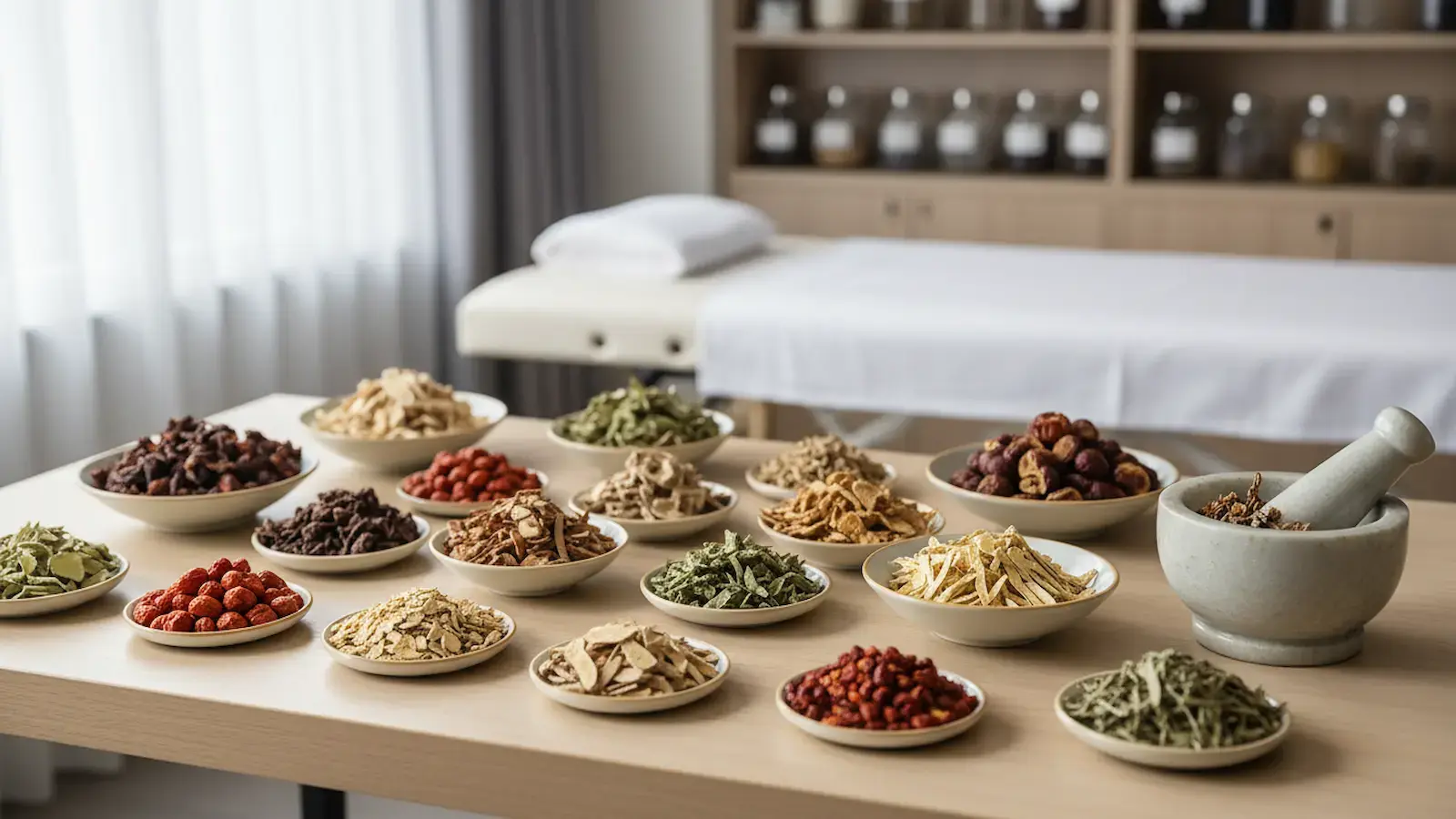
Huang Lian (Coptis) and Wu Zhu Yu (Evodia) are classically paired in a formula known as Zuo Jin Wan, used to address Heat rising from the Liver into the Stomach. Ban Xia (Pinellia) is another herb associated with redirecting rebellious Qi and easing nausea that can accompany reflux.
Herbs That Support Digestion
Chen Pi (tangerine peel) and Fuling (Poria) are often added to support digestion more broadly, helping to move Qi and drain Dampness that can accumulate when digestion slows. Hai Piao Xiao (cuttlefish bone) is sometimes included for its traditional use in calming Stomach Heat.
Why a Formula Works Better Than a Single Herb
A formula is built as a combination, not a single ingredient, because each herb plays a role alongside the others — one may move Qi, another may clear Heat, and another may protect the digestive system from the stronger herbs in the mix. This is a key reason practitioners rarely recommend picking one herb off a list. If you’re curious about how these combinations are built and what to expect from them, Are Chinese Herbs Safe to Take? covers the basics of herbal safety and quality control.
Reflux patterns can also overlap with other digestive concerns, including issues connected to the Liver and Gallbladder in Chinese medicine theory. If sluggish digestion or discomfort under the right ribs is part of your picture, Chinese Herbs for Gallbladder Support: What to Know is a useful companion read.
Safety Considerations Before Trying Chinese Herbs
Herbs that clear Heat or move Qi are not appropriate for every pattern, and taking the wrong combination can make symptoms worse rather than better. Pregnancy, existing medications, and other health conditions all factor into which herbs are safe for you. This is why a formula should come from a full diagnosis rather than a general list of “reflux herbs.”
How Traditional Healing Centre Approaches Acid Reflux
At Traditional Healing Centre in Keswick, Ontario, every treatment plan starts from your own Traditional Chinese Medicine diagnosis, never an off-the-shelf protocol. Jason Tarter, R.TCMP, R.Ac, has been in practice for 18 years and combines acupuncture with custom herbal formulas written for the individual patient. Because Jason also runs the herbal dispensary that fills the formulas he prescribes, there’s a direct line between your diagnosis and the herbs you take home. For reflux specifically, that means the formula reflects whether your pattern leans toward Stomach Heat, Liver Qi stagnation, or another presentation entirely, rather than a standard mix handed to every patient with heartburn.
What to Expect From a Course of Treatment
Most courses of treatment for digestive patterns are planned over several visits, with 5–10 treatments generally needed to judge progress and adjust the formula as symptoms change. Receipts are issued by a Registered Acupuncturist (R.Ac) and Registered Traditional Chinese Medicine Practitioner (R.TCMP), and many extended health plans cover acupuncture and Chinese medicine services, which can make a course of treatment more accessible.
Ready to book, or have a question?
Book with Traditional Healing CentreIn this series
- A Chinese Herb Guide: Understanding Traditional Formulas
- Are Chinese Herbs Safe to Take?
- Chinese Herbs to Lose Weight: What Actually Helps
- Common Chinese Herbs and What They’re Used For
- Choosing a Traditional Chinese Medicine / Herbs Book
- Warming and Cooling Herbs in Chinese Medicine
- Blood-Building Herbs in Chinese Medicine
- Traditional Chinese Herbs: What They Treat and How They Work
- Chinese Herbs for Spleen: Support for Digestion and Energy
- Organic Chinese Herbs Canada: What to Know Before You Buy
- Chinese Fertility Herbs: How Traditional Medicine Approaches Them
- Anxiety Chinese Herbs: Traditional Formulas That Support Calm
- Chinese Herbs for UTI: What Traditional Chinese Medicine Offers
- Can Chinese Herbs Increase Fertility? What to Know
- Chinese Herbs for Liver Cleanse: A TCM Perspective
- Chinese Herbs for Gallbladder Support: What to Know
- Chinese Herbs History: From Ancient Roots to Modern Care
- Rosacea Chinese Herbs: How TCM Approaches Facial Flushing
- Chinese Herbs for Hypertension: What You Should Know
- Top Chinese Herbs: What They Do and How They’re Used
- Chinese Herbs for Menopause: What to Know Before You Start
- Chinese Herbs Side Effects: What to Know Before You Start
- Chinese Herbs for Soaking Feet: A Traditional Approach to Rest
- Chinese Herbs for High Cholesterol: A TCM Perspective
- Best Time to Take Chinese Herbs for Best Results
- Chinese Herbs for Adenomyosis: What to Know
- Best Chinese Herbs for Acid Reflux: A TCM Guide