
Rosacea Chinese Herbs: How TCM Approaches Facial Flushing
In short
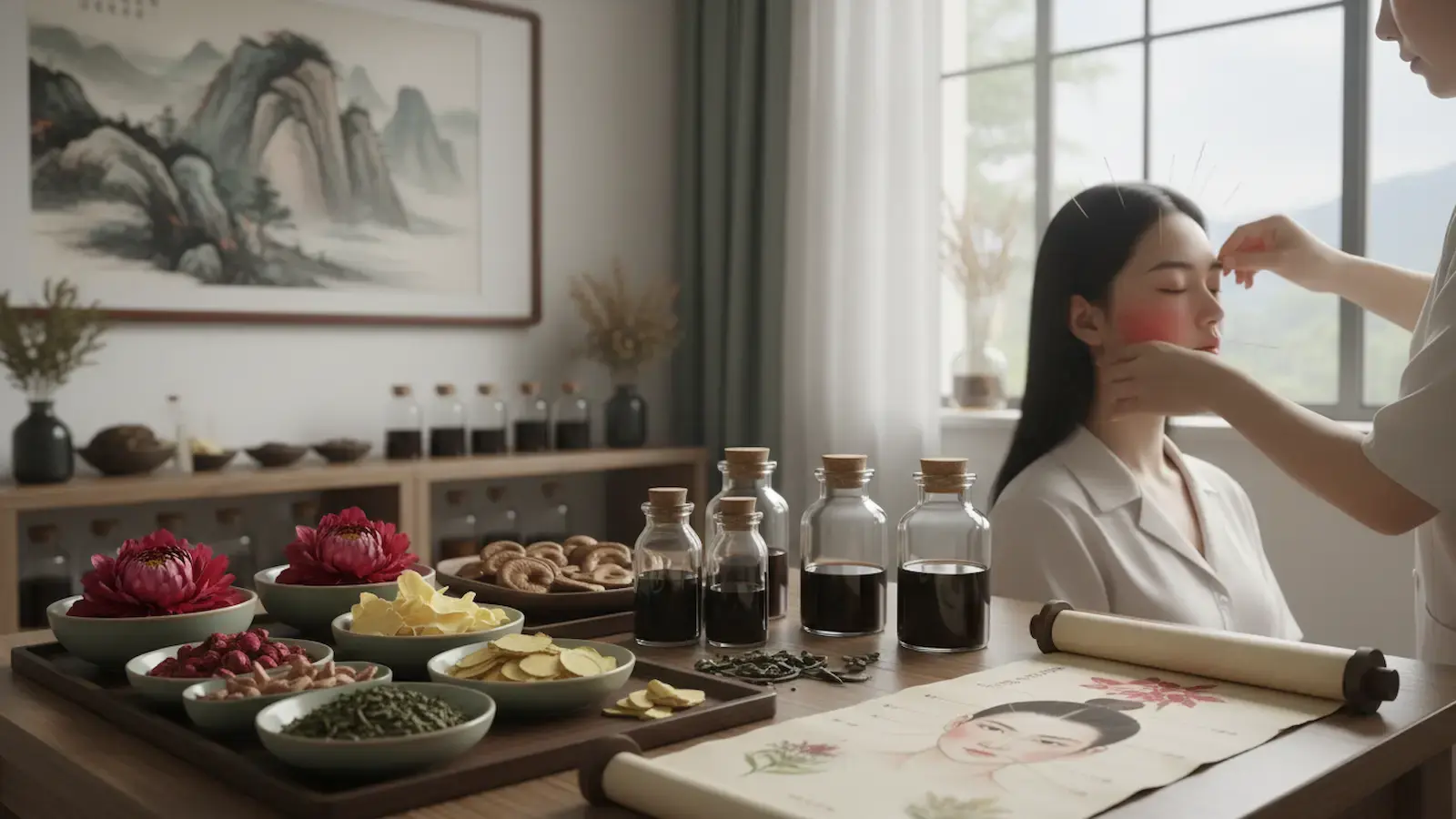
Chinese herbal medicine approaches rosacea by addressing the pattern of Heat in the Blood or Qi and Blood stagnation that Traditional Chinese Medicine associates with facial flushing, often combining herbs such as Scutellaria baicalensis, Moutan cortex, and Lonicera with acupuncture. A qualified practitioner selects and combines these herbs into a formula built for your individual pattern rather than reaching for a fixed over-the-counter blend.
Many people searching for rosacea Chinese herbs have already tried topical creams or avoidance strategies with limited success, and want to understand what Traditional Chinese Medicine offers instead. Rather than treating rosacea as a single condition with one fixed herbal answer, Traditional Chinese Medicine looks at the pattern underlying each person’s flushing, sensitivity, and visible redness. That pattern then shapes which herbs, and which combination of herbs, make sense for a given patient.
In this article
Understanding Rosacea Through a Traditional Chinese Medicine Lens
In Traditional Chinese Medicine, skin conditions are rarely viewed in isolation from the rest of the body. Facial redness, visible blood vessels, and flare-ups triggered by heat, stress, or certain foods are often tied to Heat in the Blood, sometimes alongside Qi and Blood stagnation or an underlying Yin deficiency that allows Heat to rise to the face. I go into these patterns in more depth in this guide to Chinese Medicine Rosacea: TCM Patterns, Herbs & Acupuncture, which explains how a practitioner distinguishes between them.
Common Patterns Behind Facial Flushing
A patient with Heat in the Blood may show a redder, faster-pulsing presentation, while one with underlying deficiency may flush more easily but show paler, drier skin between episodes. Qi and Blood stagnation can add a duller, more persistent redness. These distinctions matter because the herbs appropriate for clearing Heat are not the same ones used to nourish Yin or move stagnation, which is why a pattern-based diagnosis comes before any herbal recommendation.
Chinese Herbs Used for Rosacea
Several herbs appear frequently in formulas aimed at calming rosacea-related redness, though none are meant to be self-prescribed from a list.
Herbs That Clear Heat and Cool the Blood
Book a time
Pick a time that suits you.
Book a time- Phone: (647) 346-2780
- Email: jasontcm@traditionalhealingcentre.com
- Address: 213 Queensway S. Unit 400, Keswick, Ontario, L4P2A7
Related articles

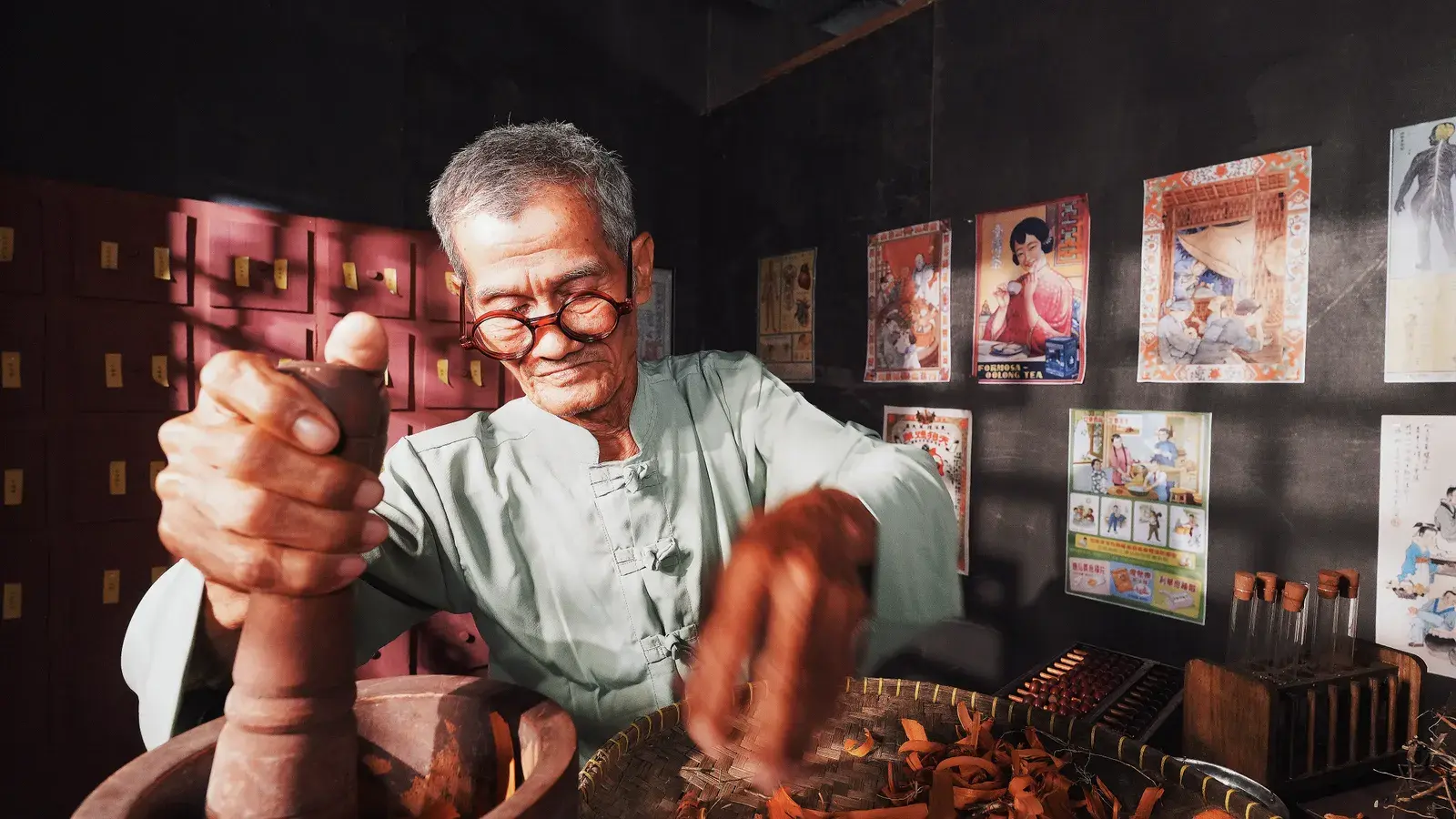
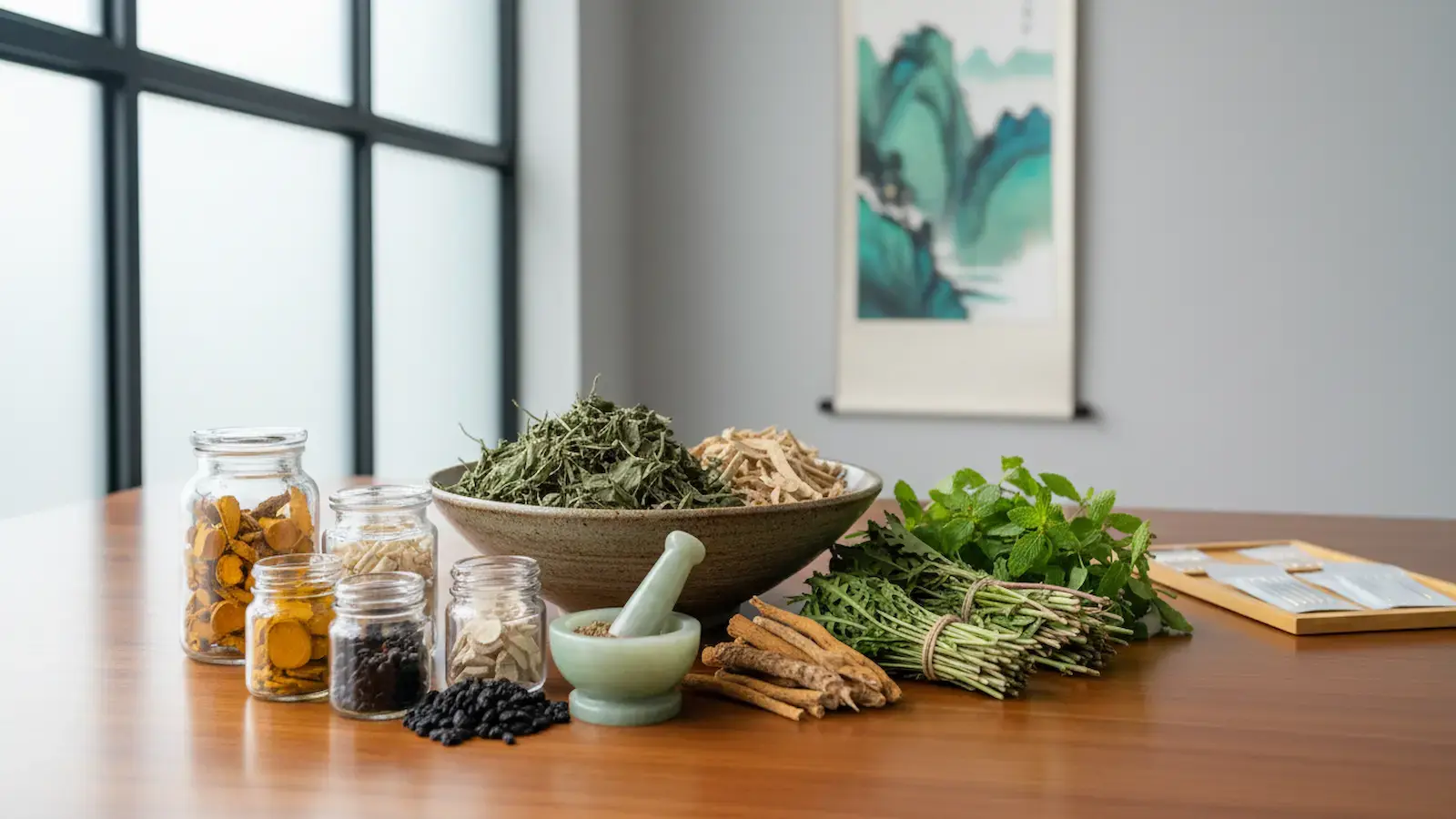
Herbs such as Scutellaria baicalensis (Huang Qin), Moutan cortex (Mu Dan Pi), and Lonicera (Jin Yin Hua) are commonly associated with clearing Heat and cooling the Blood in classical formulas. These are often selected when a patient’s pattern shows clear signs of Heat, such as pronounced redness or a sensation of warmth in the face.
Herbs That Support the Skin Over Time
Other herbs focus less on acute redness and more on longer-term skin health, supporting Yin, nourishing Blood, or gently moving Qi where stagnation is present. Because herbs interact with each other and with a person’s overall constitution, combining them correctly takes training. I address common questions about safety and interactions in Are Chinese Herbs Safe to Take?, which is worth reading before starting any herbal course.
How a Formula Is Built for Your Skin
A formula for rosacea is never assembled from a fixed recipe. It starts with a full diagnosis: a lot of questions about the skin and about overall health, followed by a look at the tongue and a reading of the pulse. This is how Traditional Chinese Medicine works out why a patient is flushing, not just where on the face it happens. From there, herbs are combined, often ten or more, into a formula weighted toward that patient’s specific pattern. For readers who want to understand how formulas are structured and adjusted over time, I’ve written A Chinese Herb Guide: Understanding Traditional Formulas.
Combining Herbs With Acupuncture and Other Therapies
Herbal formulas are often paired with acupuncture, which can support circulation and help settle the nervous system responses that contribute to flushing. Some practitioners also use Chinese cupping or Tuina massage as supporting therapies, depending on the pattern involved. None of these approaches are intended to replace medical care for rosacea; they work alongside it as part of a broader treatment plan.
What a Course of Treatment Looks Like
Skin conditions tend to respond gradually rather than overnight. A typical course of treatment runs five to ten visits before a practitioner and patient can judge how well a formula and treatment plan are working, with adjustments made as the pattern shifts.
Choosing a Qualified Practitioner
Because herbal formulas are adjusted to the individual, it’s worth choosing a practitioner registered with a recognized body, such as the College of Traditional Chinese Medicine Practitioners and Acupuncturists of Ontario (CTCMPAO), and one who issues proper receipts as a Registered Acupuncturist (R.Ac) and Registered Traditional Chinese Medicine Practitioner (R.TCMP).
The Traditional Healing Centre Approach
At Traditional Healing Centre in Keswick, Ontario, every treatment plan starts from the patient’s own Traditional Chinese Medicine diagnosis, never an off-the-shelf protocol. Jason Tarter, R.TCMP, R.Ac, has practiced for 18 years, combining acupuncture with custom herbal formulas that he writes for each patient and fills himself through the clinic’s herbal dispensary. If you’d like to ask questions about whether this approach fits your situation, you can get in touch directly.
Ready to book, or have a question?
Book with Traditional Healing CentreIn this series
- A Chinese Herb Guide: Understanding Traditional Formulas
- Are Chinese Herbs Safe to Take?
- Chinese Herbs to Lose Weight: What Actually Helps
- Common Chinese Herbs and What They’re Used For
- Choosing a Traditional Chinese Medicine / Herbs Book
- Traditional Chinese Herbs: What They Treat and How They Work
- Organic Chinese Herbs Canada: What to Know Before You Buy
- Chinese Fertility Herbs: How Traditional Medicine Approaches Them
- Chinese Herbs for Gallbladder Support: What to Know
- Chinese Herbs History: From Ancient Roots to Modern Care
- Chinese Herbs for Menopause: What to Know Before You Start
- Rosacea Chinese Herbs: How TCM Approaches Facial Flushing