
Chinese Herbs for Adenomyosis: What to Know
In short
Chinese herbs for adenomyosis are typically chosen to move Qi and Blood, warm the uterus, and reduce the stagnation that Traditional Chinese Medicine associates with pelvic pain and heavy, clotted bleeding. A formula is built around your individual pattern rather than a standard protocol, and it works alongside—not instead of—your doctor's care.
Adenomyosis is a condition in which tissue similar to the uterine lining grows into the muscular wall of the uterus, often leading to heavy periods, cramping, and a feeling of pelvic heaviness. Many people living with this diagnosis look for ways to manage symptoms alongside their medical treatment, and Chinese herbal medicine is one option that has drawn interest for its focus on the whole body rather than a single symptom.
In this article
- What Is Adenomyosis?
- How Traditional Chinese Medicine Views Adenomyosis
- Chinese Herbs Commonly Used for Adenomyosis
- What to Expect from a Course of Treatment
- Safety and Working with a Qualified Practitioner
- Finding Care at Traditional Healing Centre
- Moving Forward with Adenomyosis Care
- In this series
What Is Adenomyosis?
Adenomyosis occurs when endometrial-like tissue embeds itself into the myometrium, the muscular layer of the uterus. This can cause the uterus to enlarge and the uterine wall to thicken, which is often behind the heavy, prolonged bleeding and deep cramping that many patients describe. Symptoms can vary widely from person to person, and some people have no noticeable symptoms at all.
How Traditional Chinese Medicine Views Adenomyosis
Qi and Blood Stagnation
In Traditional Chinese Medicine, the pain and heavy bleeding associated with adenomyosis are generally understood through the lens of Qi and Blood stagnation. When Qi, the body’s vital energy, does not flow smoothly through the lower abdomen, Blood can become stagnant as well. This stagnation is thought to show up as cramping, dark clotted bleeding, and a sensation of fullness or pressure in the pelvis.
Common Patterns Practitioners Identify
Stagnation rarely appears on its own. A practitioner may also look for signs of cold accumulating in the uterus, Qi deficiency that leaves the Blood without enough force to move properly, or an underlying pattern of Kidney or Spleen weakness. Working out which pattern—or combination of patterns—is present is the starting point for any herbal formula.
Chinese Herbs Commonly Used for Adenomyosis
Book a time
Pick a time that suits you.
Book a time- Phone: (647) 346-2780
- Email: jasontcm@traditionalhealingcentre.com
- Address: 213 Queensway S. Unit 400, Keswick, Ontario, L4P2A7
Related articles
Herbs That Move Blood and Resolve Stasis
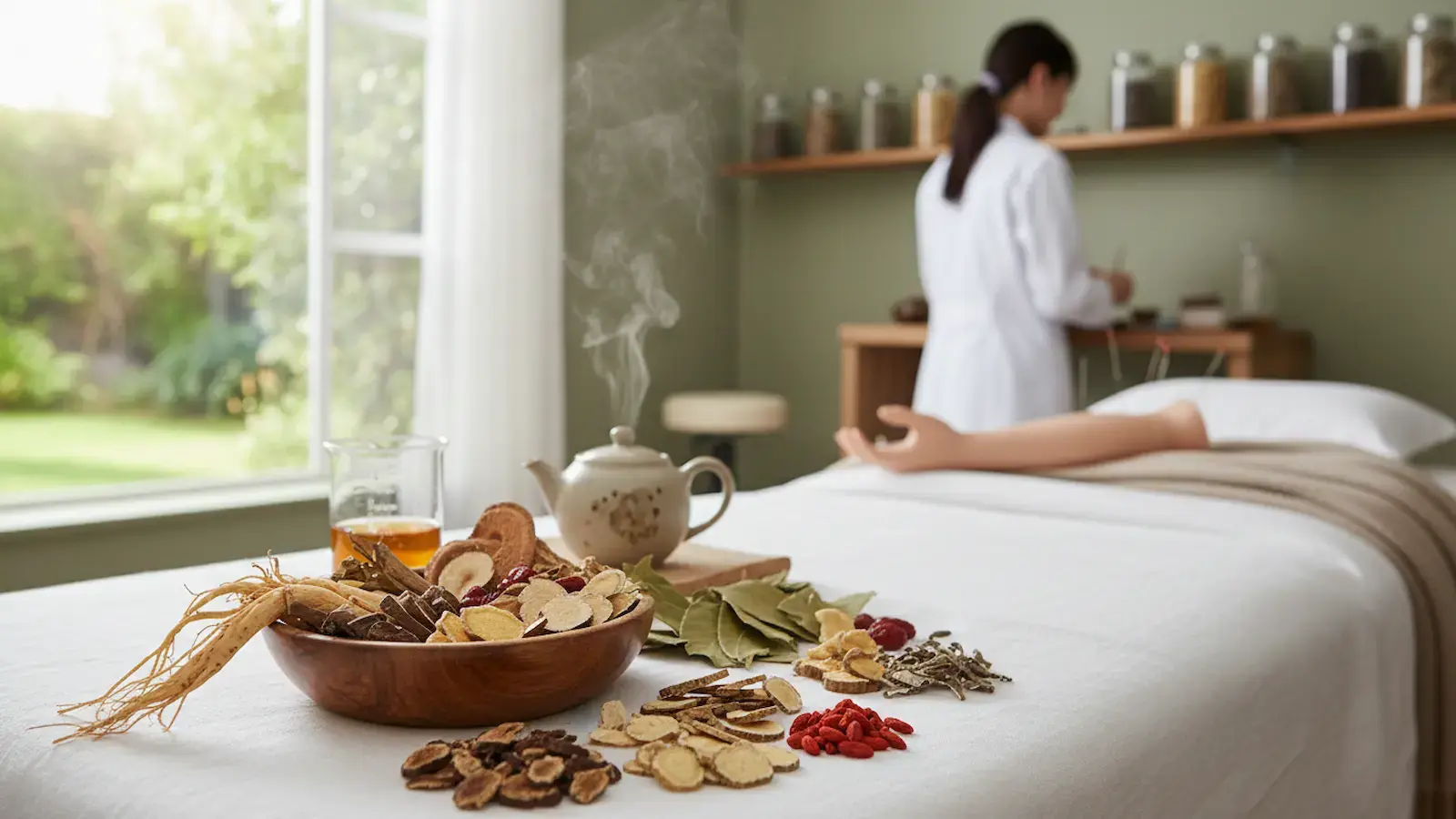
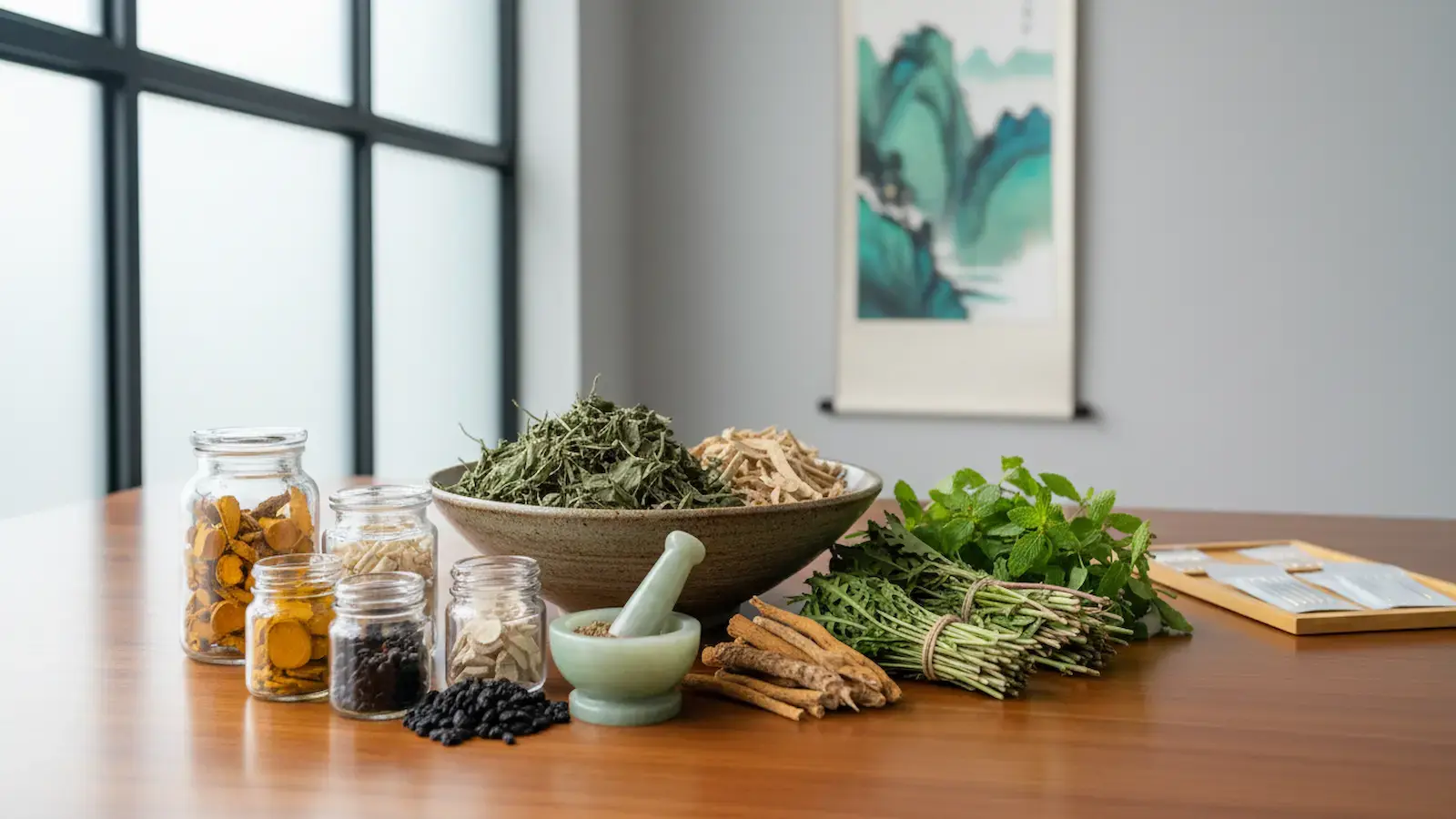
Herbs chosen to invigorate Blood and break up stagnation are a frequent part of formulas for this pattern. These are often combined with herbs that soften hardened tissue and relieve pain, reflecting the idea that moving stuck Blood can ease both the cramping and the heaviness patients describe.
Herbs That Support Qi and Warm the Uterus
Where cold or Qi deficiency is also present, a formula may include warming herbs or Qi tonics alongside the Blood-moving ingredients. The goal is to support the body’s own ability to keep Qi and Blood circulating smoothly, rather than relying on a single herb to do all the work.
Because formulas are written for the individual rather than pulled from a shelf, two people with the same diagnosis of adenomyosis may receive quite different combinations of herbs, depending on their pattern, their pulse, and their tongue. For more on how these formulas are put together and monitored, Are Chinese Herbs Safe to Take? explains the general safety considerations involved.
Adenomyosis can also affect fertility for some patients, and this is often part of the conversation during an initial visit. If this is a concern for you, Can Chinese Herbs Increase Fertility? What to Know walks through how herbal formulas are approached when fertility is a goal.
What to Expect from a Course of Treatment
Chinese herbal medicine for adenomyosis is not a quick fix, and it does not replace your doctor’s treatment or medication. It is generally approached as a longer course of treatment, often paired with acupuncture, with formulas adjusted as your pattern shifts. As a general guideline, I suggest planning on 5–10 treatments before judging whether an approach is working for you, since Qi and Blood stagnation built up over time tends to respond gradually rather than overnight.
Safety and Working with a Qualified Practitioner
Chinese herbs are potent substances, and taking the wrong formula—or combining herbs with certain medications—can cause problems. This is why I always start from a full Traditional Chinese Medicine diagnosis: a lot of questions about your health, a look at your tongue, and a reading of your pulse, before any formula is written. I am registered with the College of Traditional Chinese Medicine Practitioners and Acupuncturists of Ontario (CTCMPAO), and I run the herbal dispensary that fills the custom formulas I prescribe, so I can keep a close eye on what you are taking and how you are responding.
Finding Care at Traditional Healing Centre
At Traditional Healing Centre in Keswick, Ontario, I have been treating patients with acupuncture and Chinese herbal medicine since 2008. Every treatment plan I write starts from your own diagnosis, never an off-the-shelf protocol, which matters a great deal for a condition like adenomyosis where patterns differ so much from one patient to the next. Many extended health plans cover acupuncture and Chinese medicine services, and I issue receipts as a Registered Acupuncturist (R.Ac) and Registered Traditional Chinese Medicine Practitioner (R.TCMP) so you can submit a claim if your plan allows it. You can book an appointment to start with a full diagnosis and discuss whether a tailored herbal formula makes sense alongside your current care.
Moving Forward with Adenomyosis Care
Ready to book, or have a question?
Book with Traditional Healing CentreIn this series
- A Chinese Herb Guide: Understanding Traditional Formulas
- Are Chinese Herbs Safe to Take?
- Chinese Herbs to Lose Weight: What Actually Helps
- Common Chinese Herbs and What They’re Used For
- Choosing a Traditional Chinese Medicine / Herbs Book
- Warming and Cooling Herbs in Chinese Medicine
- Blood-Building Herbs in Chinese Medicine
- Traditional Chinese Herbs: What They Treat and How They Work
- Chinese Herbs for Spleen: Support for Digestion and Energy
- Organic Chinese Herbs Canada: What to Know Before You Buy
- Chinese Fertility Herbs: How Traditional Medicine Approaches Them
- Anxiety Chinese Herbs: Traditional Formulas That Support Calm
- Chinese Herbs for UTI: What Traditional Chinese Medicine Offers
- Can Chinese Herbs Increase Fertility? What to Know
- Chinese Herbs for Liver Cleanse: A TCM Perspective
- Chinese Herbs for Gallbladder Support: What to Know
- Chinese Herbs History: From Ancient Roots to Modern Care
- Rosacea Chinese Herbs: How TCM Approaches Facial Flushing
- Chinese Herbs for Hypertension: What You Should Know
- Top Chinese Herbs: What They Do and How They’re Used
- Chinese Herbs for Menopause: What to Know Before You Start
- Chinese Herbs Side Effects: What to Know Before You Start
- Chinese Herbs for Soaking Feet: A Traditional Approach to Rest
- Chinese Herbs for High Cholesterol: A TCM Perspective
- Best Chinese Herbs for Acid Reflux: A TCM Guide
- Best Time to Take Chinese Herbs for Best Results
- Chinese Herbs for Adenomyosis: What to Know