
Can Chinese Herbs Increase Fertility? What to Know
In short
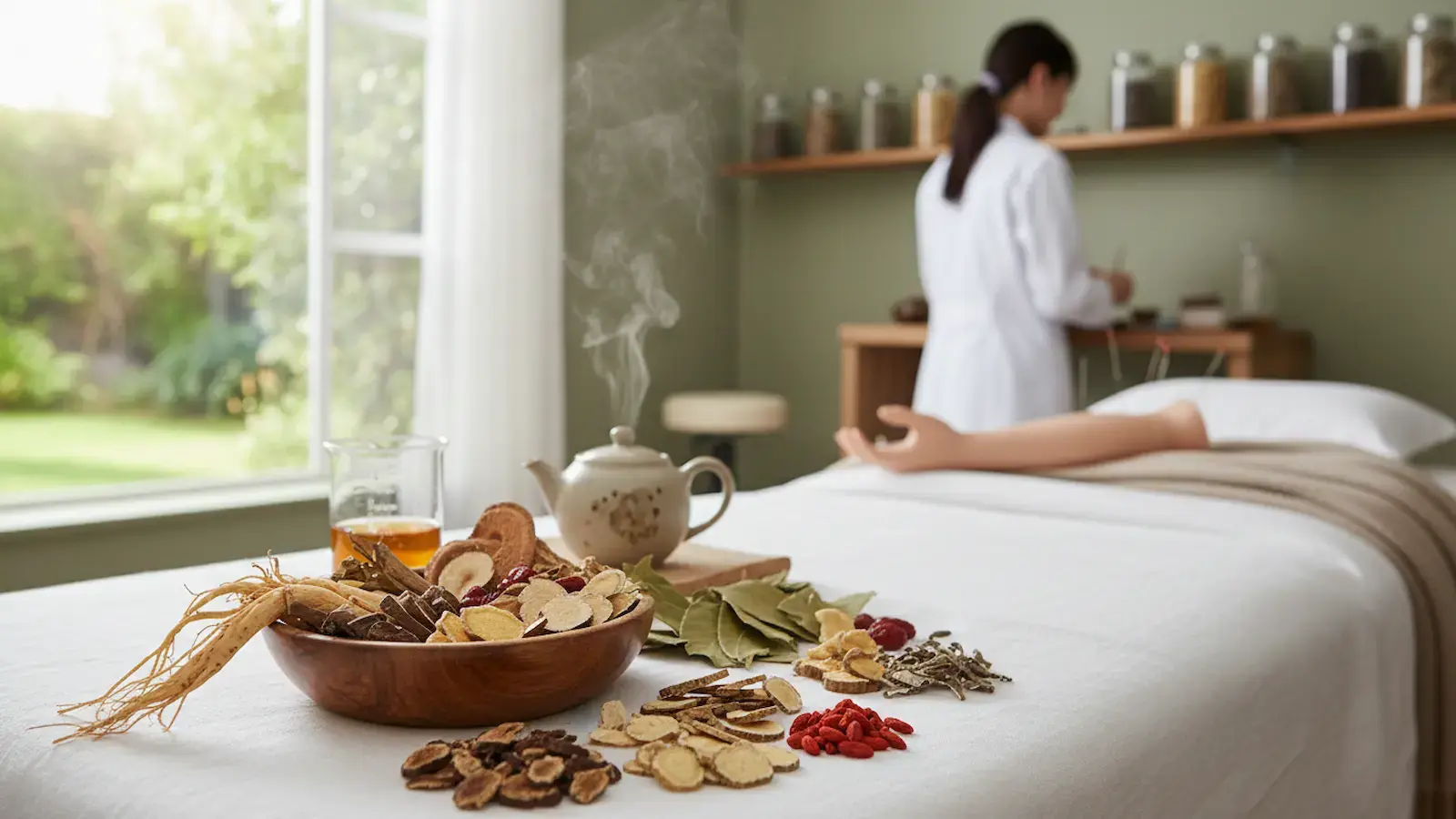
Chinese herbs increase fertility support by addressing patterns such as Qi and Blood stagnation, Kidney deficiency, or hormonal imbalance that may affect conception. A practitioner selects a formula based on your individual diagnosis rather than a single herb or standard mix. Herbal treatment is typically used alongside, not in place of, your doctor's fertility care.
Many people exploring natural options for conception come across the idea that chinese herbs increase fertility, and want to understand what that actually means in practice. Traditional Chinese Medicine (TCM) does not treat “fertility” as a single condition. Instead, it looks at the patterns underlying a person’s reproductive health, then builds a formula to address those specific patterns.
In this article
How Traditional Chinese Medicine Approaches Fertility
In TCM, fertility concerns are rarely viewed as one isolated issue. A practitioner asks detailed questions about menstrual cycles, sleep, digestion, stress levels, and general health, then looks at the tongue and takes the pulse. This full diagnosis is how a pattern is identified, and it is the pattern, not a generic label like “infertility,” that shapes the herbal formula.
Common Patterns Linked to Fertility Concerns
A few patterns come up often when fertility is a concern:
- Qi and Blood stagnation — associated with irregular or painful cycles and a sense that the body’s natural flow is blocked.
- Kidney deficiency — in TCM theory, the Kidney system is closely tied to reproductive health and vitality.
- Spleen Qi deficiency — can relate to digestive weakness and low energy, which practitioners may connect to overall reproductive balance.
- Liver Qi stagnation — often linked with stress and its effects on the menstrual cycle.
Each pattern calls for a different combination of herbs, which is why no single herb or over-the-counter blend is likely to address every person’s situation in the same way.
Why a Tailored Formula Matters
Because fertility-related patterns vary so widely from person to person, the formula used in one case may look nothing like the formula used in another, even if both patients describe similar difficulty conceiving. A formula built around Qi and Blood stagnation, for example, will differ substantially from one designed for Kidney deficiency.
This is also why I don’t recommend picking herbs off a list and self-treating. Readers who want to understand individual herbs and their traditional uses may find our overview of common Chinese herbs and what they’re used for helpful as background reading, but it isn’t a substitute for a proper diagnosis. Those who want a deeper, structured introduction to how herbs are chosen and combined may also want to look at our guide on choosing a Traditional Chinese Medicine or herbs book.
What a Visit Typically Involves
A first visit focused on fertility support generally includes:
- A detailed intake covering menstrual history, general health, sleep, stress, and digestion.
- Tongue and pulse examination.
- Identification of the relevant pattern or patterns.
- Development of a formula, often combined with acupuncture, to address those patterns over a course of treatment.
Book a time
Pick a time that suits you.
Book a time- Phone: (647) 346-2780
- Email: jasontcm@traditionalhealingcentre.com
- Address: 213 Queensway S. Unit 400, Keswick, Ontario, L4P2A7
Related articles
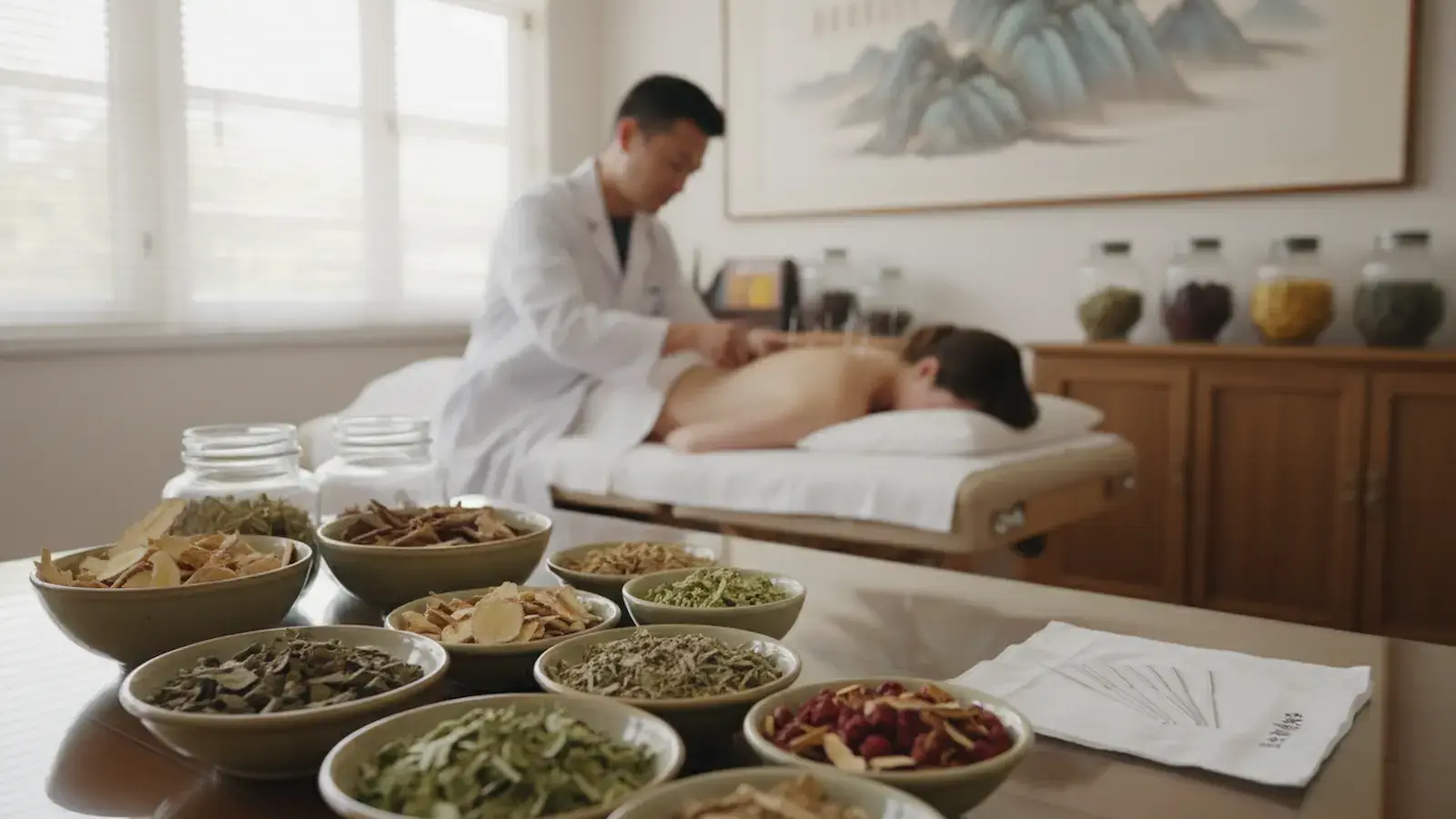
Acupuncture is frequently paired with herbal formulas in TCM fertility support, since both approaches are traditionally used to influence the same underlying patterns of Qi and Blood.
A Note on Expectations
It’s worth being clear-eyed about what herbal treatment can reasonably offer. Chinese herbal medicine is traditionally used to support overall reproductive health by addressing patterns like Qi and Blood stagnation, but it does not replace medical fertility treatment, and no responsible practitioner should promise a specific outcome or timeline. If you are working with a fertility specialist or your doctor, herbal treatment is best considered a complementary piece of your overall plan rather than a stand-alone solution.
How Traditional Healing Centre Approaches This
At Traditional Healing Centre in Keswick, Ontario, every treatment plan starts from the patient’s own Traditional Chinese Medicine diagnosis, never an off-the-shelf protocol. For fertility-related concerns, this means Jason asks detailed questions, examines the tongue, and takes the pulse before recommending anything, so that any Chinese Herbal Medicine formula and accompanying Acupuncture are matched to the pattern he identifies, not a standard fertility package. This clinic also offers Tuina Massage, Chinese Cupping, and Moxibustion, which may be incorporated depending on the pattern involved.
Moving Forward With Care
If you’re considering herbal support as part of your fertility journey, the most useful first step is a thorough diagnosis rather than a particular herb. Understanding your own pattern, whether that’s Qi and Blood stagnation, Kidney deficiency, or something else, is what allows a formula to be built around your actual health picture.
Ready to book, or have a question?
Book with Traditional Healing CentreIn this series
- A Chinese Herb Guide: Understanding Traditional Formulas
- Are Chinese Herbs Safe to Take?
- Chinese Herbs to Lose Weight: What Actually Helps
- Common Chinese Herbs and What They’re Used For
- Choosing a Traditional Chinese Medicine / Herbs Book
- Warming and Cooling Herbs in Chinese Medicine
- Traditional Chinese Herbs: What They Treat and How They Work
- Chinese Herbs for Spleen: Support for Digestion and Energy
- Organic Chinese Herbs Canada: What to Know Before You Buy
- Chinese Fertility Herbs: How Traditional Medicine Approaches Them
- Anxiety Chinese Herbs: Traditional Formulas That Support Calm
- Chinese Herbs for UTI: What Traditional Chinese Medicine Offers
- Chinese Herbs for Liver Cleanse: A TCM Perspective
- Chinese Herbs for Gallbladder Support: What to Know
- Chinese Herbs History: From Ancient Roots to Modern Care
- Rosacea Chinese Herbs: How TCM Approaches Facial Flushing
- Chinese Herbs for Hypertension: What You Should Know
- Top Chinese Herbs: What They Do and How They’re Used
- Chinese Herbs for Menopause: What to Know Before You Start
- Chinese Herbs Side Effects: What to Know Before You Start
- Chinese Herbs for High Cholesterol: A TCM Perspective
- Can Chinese Herbs Increase Fertility? What to Know