
Chinese Herbs for Menopause: What to Know Before You Start
In short
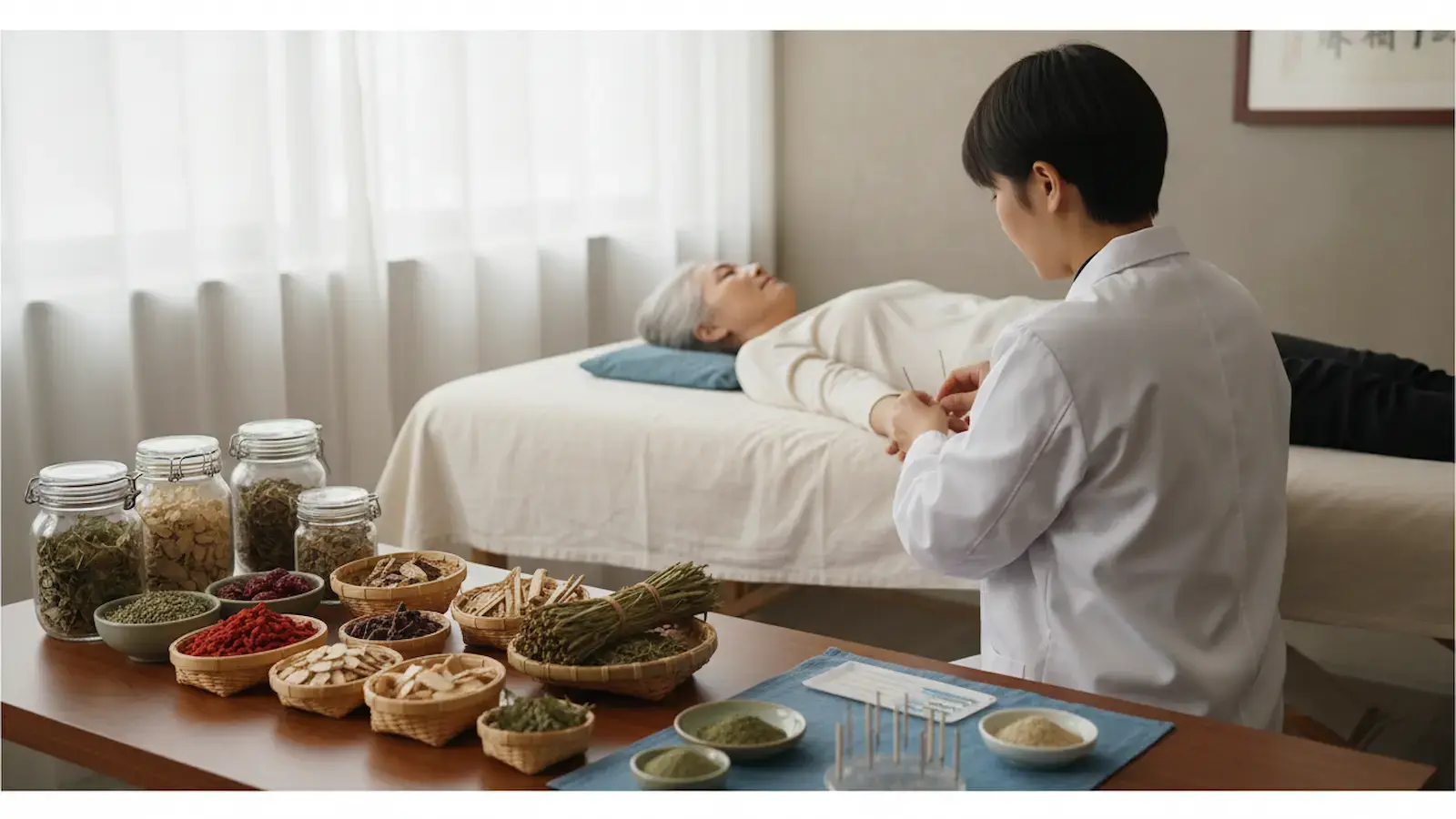
Chinese herbs for menopause are typically combined into a custom formula based on a patient's individual pattern, such as Yin deficiency or Blood deficiency, rather than taken as single herbs. A qualified practitioner adjusts the formula over a course of treatment as symptoms such as hot flashes, sleep disruption, or mood changes shift.
Menopause brings a wide range of experiences, and women often look beyond conventional options when hot flashes, night sweats, sleep disruption, or mood swings start to affect daily life. I want to walk you through how Traditional Chinese Medicine approaches this transition, what role herbs play, and what a reasonable course of treatment looks like.
In this article
Understanding Menopause Through a Traditional Chinese Medicine Lens
In Traditional Chinese Medicine, menopause is understood as a natural decline in Kidney Essence that affects the balance of Yin and Yang in the body. This shift can show up differently from one woman to the next, which is why I never start with a fixed idea of what a patient needs.
How TCM Views Menopausal Symptoms
Hot flashes and night sweats are often linked to Yin deficiency, where the body loses some of its cooling, moistening function. Irritability, poor sleep, and mood changes may point to an imbalance between the Liver and Heart. Fatigue and low mood sometimes trace back to Qi and Blood stagnation. A full diagnosis involves a lot of questions about your health history, a look at your tongue, and a reading of your pulse, and this is how a pattern is identified rather than simply a list of symptoms.
Common Chinese Herbs Used for Menopause
Several herbs are commonly used in formulas aimed at supporting women through menopause, though the specific combination always depends on the pattern identified during the visit.
Herbs That Support Yin and Blood
Book a time
Pick a time that suits you.
Book a time- Phone: (647) 346-2780
- Email: jasontcm@traditionalhealingcentre.com
- Address: 213 Queensway S. Unit 400, Keswick, Ontario, L4P2A7
Related articles
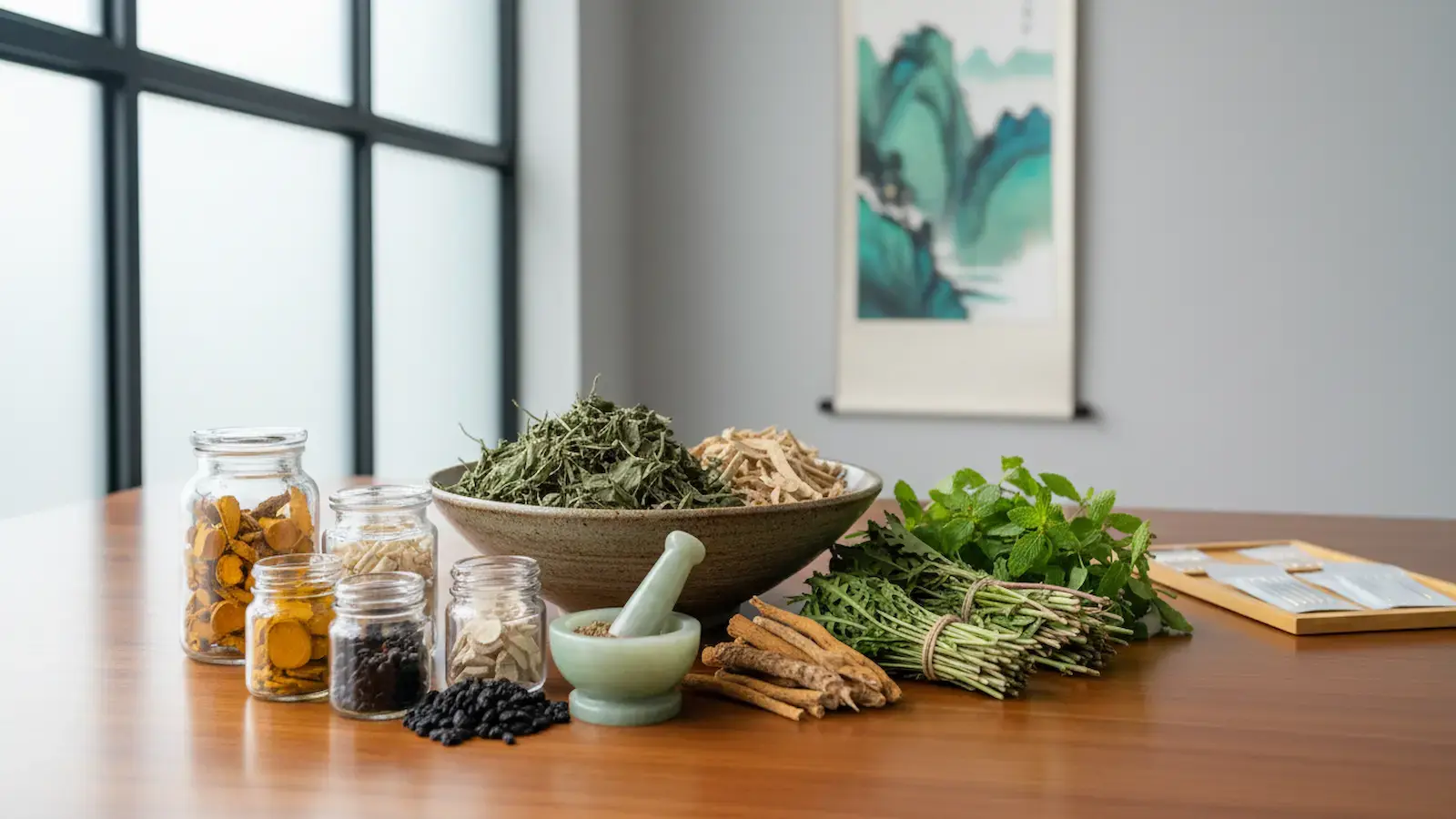
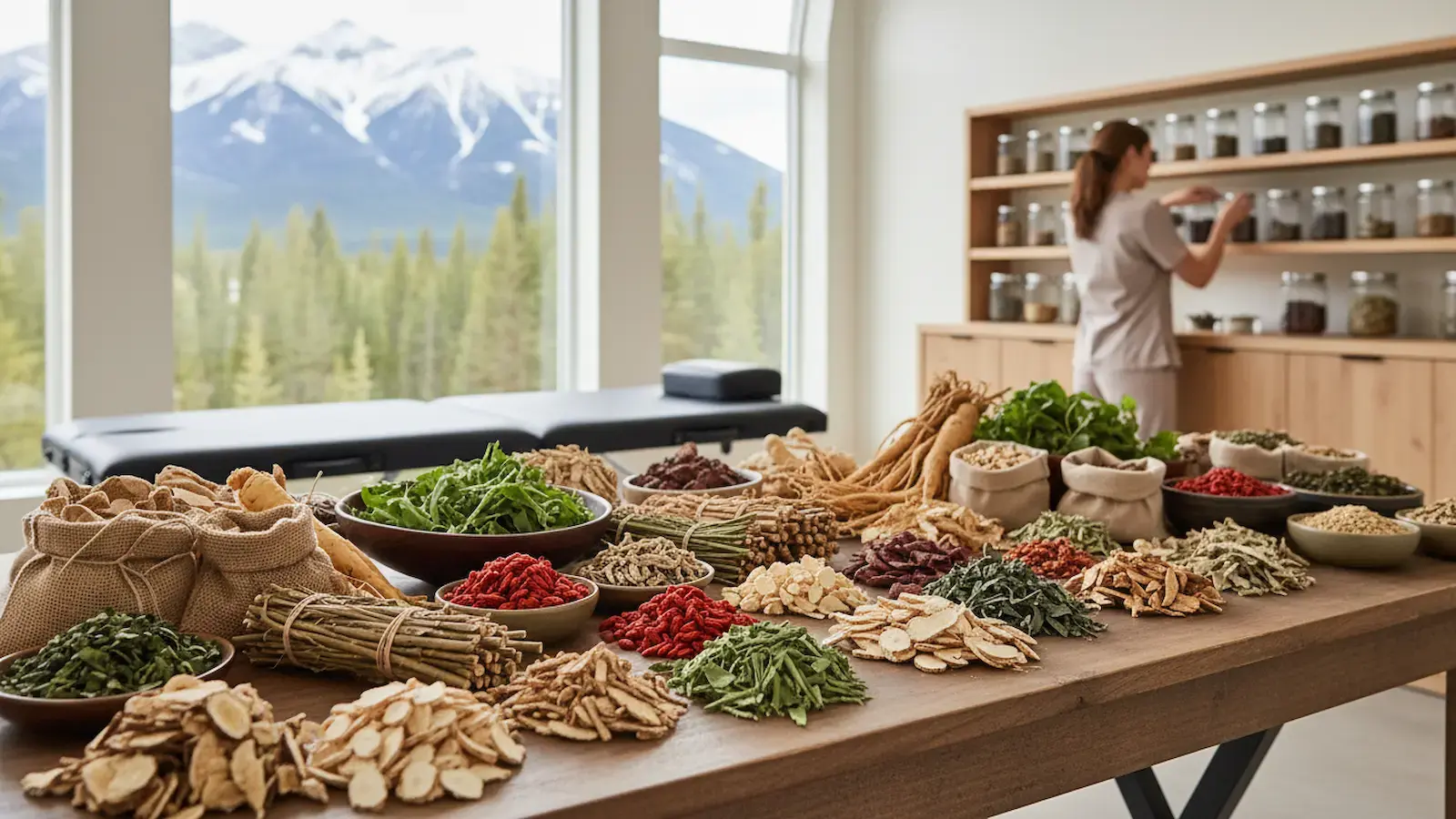
Herbs that nourish Yin and Blood are frequently included when hot flashes, night sweats, or dryness are prominent. Others are chosen to calm the spirit and support sleep, while some are included to move Qi and ease irritability or tension. None of these herbs work in isolation within a formula; they are selected to balance and support one another.
Why Custom Formulas Matter More Than Single Herbs
A formula written for one patient’s Yin deficiency pattern can look quite different from one written for another patient whose main concern is Qi and Blood stagnation, even if both are going through menopause. This is why I write every formula based on the individual sitting in front of me rather than drawing from a generic menopause protocol. If you want to understand how these formulas are put together, my Chinese Herb Guide explains the reasoning behind traditional formula structure in more detail.
What to Expect From a Course of Treatment
Chinese herbal medicine is not a quick fix, and I ask patients to plan on 5 to 10 treatments before expecting to judge real progress. Menopausal symptoms can take time to settle, and the formula is often adjusted along the way as your pattern shifts.
Combining Herbs With Acupuncture
Many patients combine Chinese herbal medicine with acupuncture, since the two approaches work from the same diagnostic framework. Acupuncture can support sleep and help settle the nervous system, while the herbal formula works over a longer course to address the underlying pattern. I have combined acupuncture with custom herbal formulas throughout my 18 years in practice, adjusting each formula myself since I also run the dispensary that fills it.
Safety and Working With a Qualified Practitioner
Chinese herbs are generally well tolerated when prescribed by a properly trained practitioner, but they are not without considerations, particularly if you take other medications or have existing health conditions. It is worth reading more about whether Chinese herbs are safe to take before starting a formula.
Checking Credentials and Formula Quality
Ask whether the practitioner is registered with a recognized regulatory body. I am registered with the College of Traditional Chinese Medicine Practitioners and Acupuncturists of Ontario, and receipts I issue reflect my credentials as a Registered Acupuncturist and Registered Traditional Chinese Medicine Practitioner. Many extended health plans cover acupuncture and Chinese medicine services, so it is worth checking your plan before your first visit, though these services are not covered by OHIP.
Finding Care at Traditional Healing Centre
At Traditional Healing Centre in Keswick, Ontario, every treatment plan starts from your own Traditional Chinese Medicine diagnosis, never an off-the-shelf protocol. This matters for menopause specifically, since no two women experience this transition the same way. I write each herbal formula for the individual patient and prepare it myself in the clinic’s dispensary, so the formula you take reflects the pattern I find during your visit, not a standard menopause package.
Ready to book, or have a question?
Book with Traditional Healing CentreIn this series
- A Chinese Herb Guide: Understanding Traditional Formulas
- Are Chinese Herbs Safe to Take?
- Chinese Herbs to Lose Weight: What Actually Helps
- Common Chinese Herbs and What They’re Used For
- Choosing a Traditional Chinese Medicine / Herbs Book
- Traditional Chinese Herbs: What They Treat and How They Work
- Organic Chinese Herbs Canada: What to Know Before You Buy
- Chinese Fertility Herbs: How Traditional Medicine Approaches Them
- Chinese Herbs for Gallbladder Support: What to Know
- Chinese Herbs History: From Ancient Roots to Modern Care
- Rosacea Chinese Herbs: How TCM Approaches Facial Flushing
- Chinese Herbs for Menopause: What to Know Before You Start