
Best Chinese Herbs for Immune System Support
In short
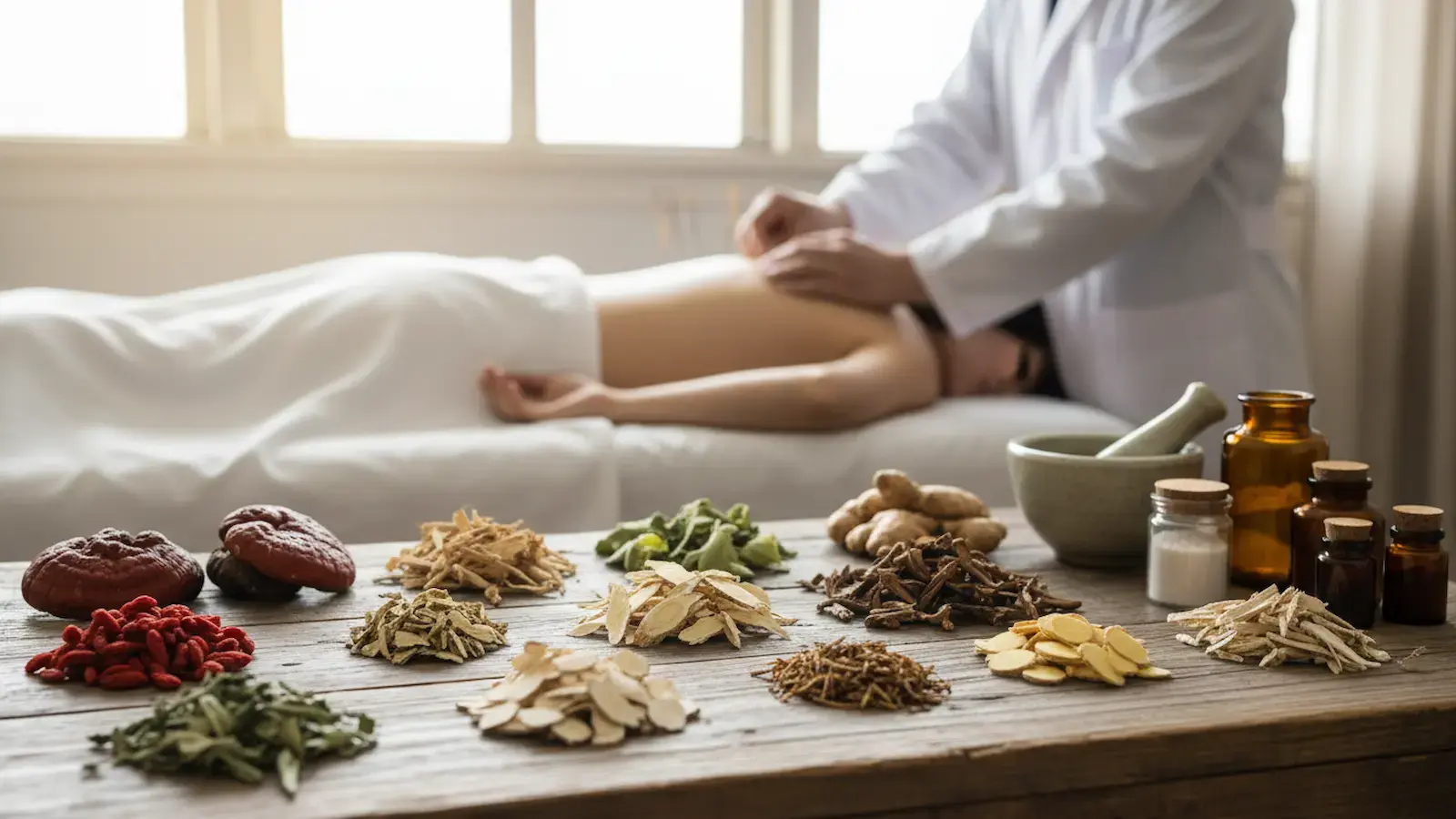
Astragalus, Reishi mushroom, Codonopsis, and Schisandra are among the herbs most often discussed for immune support in Traditional Chinese Medicine. They are traditionally used to strengthen what is called Wei Qi, or defensive Qi, and are most often combined into a formula rather than taken alone.
When people search for the best chinese herbs for immune system support, they are usually looking for a short list of ingredients they can start taking right away. That instinct makes sense, but Traditional Chinese Medicine does not treat the immune system as a single switch that one herb flips on. It looks at the whole pattern of a person’s health, including digestion, sleep, stress, and energy levels, before deciding which herbs belong in a formula and in what proportion.
In this article
Understanding Immune Support in Traditional Chinese Medicine
Qi, Wei Qi, and the Immune Concept
In Traditional Chinese Medicine, the concept closest to immune function is Wei Qi, often translated as defensive Qi. Wei Qi is described as circulating at the body’s surface, where it is thought to help the body respond to external factors such as wind, cold, and seasonal changes. When Wei Qi is considered weak, a person may notice they catch colds more easily, feel run down after minor exertion, or take longer than expected to bounce back from illness.
Herbs that support the immune system are generally chosen for their ability to tonify Qi, nourish Blood, or address Qi and Blood stagnation that may be interfering with the body’s defenses. This is a different starting point than selecting a single herb for a single symptom, and it’s why the same herb can show up in very different formulas depending on the person taking it.
Commonly Used Chinese Herbs for Immune Support
Astragalus (Huang Qi)
Astragalus root is one of the most frequently discussed herbs in this category. It is classified as a Qi tonic and is traditionally used to support the body’s resilience, particularly for people who feel fatigued or who seem to catch every cold that goes around. It is rarely prescribed alone and is commonly paired with other Qi-tonifying herbs in a formula.
Reishi Mushroom (Ling Zhi)
Reishi, sometimes written as Ling Zhi, is another herb with a long history in Chinese medicine. It is traditionally associated with calming the spirit as well as supporting overall vitality, which is relevant given how closely stress and sleep are tied to immune resilience in Traditional Chinese Medicine theory.
Codonopsis (Dang Shen)
Book a time
Pick a time that suits you.
Book a time- Phone: (647) 346-2780
- Email: jasontcm@traditionalhealingcentre.com
- Address: 213 Queensway S. Unit 400, Keswick, Ontario, L4P2A7
Related articles
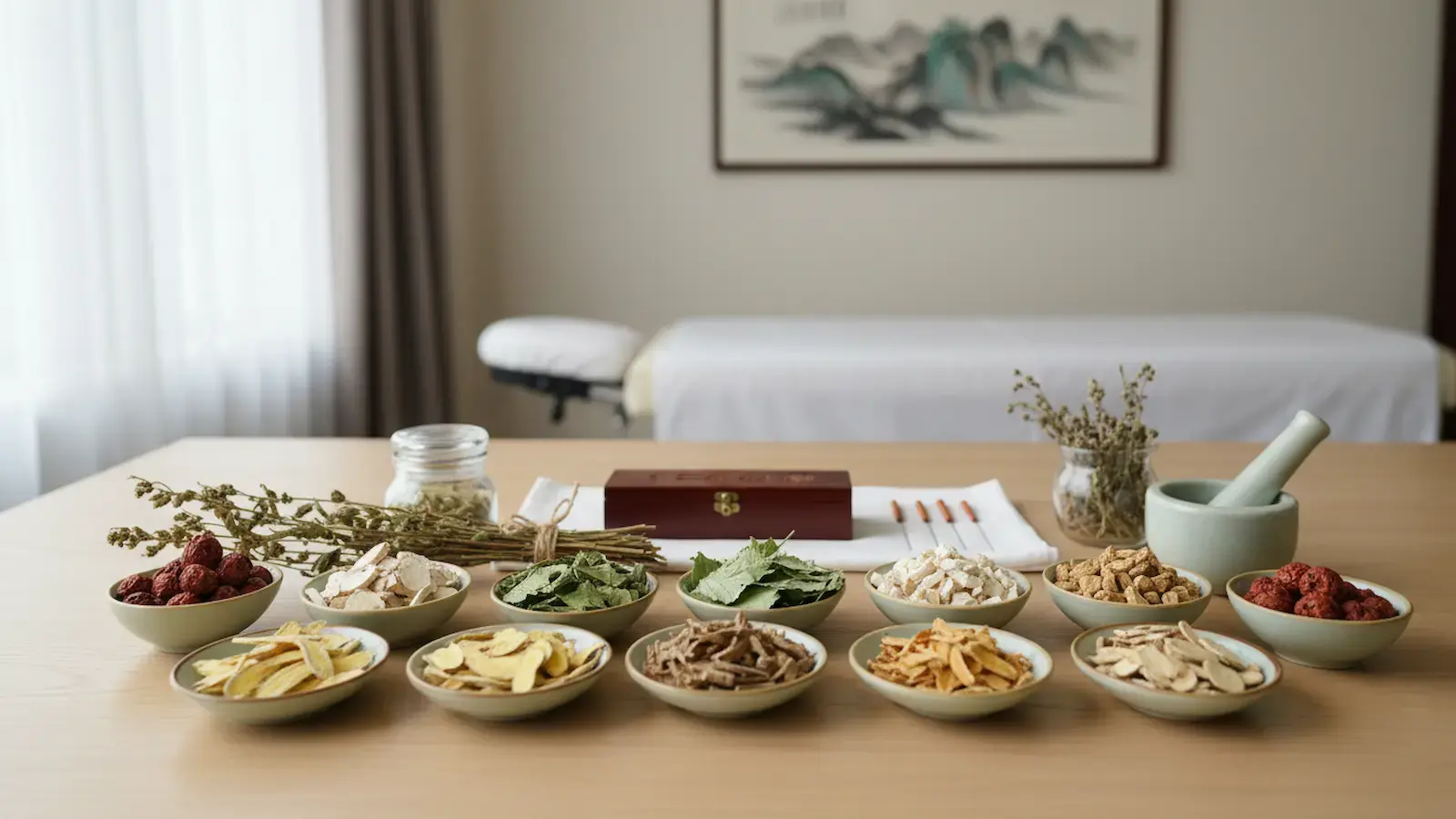
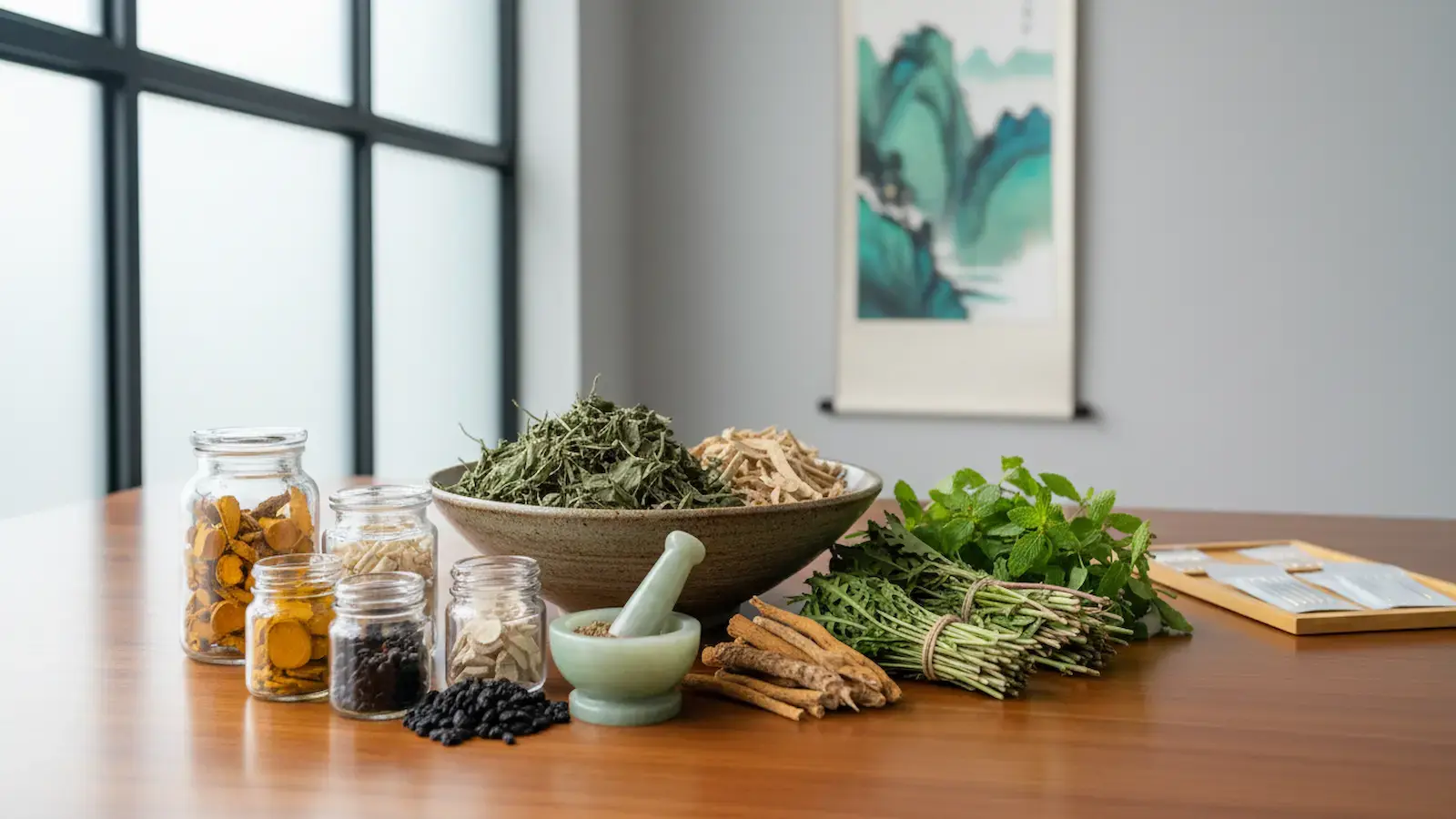
Codonopsis root is often used as a gentler alternative or companion to ginseng. It is considered a Qi tonic that also supports the digestive system, reflecting the Traditional Chinese Medicine view that healthy digestion underlies the body’s ability to generate the Qi and Blood needed for a strong defense.
Schisandra (Wu Wei Zi)
Schisandra berry is valued for its role in supporting the body during periods of stress or depletion. It is traditionally included in formulas aimed at steadying energy over time rather than producing an immediate effect.
Why a Custom Formula Matters More Than a Single Herb
Pattern-Based Prescribing
A list of individual herbs can be a useful starting point for learning, but Traditional Chinese Medicine does not generally prescribe herbs one at a time. A practitioner works from a pattern, built from questions about your health history, a look at your tongue, and a reading of your pulse, then selects a combination of herbs meant to work together for your particular presentation. Two people with similar complaints about getting sick often may still receive different formulas, because the underlying pattern driving those symptoms is different.
This is also why I’d encourage caution with over-the-counter products that combine many of these herbs into one fixed blend. For more detail on how to think about safety and sourcing, see Are Chinese Herbs Safe to Take?
Safety and What to Expect
Working With a Registered Practitioner
Chinese herbs are generally well tolerated when prescribed appropriately, but they can interact with medications or may not suit every health condition. Working with a practitioner registered with the College of Traditional Chinese Medicine Practitioners and Acupuncturists of Ontario (CTCMPAO) means your formula is written for you, with your full health picture in view, rather than selected off a shelf.
It is also reasonable to expect a course of treatment, not a one-time fix. Most people plan on 5 to 10 treatments before judging whether a formula and accompanying acupuncture are making a difference.
How Traditional Healing Centre Approaches Immune Support
At Traditional Healing Centre in Keswick, Ontario, every treatment plan starts from your own Traditional Chinese Medicine diagnosis, never an off-the-shelf protocol. Jason Tarter, R.TCMP, R.Ac, has been in practice for 18 years and combines acupuncture with custom herbal formulas written for the individual patient. Jason also runs the clinic’s own herbal dispensary, so the formula he writes is the one that gets filled. Many extended health plans cover acupuncture and Chinese medicine services, and receipts are issued by a Registered Acupuncturist (R.Ac) and Registered Traditional Chinese Medicine Practitioner (R.TCMP) for your records.
If you’d like to discuss your own pattern and whether a custom herbal formula makes sense for you, you can book an appointment to get started.
A Reasonable Next Step
Ready to book, or have a question?
Book with Traditional Healing CentreIn this series
- A Chinese Herb Guide: Understanding Traditional Formulas
- Are Chinese Herbs Safe to Take?
- Chinese Herbs to Lose Weight: What Actually Helps
- Common Chinese Herbs and What They’re Used For
- Choosing a Traditional Chinese Medicine / Herbs Book
- Warming and Cooling Herbs in Chinese Medicine
- Blood-Building Herbs in Chinese Medicine
- Traditional Chinese Herbs: What They Treat and How They Work
- Chinese Herbs for Spleen: Support for Digestion and Energy
- Organic Chinese Herbs Canada: What to Know Before You Buy
- Chinese Fertility Herbs: How Traditional Medicine Approaches Them
- Anxiety Chinese Herbs: Traditional Formulas That Support Calm
- Chinese Herbs for UTI: What Traditional Chinese Medicine Offers
- Can Chinese Herbs Increase Fertility? What to Know
- Chinese Herbs for Liver Cleanse: A TCM Perspective
- Chinese Herbs for Gallbladder Support: What to Know
- Chinese Herbs History: From Ancient Roots to Modern Care
- Rosacea Chinese Herbs: How TCM Approaches Facial Flushing
- Chinese Herbs for Hypertension: What You Should Know
- Top Chinese Herbs: What They Do and How They’re Used
- Chinese Herbs for Menopause: What to Know Before You Start
- Chinese Herbs Side Effects: What to Know Before You Start
- Chinese Herbs for Soaking Feet: A Traditional Approach to Rest
- Chinese Herbs for High Cholesterol: A TCM Perspective
- Best Chinese Herbs for Acid Reflux: A TCM Guide
- Best Time to Take Chinese Herbs for Best Results
- Chinese Herbs for Adenomyosis: What to Know
- Can Chinese Herbs Be Harmful? What to Know Before You Start
- Best Chinese Herbs for Immune System Support