
Chinese Herbs for Spleen: Support for Digestion and Energy
In short
Chinese herbs for spleen support are chosen based on a practitioner's diagnosis of Spleen Qi deficiency or dampness, common patterns linked to fatigue, bloating, loose stools and poor appetite. Herbs such as Bai Zhu, Fu Ling and Dang Shen are often combined into a formula rather than taken alone, since Traditional Chinese Medicine treats the whole pattern, not a single symptom.
In Traditional Chinese Medicine, the Spleen is considered the root of digestion and the source of Qi and Blood production for the entire body. When the Spleen is working well, a person tends to have steady energy, a healthy appetite and comfortable digestion. When it is not, the effects can ripple outward into fatigue, brain fog, loose stools, bloating after meals and even menstrual irregularities. This is why Chinese herbs for spleen support are among the most frequently used formulas in herbal practice, and why understanding the underlying pattern matters more than reaching for a single ingredient.
In this article
Understanding the Spleen in Traditional Chinese Medicine
The TCM Spleen is not identical to the anatomical organ studied in Western medicine. It refers instead to a functional system responsible for transforming food into Qi and Blood, and for keeping fluids moving properly through the body. A Spleen that is working efficiently keeps a person grounded, well-nourished and resilient to illness.
Signs of Spleen Qi deficiency
Practitioners look for a cluster of signs rather than one isolated complaint. Common indicators include:
- Fatigue, especially after eating
- Bloating or a feeling of heaviness in the abdomen
- Loose stools or irregular digestion
- Poor appetite
- A pale tongue with a thin, white coating
- A weak or soft pulse
These signs, gathered through questioning, tongue observation and pulse reading, help determine whether the pattern is simple Spleen Qi deficiency or whether dampness, Qi and Blood stagnation, or another pattern is also present. The formula chosen depends entirely on this picture.
Common Chinese Herbs for Spleen Support
Several herbs appear repeatedly in formulas aimed at strengthening the Spleen. Each has a specific role within the broader combination.
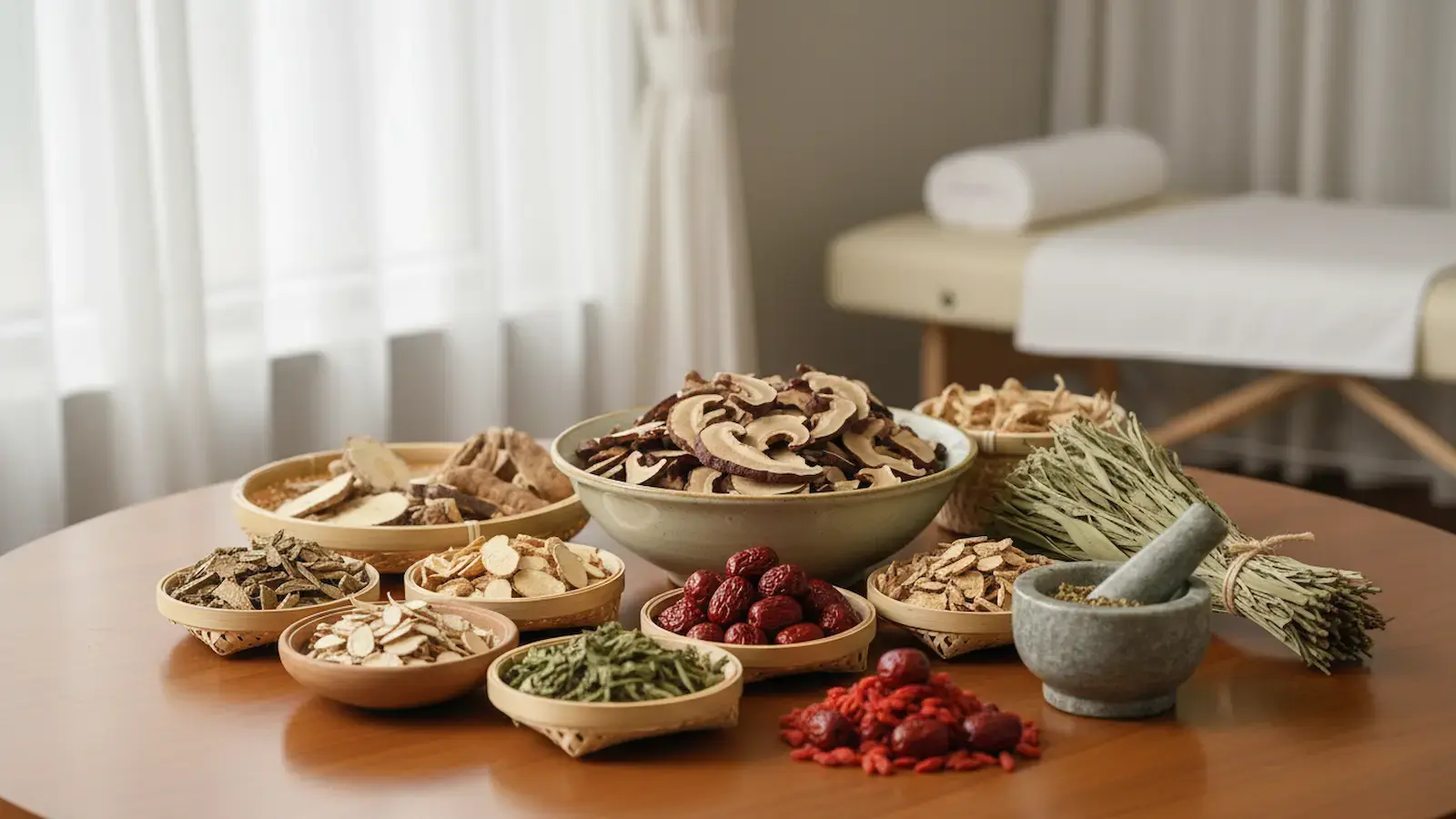
- Bai Zhu (Atractylodes) is often used to strengthen Spleen Qi and dry excess dampness.
- Fu Ling (Poria) helps drain dampness while gently supporting digestion.
- Dang Shen (Codonopsis) is used to tonify Qi, particularly when fatigue is prominent.
- Gan Cao (Licorice root) is frequently added in small amounts to harmonize the other herbs in a formula.
These herbs rarely stand alone. For a broader look at how individual herbs are selected and combined, see this overview of common Chinese herbs and what they’re used for.
Formulas vs. single herbs
Book a time
Pick a time that suits you.
Book a time- Phone: (647) 346-2780
- Email: jasontcm@traditionalhealingcentre.com
- Address: 213 Queensway S. Unit 400, Keswick, Ontario, L4P2A7
Related articles
A classic example is Si Jun Zi Tang, the “Four Gentlemen Decoction,” which combines several Qi-tonifying herbs to support Spleen function as a foundation formula. Other formulas build on this base by adding herbs to address dampness, Qi and Blood stagnation, or digestive stagnation specifically. This is why a formula prescribed for one person’s fatigue may look quite different from one prescribed for another person with similar complaints but a different underlying pattern.
Beyond Herbs: A Full Treatment Approach
Herbs are only one part of how Traditional Chinese Medicine addresses Spleen-related concerns. Acupuncture points along the Spleen and Stomach channels are commonly used alongside herbal formulas to support digestive function and Qi circulation. Tuina massage techniques can also encourage movement in areas where Qi and Blood stagnation has developed, complementing the internal work that herbs do.
Why diagnosis comes before treatment
At Traditional Healing Centre in Keswick, Ontario, every treatment plan starts from the patient’s own Traditional Chinese Medicine diagnosis, never an off-the-shelf protocol. I ask a lot of questions about digestion, energy levels and overall health, then look at the tongue and take the pulse before recommending acupuncture, Chinese herbal medicine, Tuina massage or a combination of these. This approach extends to related concerns as well, since Spleen and Blood patterns often connect to other complaints, including the kind discussed in this guide to TCM for menstrual cramps. For those dealing with chronic tension alongside digestive fatigue, this guide to pain relief massage explains how Tuina fits into a broader course of treatment.
When to Seek Guidance
Because Chinese herbs for spleen support are selected based on an individual pattern, self-diagnosing from a list of symptoms is not recommended. A formula that helps one person with fatigue and bloating may not suit another person whose underlying pattern differs, even if the surface symptoms look similar. Working with a trained practitioner ensures the formula, along with any accompanying acupuncture or Tuina massage, is matched to the actual pattern present.
Ready to book, or have a question?
Book with Traditional Healing CentreIn this series
- A Chinese Herb Guide: Understanding Traditional Formulas
- Are Chinese Herbs Safe to Take?
- Chinese Herbs to Lose Weight: What Actually Helps
- Common Chinese Herbs and What They’re Used For
- Choosing a Traditional Chinese Medicine / Herbs Book
- Warming and Cooling Herbs in Chinese Medicine
- Traditional Chinese Herbs: What They Treat and How They Work
- Organic Chinese Herbs Canada: What to Know Before You Buy
- Chinese Fertility Herbs: How Traditional Medicine Approaches Them
- Anxiety Chinese Herbs: Traditional Formulas That Support Calm
- Chinese Herbs for UTI: What Traditional Chinese Medicine Offers
- Chinese Herbs for Liver Cleanse: A TCM Perspective
- Chinese Herbs for Gallbladder Support: What to Know
- Chinese Herbs History: From Ancient Roots to Modern Care
- Rosacea Chinese Herbs: How TCM Approaches Facial Flushing
- Chinese Herbs for Menopause: What to Know Before You Start
- Chinese Herbs Side Effects: What to Know Before You Start
- Chinese Herbs for High Cholesterol: A TCM Perspective
- Chinese Herbs for Spleen: Support for Digestion and Energy