
Chinese Cupping on Feet: What It Does and What to Expect
November 26, 2026 · Jason Tarter, R.TCMP, R.Ac
In short
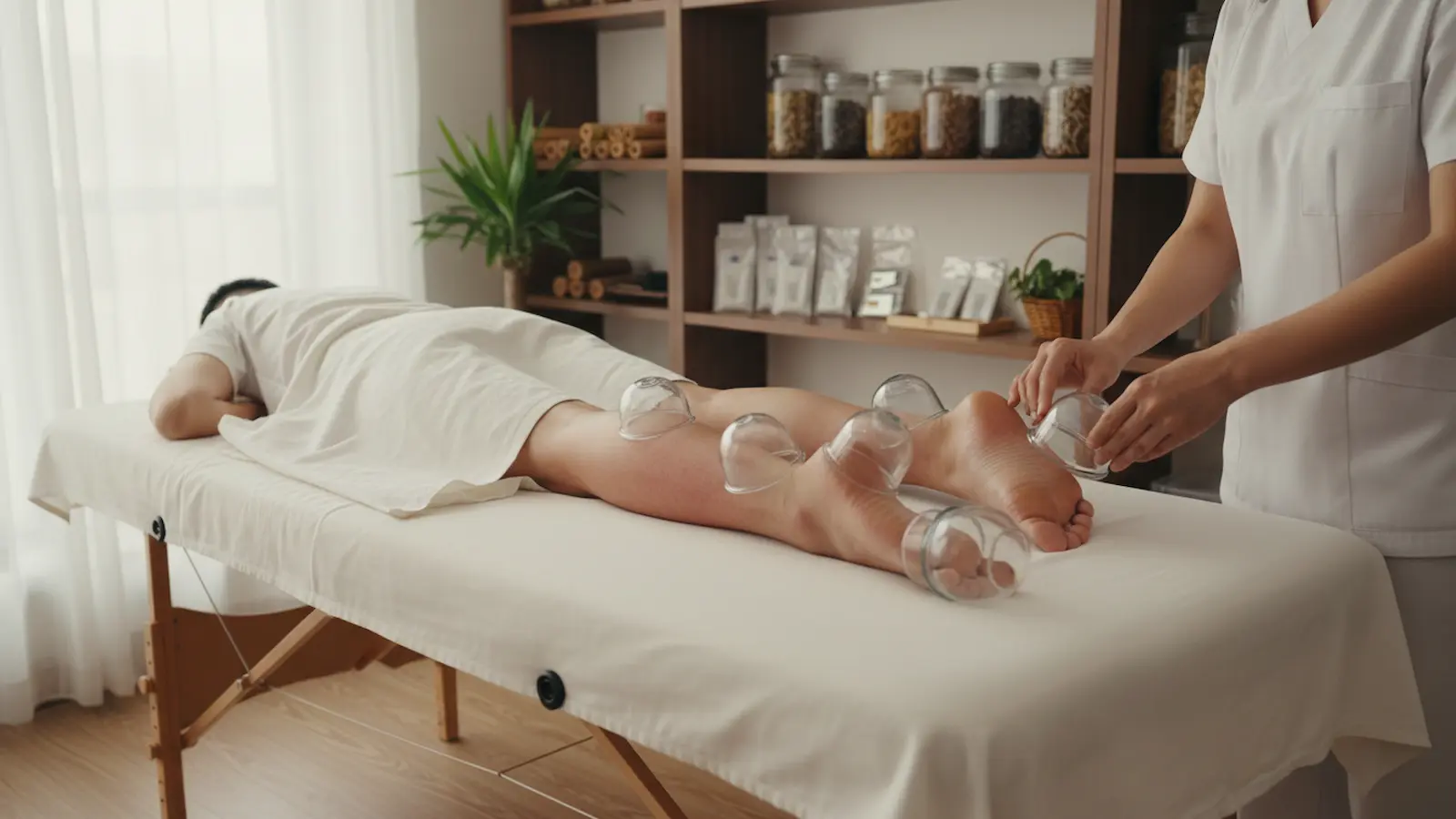
Chinese cupping on feet uses small cups and gentle suction over points on the soles, arches, and ankles to help move Qi and Blood stagnation and support circulation to the lower legs. A licensed practitioner chooses the points based on your pattern and adjusts cup size, pressure, and duration to what your skin and tissue can handle. It's generally paired with acupuncture or Tuina massage rather than used on its own.
The feet carry a dense network of acupuncture points in Traditional Chinese Medicine, which is one reason practitioners sometimes extend cupping below the ankle instead of limiting it to the back and shoulders. Chinese cupping on feet is less common than cupping on the back, but it has a long history in treating foot pain, tired legs, and stubborn stiffness that doesn't respond well to rubbing or stretching alone. Understanding how it works, and where it fits alongside other treatments, helps you decide whether to ask about it at your next visit.
In this article
How Chinese Cupping on Feet Works
Cupping creates a vacuum, usually with a small glass, silicone, or plastic cup, that lifts the skin and the tissue just beneath it. On the back, this is often done over large muscle groups. On the feet, the cups are smaller and the technique is more precise, because the skin is thinner and the underlying structures are closer to the surface.
Why the Feet Are a Treatment Site
In Traditional Chinese Medicine, several channels run through the feet, including points linked to the Kidney, Liver, and Spleen systems. Practitioners may apply cupping here when they're addressing Qi and Blood stagnation that shows up as cold feet, heaviness in the legs, or pain along the sole and arch. It's also used to complement acupuncture points that are difficult to needle comfortably in areas like the heel.
Cup Types Used on the Feet
Because the foot has less soft tissue than the back or thighs, practitioners typically use smaller cups and lighter suction. Some combine brief, stationary cupping with gentle gliding cupping along the arch, where a thin layer of oil lets the cup move instead of sitting in one spot. The choice depends on the pattern being treated and how the tissue responds during the visit.
What to Expect During a Session
Book a time
Pick a time that suits you.
Book a time- Phone: (647) 346-2780
- Email: jasontcm@traditionalhealingcentre.com
- Address: 213 Queensway S. Unit 400, Keswick, Ontario, L4P2A7
Related articles
A session usually starts the same way any Traditional Chinese Medicine visit does: a review of your health history, a look at your tongue, and a check of your pulse. From there, the practitioner identifies which points on the feet are tender or where the skin and muscle feel tight, and selects cup placement accordingly.
Sensations and Marks
Most people feel a pulling or mild pressure sensation rather than pain. Because the skin on the foot is thinner, marks (if they appear) tend to fade faster than marks from back cupping. Suction is typically lighter here, and sessions are often shorter than cupping done on larger muscle groups. If you want a broader sense of what a cupping visit feels like before trying it on the feet specifically, The Chinese Cupping Method: What to Expect From Treatment walks through the general process step by step.
Conditions It May Support
Chinese cupping on feet is most often used alongside other treatments rather than by itself, and it's generally considered as one part of a broader plan rather than a stand-alone fix.
Pain and Circulation Concerns
Practitioners may bring it into a course of treatment for plantar heel discomfort, cold or heavy-feeling feet, or general stiffness after a long day on your feet. It's frequently combined with Tuina massage or acupuncture during the same visit, since the three approaches address stagnation from slightly different angles.
Safety Considerations
Cupping on the feet is generally well tolerated, but the area requires a bit more care than the back because of thinner skin and sensitive structures like the heel pad and arch ligaments.
Who Should Be Cautious
People with fragile skin, poor circulation in the legs, open wounds, or certain clotting conditions should discuss foot cupping with a practitioner before trying it, and it's not meant to replace care for a diagnosed circulatory or vascular condition. If you've seen cupping kits marketed for home use, it's worth reading Chinese Cupping Therapy at Home: What to Know First before doing anything on the feet without guidance, since the margin for error is smaller in this area.
Why the Diagnosis Comes First
At Traditional Healing Centre in Keswick, Ontario, I never start a cupping treatment, foot or otherwise, from a generic protocol. Every treatment plan starts from your own Traditional Chinese Medicine diagnosis: I ask about your symptoms and health history, look at your tongue, and take your pulse before deciding whether cupping, acupuncture, Chinese herbal medicine, or a combination suits your pattern. I've been in practice for 18 years and am registered with the College of Traditional Chinese Medicine Practitioners and Acupuncturists of Ontario (CTCMPAO), and I also write custom herbal formulas to support whatever hands-on treatment you receive. Most patients plan on 5–10 treatments to judge progress, and many extended health plans cover acupuncture and Chinese medicine services, though OHIP does not.
Finding the Right Place for Treatment
If you're searching for someone qualified to perform Chinese cupping on feet near you, it's worth checking a practitioner's training and registration before booking, since technique and cup selection matter more on the feet than on larger muscle groups. Chinese Cupping Near Me: What to Know Before You Book covers the questions worth asking before your first visit, whether you're considering Traditional Healing Centre or another clinic in your area.
Book a Visit
Ready to book, or have a question?
Book with Traditional Healing CentreIn this series
- Fire Cupping: What It Is, Does It Hurt, and the Marks It Leaves
- How Often Should You Get Cupping?
- Cupping for Neck Pain
- Chinese Cupping Therapy at Home: What to Know First
- Cupping Therapy: How It Works and Who It Helps
- Cupping Side Effects, Bruises and Dangers: What's Normal
- Understanding the Cupping Procedure: What to Expect
- Facial Cupping Therapy: What It Is and How It Works
- Flame Cupping: How It Works and What to Expect
- Cupping Therapy Chinese Medicine: What to Expect
- Back Pain Cupping Therapy: What to Expect and How It Helps
- Cupping Placement Chart: What It Shows and Why It Varies
- Massage Cupping Therapy Near Me: What to Expect
- Chinese Cupping Near Me: What to Know Before You Book
- How Often Should You Do Cupping? A Practical Guide
- Cupping Therapy for Legs: Benefits and What to Expect
- Wet Cupping Benefits: What the Research Really Shows
- Chinese Cupping Benefits: What This Therapy Can Do for You
- Chinese Cupping Massage: Benefits, Process, and What to Expect
- Where to Place Cups for Cupping: A Regional Guide
- Is It Safe to Do Cupping on Neck Muscles?
- Cupping Therapy Video: What You'll See Before a Visit
- Chinese Fire Cupping Near Me: What to Know Before You Book
- Benefits of Ventosa Massage Cupping Therapy for Pain and Tension
- Fire Cupping vs Dry Cupping: What's the Real Difference?
- Chinese Cupping Weight Loss: What Traditional Chinese Medicine Says
- Fire Cupping Back Treatment: What to Expect and Why It Helps
- Chinese Cupping on Feet: What It Does and What to Expect